
EU-Canada 'associate member' bid sparks US backlash, diplomatic scramble
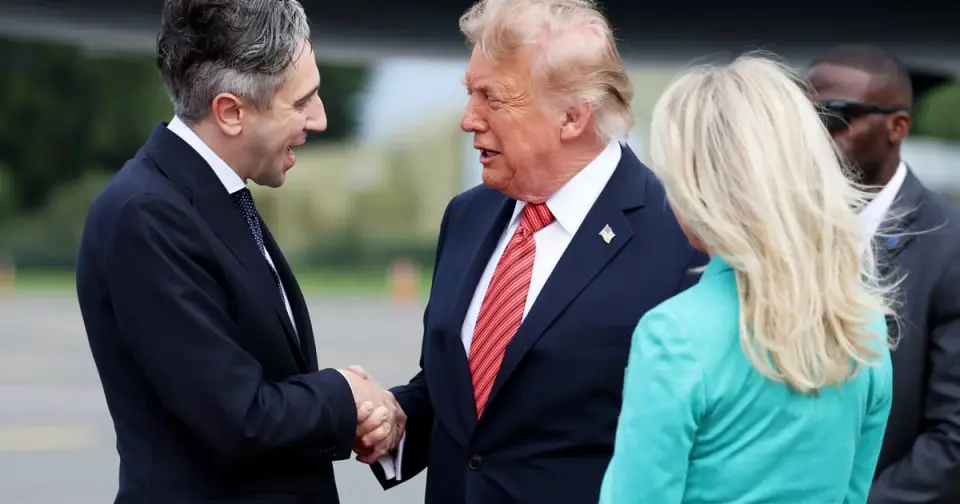
European Commission President Ursula von der Leyen proposed making Canada an 'associate member' of the EU, a move that drew sharp criticism from President Donald Trump but support from Irish Finance Minister Simon Harris. The proposal, announced in a 'State of the Union' speech, aims to deepen ties in manufacturing, technology, and security, with Canadian Finance Minister François-Philippe Champagne set to join EU finance ministers in Dublin. While the US threatened 'heavy tariffs,' European leaders emphasized the economic interdependence between the EU and US, and Canadian PM Mark Carney cautiously welcomed the ambition.
Key points
- Von der Leyen proposed Canada as an 'associate member' of the EU, a status that does not currently exist, during a 'State of the Union' speech on Wednesday.
- Trump called the proposal a 'hostile act' and threatened 'very heavy tariffs' on the EU, though Irish Finance Minister Simon Harris downplayed the reaction, citing strong economic ties.
- Canadian Finance Minister François-Philippe Champagne will join EU finance ministers in Dublin on Friday, following PM Mark Carney's recent tour, to discuss economic cooperation.
- The European Investment Bank's head, Nadia Calviño, will visit Ottawa to discuss cooperation on critical raw materials, signaling a push for deeper EU-Canada ties.
- The proposal has divided opinions, with some EU capitals skeptical and the Washington Post's editorial board calling it a 'foolhardy' move, while Paul Krugman argued it reflects a decline in fear of Trump.
Background
Recent tensions between the US and Canada, including trade disputes and diplomatic friction, have prompted Canada to seek closer ties with the EU. The EU's move to propose an 'associate member' status for Canada is part of a broader strategy to diversify trade relationships and reduce dependence on the US, amid ongoing geopolitical uncertainties.
How outlets are covering it
Opinions on the EU-Canada 'associate member' proposal vary widely. Irish Finance Minister Simon Harris and European Commission President Ursula von der Leyen view it as a positive step toward deeper cooperation, emphasizing economic interdependence and shared goals in areas like climate and cybersecurity. In contrast, President Donald Trump has condemned the move as a 'hostile act,' threatening tariffs. The Washington Post's editorial board criticized the proposal as 'foolhardy,' arguing that Canada's economic dependence on the US makes such a pivot risky. Paul Krugman, however, sees the move as a sign that nations are no longer afraid of Trump, citing a decline in fear and a rise in defiance. These differing perspectives highlight the complex dynamics of transatlantic relations and the potential impact of the proposal on global trade and diplomacy.
Why it matters
The EU-Canada 'associate member' proposal could reshape transatlantic trade and diplomatic relations, potentially reducing Europe's dependence on the US and strengthening ties with Canada. It may also influence global trade policies and geopolitical alignments, especially in areas like critical raw materials, technology, and security. The reaction from the US, including potential tariffs, could have significant economic implications for both the EU and Canada, while also affecting broader international relations and the balance of power in global trade.
What to watch
The next steps include a summit next month to negotiate the details of the 'associate member' status, with Canadian Finance Minister François-Philippe Champagne joining EU finance ministers in Dublin on Friday. The European Investment Bank's head, Nadia Calviño, will visit Ottawa to discuss cooperation on critical raw materials. The US response, including potential tariffs, will be closely monitored, as will the reactions from other EU capitals and global trade partners. The outcome of these negotiations could set a precedent for future EU-Canada relations and influence broader transatlantic diplomacy.
- US will see sense on EU-Canada deal, Irish finance minister says politico.eu
- What the EU’s offer of ‘associate member’ to Canada might mean AP News
- Fear Strikes Out Paul Krugman | Substack
- Opinion | Canada’s great European misadventure The Washington Post
- Trump Wanted Canada as the 51st State. He Ended Up Pushing It Toward the European Union. The New York Times
Want the full story? Read the original reporting
Read on politico.eu