
Carney tells Trump China trade is low priority as Canada diversifies amid tariff standoff
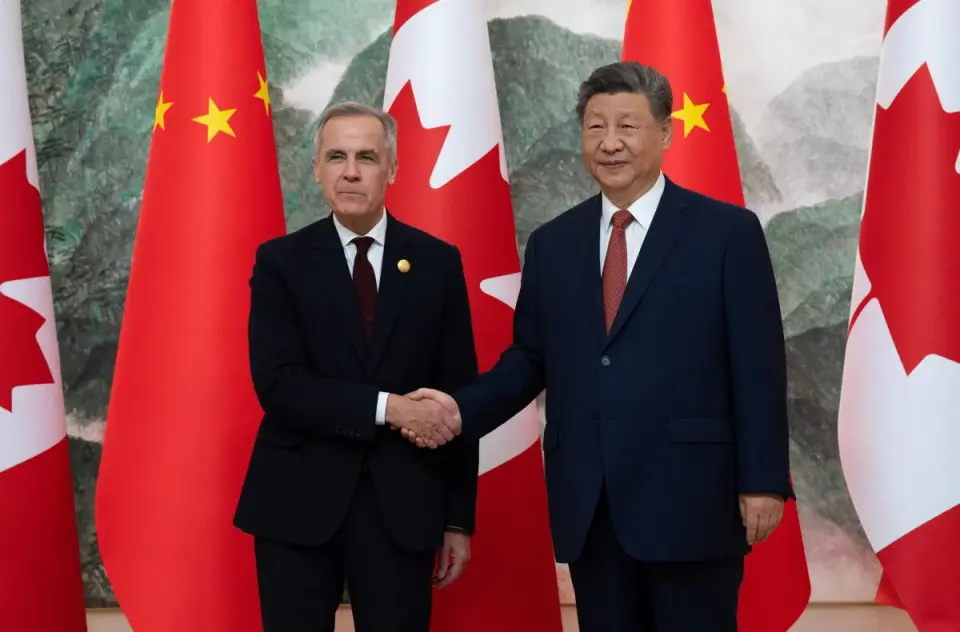
Canadian PM Mark Carney stated that his expanding trade ties with China are not a top concern for President Trump, emphasizing that Canada exports commodities rather than sensitive technology. This follows a new tariff deal with Beijing and sharp criticism from White House adviser Peter Navarro, who accused Ottawa of playing China against the U.S. Carney met with Trump in Shenzhen to discuss a potential bilateral trade agreement, while U.S. tariffs on Canadian goods remain a source of tension.
Key points
- Carney met with Trump in Shenzhen for a 20-minute discussion on a potential trade deal, with officials from both nations present.
- Canada and China agreed to new tariff cuts, with Beijing reducing duties on C$400 million in Canadian pork and seafood, and Ottawa extending exemptions for Chinese steel and aluminum.
- White House adviser Peter Navarro criticized Carney for suggesting Canada might turn to Chinese automakers if U.S. talks fail, calling the move 'offensive in the extreme.'
- Carney argued that Canada’s trade with China involves commodities like canola and oil, not advanced semiconductors, making it distinct from the complex U.S.-China relationship.
- U.S. tariffs on nearly $30 billion in Canadian goods remain in place after negotiations collapsed in August, prompting Ottawa to seek alternative markets.
Background
This development follows a series of recent agreements between Canada and China to expand trade ties, including earlier tariff cuts on pork and steel. Carney has previously signaled that Canada might pivot to Chinese automakers if U.S. trade talks fail to preserve an integrated North American auto industry, a stance that has drawn sharp rebuke from the White House. The current tensions stem from U.S. tariffs imposed after negotiations collapsed in August, which have pushed Ottawa to diversify its trade relationships.
How outlets are covering it
AP and CBC report that Carney’s comments were aimed at reassuring Trump that Canada’s growing ties with China are not a priority for the U.S. president, while also highlighting the sharp criticism from White House adviser Peter Navarro. WWMT focuses on the potential economic implications for Michigan, where automotive manufacturing is a significant part of the economy, noting that any shift in Canadian trade relationships could impact U.S. automakers and suppliers. The three outlets agree on the facts of the new Canada-China tariff deal and the ongoing U.S.-Canada trade tensions, but differ in emphasis: AP and CBC focus on the diplomatic and trade aspects, while WWMT highlights the economic consequences for U.S. manufacturing.
Why it matters
The outcome of U.S.-Canada trade talks could determine whether Canada pursues alternative partnerships with Chinese, European, or Japanese automakers, potentially reshaping North American manufacturing and trade relationships. The new Canada-China tariff deal and the ongoing tensions with the U.S. highlight the broader geopolitical and economic implications of trade disputes in the region.
What to watch
Carney and Trump are expected to continue discussions on a potential trade deal, with the outcome potentially determining whether Canada pursues alternative partnerships with Chinese, European, or Japanese automakers. The U.S. and Canada will likely continue to negotiate over the existing tariffs, while Canada and China may further expand their trade ties.
- Carney says Canada’s growing trade ties with China are not a top concern for Trump AP News
- Carney to meet with Trump at APEC, says Canada's trade ties with China are not U.S. president's top concern CBC
- Canada's potential auto shift raises concerns for Michigan, but no immediate threat WWMT
- Carney says Canada could turn to Chinese automakers if Trump trade talks fail AP News
- Carney and Trump to Hold Unscheduled Trade Meeting at Asia Summit The New York Times
Want the full story? Read the original reporting
Read on AP News