
Hegseth signs military pact with Venezuela, framing it as a shift from 'threat' to 'partner'
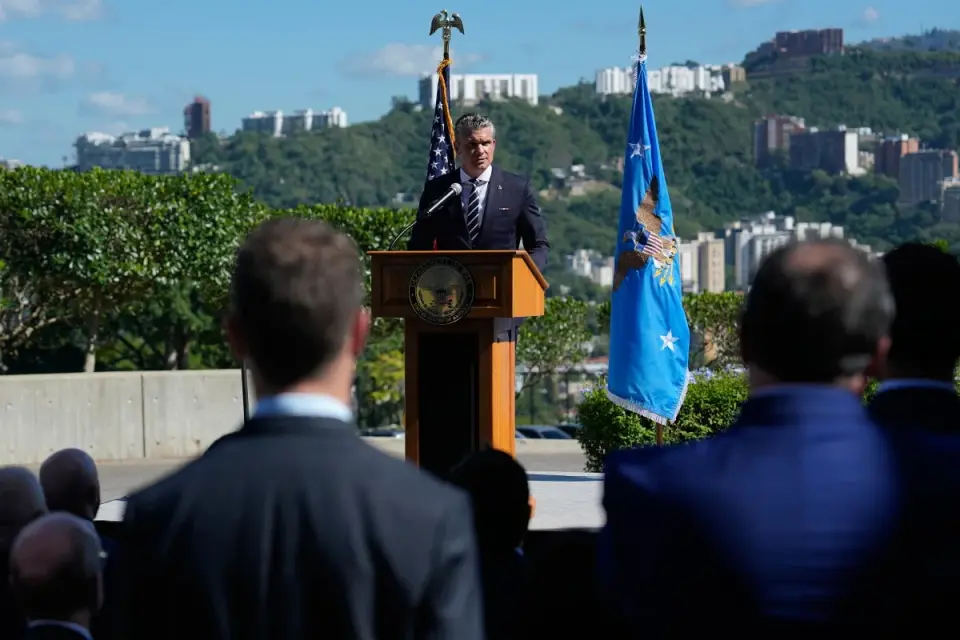
U.S. Defense Secretary Pete Hegseth announced a new military agreement with Venezuela on November 18, describing the nation as a 'compliant security partner' following the January capture of President Nicolás Maduro. The deal, signed with acting President Delcy Rodríguez, aims to reestablish ties through joint training and intelligence sharing to combat drug trafficking. While the U.S. frames this as a stabilization effort, details remain sparse, and critics note the agreement prioritizes oil interests over democratic reforms.
Key points
- Hegseth signed a military cooperation agreement with Venezuela’s acting President Delcy Rodríguez in Caracas, covering training, intelligence sharing, and equipment.
- The U.S. described Venezuela as shifting from an 'aggressive regional threat' to a 'compliant security partner' after the January 2026 capture of Nicolás Maduro.
- The agreement follows a broader U.S. push in Latin America, including the 'Shield of the Americas' initiative and strikes on alleged drug boats in the Caribbean and Pacific.
- Venezuela’s ruling party remains in power under Rodríguez, who has released political prisoners and facilitated U.S. investment in oil reserves.
- The Pentagon did not provide specific details on the agreement’s scope or timeline, stating that cooperation relies on 'results, not arbitrary timelines.'
Background
This development follows the U.S. military’s January 2026 raid that captured Nicolás Maduro, who is now facing drug trafficking charges in New York. The U.S. has since expanded its presence in Latin America, including sending troops to Panama and interdicting boats in the Caribbean. The agreement also follows a 2026 deal for U.S. control of Venezuelan oil reserves, which was criticized by some Democrats for prioritizing economic interests over democratic transitions.
How outlets are covering it
AP News and CNN emphasize the U.S. framing of Venezuela as a 'compliant' partner, highlighting Hegseth’s praise for the operation that captured Maduro. The Hill notes the agreement’s connection to the 'Shield of the Americas' initiative and the U.S. focus on countering 'narco-terrorists.' The Financial Times highlights concerns within Venezuela’s Chavismo movement, with an anonymous intelligence official calling the deal a 'sellout' of the country. The FT also notes that the U.S. has not committed to specific timelines for democratic transitions, focusing instead on security results.
Why it matters
The agreement signals a deepening of U.S. military influence in Venezuela, potentially affecting regional stability and U.S. relations with other Latin American nations. It also raises questions about the U.S. approach to democratic transitions, as the agreement prioritizes security and oil interests over immediate democratic reforms. The deal could set a precedent for U.S. military partnerships in the region, potentially impacting future U.S. foreign policy in Latin America.
What to watch
Hegseth is expected to visit Colombia, Ecuador, and Honduras to discuss security ties and deliver military equipment. The U.S. and Venezuela will likely continue negotiations on the scope and implementation of the military agreement. The U.S. may also press for further democratic reforms in Venezuela, though the Pentagon has not committed to specific timelines. The agreement’s impact on regional stability and U.S. relations with other Latin American nations will be closely monitored.
- Live updates: US and Venezuela sign military agreement as Trump administration seeks to deepen ties AP News
- Hegseth meets with Delcy Rodríguez in Venezuela to deepen military partnership The Hill
- US and Venezuela to expand military co-operation to target drug trafficking Financial Times
- Venezuela a ‘compliant security partner,’ Hegseth says as he announces military deal with Caracas CNN
- Hegseth uses Venezuela visit to boast of Maduro’s capture by US military The Guardian
Want the full story? Read the original reporting
Read on AP News