
Trump Claims Control Over Iran War End Amid Escalating Gulf Tensions
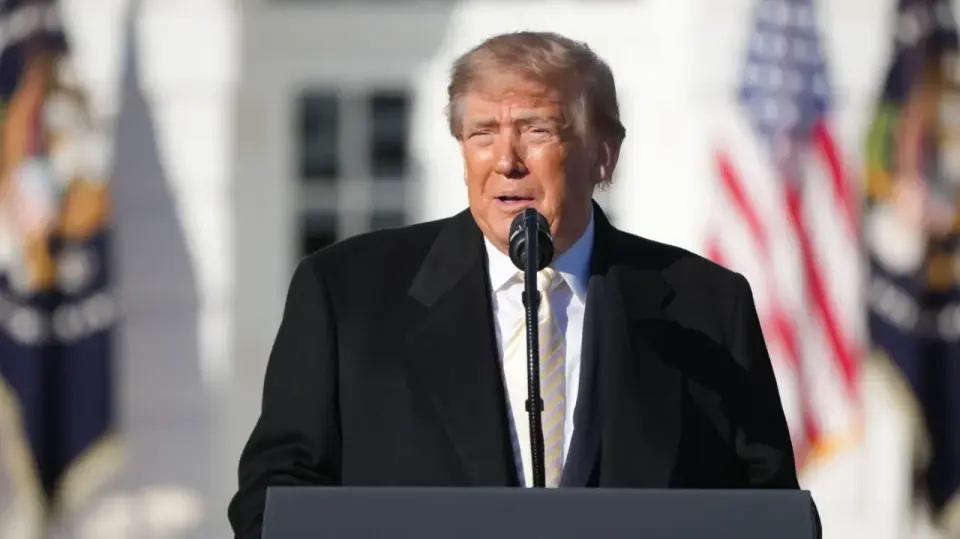
President Donald Trump asserted that the US-Iran war will end 'sort of whenever I want it to be' during Thanksgiving calls with troops, despite the conflict entering its ninth month. While Washington maintains a naval blockade and claims to be giving Tehran a chance to negotiate, Iran denies responsibility for a recent drone attack in Kuwait that killed two Italian technicians. The US has deployed additional naval assets, including the USS Portland, to enforce the blockade, while diplomatic talks remain stalled following a June memorandum of understanding. The war’s cost has risen to $48.3 billion, and regional tensions have escalated with strikes on oil tankers in the Strait of Hormuz and increased friction between Iran and Gulf states.
Key points
- Trump stated the war will end 'sort of whenever I want it to be' and claimed 'victory at hand,' while offering Iran a chance to make a deal to save lives.
- The US-Iran conflict has entered its ninth month, with the cost rising to $48.3 billion as of November 13, according to Pentagon Deputy Comptroller Arthur Miller.
- Iran denied responsibility for a drone attack in Kuwait that killed two Italian technicians and injured others, suggesting a 'false flag' operation, while Kuwait blamed Tehran.
- The US is enforcing a naval blockade on Iran’s ports, with the USS Portland having spent over 150 consecutive days at sea to support the operation.
- Two oil tankers were struck by naval mines in the Strait of Hormuz, which Iran’s Revolutionary Guard claimed were due to unauthorized transit, while the US claims to have launched 150 missiles to protect commercial shipping.
Background
The US-Iran war began in February 2026 with joint American-Israeli strikes, which killed Supreme Leader Ayatollah Ali Khamenei and other top officials. A memorandum of understanding was signed in June 2026 to end the war, but talks have since stalled. The US has maintained a naval blockade, while Iran has continued to claim control over the Strait of Hormuz and has engaged in tit-for-tat attacks. The conflict has also sparked regional tensions, including attacks on US bases in Bahrain and Kuwait, and has intensified fighting between Saudi-backed forces and Iran-backed Houthis in Yemen.
How outlets are covering it
The Hill and The Jerusalem Post emphasize Trump’s assertion of control over the war’s timeline and his claim that Iran’s military capabilities have been severely weakened. ABC News and Iran International highlight the immediate escalation, focusing on the drone attack in Kuwait that killed two Italians and the subsequent denial by Iran, which accused the US and Israel of 'false flag' tactics. Iran International also notes the economic impact of the US naval blockade, with Iranian economists warning that alternative trade routes cannot offset lost oil revenues, while hardliners call for military action to break the blockade. The Jerusalem Post notes Trump’s claim that the US does not need Middle East oil but remains in the region to protect Israel and ensure peace.
Why it matters
The ongoing conflict threatens to destabilize the Middle East, with potential for further escalation if diplomatic efforts fail. The economic impact of the naval blockade on Iran and the global oil market is significant, while the risk of a wider regional war involving Gulf states and Israel remains high. Trump’s assertion of control over the war’s end may signal a shift in US strategy, but the lack of progress in negotiations and continued military actions suggest a prolonged and volatile situation.
What to watch
The US and Iran are expected to continue their tit-for-tat attacks and naval standoff, with the US maintaining its blockade and Iran claiming control over the Strait of Hormuz. Diplomatic talks remain stalled, and the US is likely to continue its military presence in the region, including the deployment of additional naval assets. The conflict may escalate further if Iran does not agree to a deal, with potential for renewed strikes on Iranian nuclear sites and increased friction with Gulf states. The economic impact of the blockade on Iran and global oil markets will likely persist, with potential for further inflation and economic hardship in Iran.
- Trump: Iran war will be over ‘sort of whenever I want it to be’ The Hill
- Trump deploys extra aircraft carrier, says Iran is making ‘big mistakes’ Iran International
- Iran live updates: Iranian drone attack killed 2 Italians, Kuwait says ABC News - Breaking News, Latest News and Videos
- Trump says ‘victory at hand’ on Iran, names Pickaxe Mountain as target if US strikes again The Jerusalem Post
- Trump says Iran war ‘funded’ through January, suggesting limited window for new op The Times of Israel
Want the full story? Read the original reporting
Read on The Hill