
Trump Breaks U.S. Neutrality by Endorsing Irish Unification During Dublin Visit
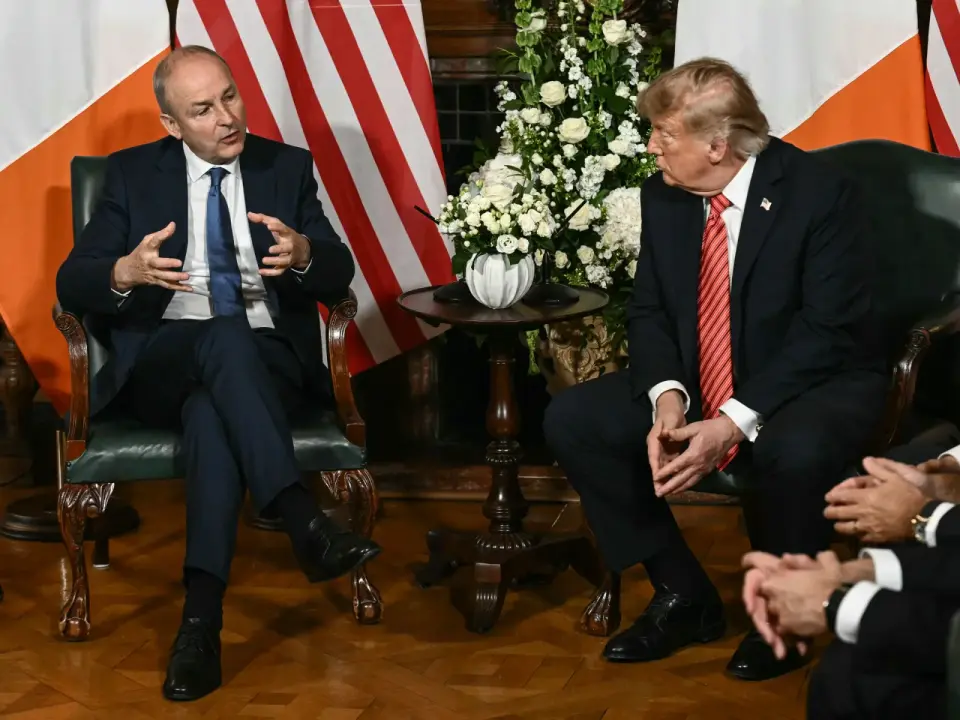
U.S. President Donald Trump stated that a unified Ireland would be 'fantastic' during a visit to Dublin, breaking with decades of American neutrality on the issue. While Irish Prime Minister Micheál Martin did not respond, UK Prime Minister Andy Burnham reaffirmed that a referendum is 'off the table' due to lack of public support. The comments drew sharp criticism from unionist leaders and sparked protests in Dublin and at Trump’s golf course in Doonbeg.
Key points
- Trump told reporters in Dublin that he would 'love to see' Northern Ireland and the Republic of Ireland unified, calling it a 'fantastic' outcome that will happen eventually.
- UK Prime Minister Andy Burnham maintained that a border poll is 'off the table' because there is no majority public support for leaving the UK, citing the 1998 Good Friday Agreement.
- Gavin Robinson, leader of the Democratic Unionist Party, stated that Northern Ireland’s future is for its people to decide, not for commentary from Washington, London, or Dublin.
- Thousands of protesters gathered in Dublin and at Shannon Airport, citing concerns over U.S. military actions, the cost of security, and Trump’s stance on the Middle East.
- Trump met with Irish President Catherine Connolly, whom he previously criticized, and attended the Irish Open at his Doonbeg golf course, where he claimed to be unaware of local protests.
Background
This visit follows a long-standing U.S. policy of neutrality regarding Northern Ireland’s status, established after the 1998 Good Friday Agreement ended decades of sectarian violence. Previous U.S. presidents, including Joe Biden, have avoided commenting on reunification despite Irish heritage. The current visit occurs amid heightened tensions, with anti-war protests in Dublin and a narrowing gap in Northern Ireland polls favoring remaining in the UK since Brexit.
How outlets are covering it
Al Jazeera and The New York Times emphasize the diplomatic breach of U.S. neutrality and the immediate backlash from UK officials. CNN highlights the logistical details of the visit, including the security measures and Trump’s dismissal of the protests. All three outlets agree that the comments were unexpected and controversial, but they differ in focus: Al Jazeera centers on the political fallout and unionist response, while CNN details the contrast between the official state visit and the public dissent. The New York Times frames the event as a significant departure from historical precedent.
Why it matters
Trump’s remarks challenge the delicate balance of the Good Friday Agreement, which requires British government discretion for any referendum. The comments risk inflaming sectarian tensions in Northern Ireland and complicate U.S.-UK relations, as the UK government firmly rejects the premise of immediate unification. Additionally, the protests highlight deep divisions within the Irish public regarding the hosting of a controversial U.S. leader.
What to watch
The UK government is expected to continue enforcing the Good Friday Agreement’s provisions, maintaining that no referendum will occur without majority support. Irish officials will likely manage the diplomatic fallout while balancing economic ties with the U.S. and public sentiment. Future U.S. visits to Ireland may face increased scrutiny and protest, particularly regarding military and foreign policy issues.
- Trump says a unified Ireland would be ‘fantastic’ during Irish visit Al Jazeera
- Trump says Irish unification would be ‘fantastic,’ wading in to sensitive topic during weekend visit | CNN Politics CNN
- President voiced 'strong view' on war, genocide to Trump RTE.ie
- Trump meets Ireland's leaders before heading to his golf club in Doonbeg NPR
- Trump Says Irish Unification Would Be ‘Fantastic,’ Breaking With Precedent The New York Times
Want the full story? Read the original reporting
Read on Al Jazeera