
DOJ Indicts ICE Agent for Lying About Nonfatal Shooting in Minneapolis Crackdown
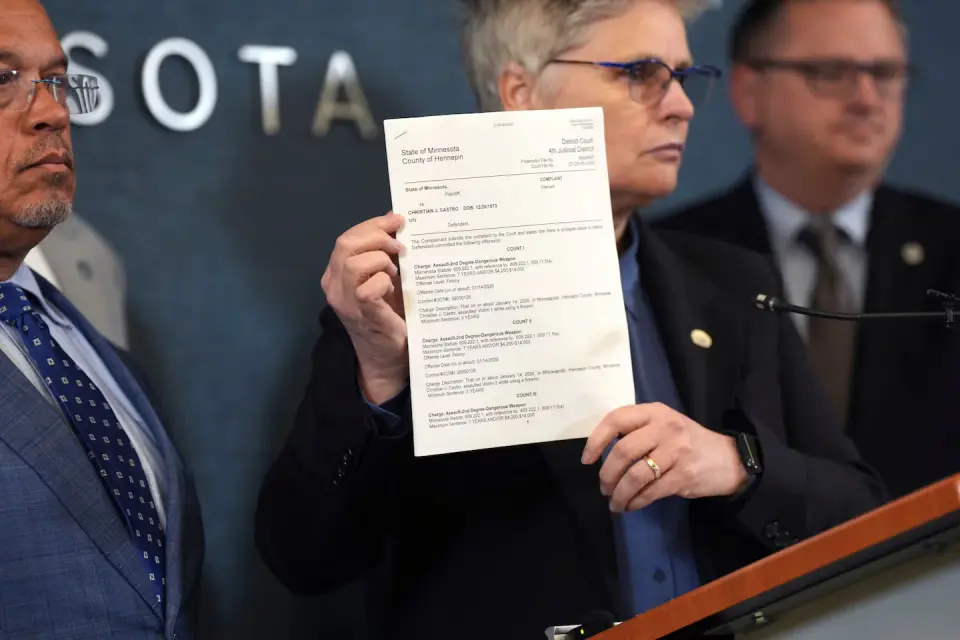
Federal prosecutors have indicted ICE agent Christian Castro for making false statements to investigators regarding a nonfatal shooting in Minneapolis. The case marks a rare instance of the Trump administration's Justice Department charging a federal officer for on-duty conduct. Castro shot Julio Cesar Sosa-Celis through a closed door in January, but surveillance video contradicted his claim of self-defense. While Minnesota seeks state charges, Texas Governor Greg Abbott blocked extradition, leading to Castro's release from a Texas jail last week. The federal indictment follows internal DOJ debates over pursuing more serious civil rights charges.
Key points
- Christian Castro, an ICE agent, was federally charged with making false statements about the January 14 shooting of Julio Cesar Sosa-Celis in Minneapolis.
- The indictment is the first known instance of the current Justice Department prosecuting a federal immigration officer for actions taken during the Minneapolis operation.
- Surveillance footage contradicted Castro's initial claim that he fired in self-defense after being attacked by migrants with a shovel and broom handle.
- Castro was released from a Texas jail last week after Texas Governor Greg Abbott refused to extradite him to Minnesota, citing doubts about his status as a fugitive.
- Minnesota prosecutors continue to pursue state charges for assault and false reporting, while federal authorities have dropped charges against the victims, Sosa-Celis and Alfredo Aljorna.
Background
This development follows a series of earlier reports in late August 2026 regarding the legal standoff between Minnesota and Texas. Previous coverage noted that federal prosecutors had initially considered but ultimately abandoned a bid to indict Castro for deprivation of rights, while Minnesota sought to keep him in custody. The broader context includes the 'Operation Metro Surge' immigration crackdown in Minneapolis, which involved thousands of federal agents, resulted in clashes with residents, and led to the deaths of two U.S. citizens and the injury of others.
How outlets are covering it
The Washington Post and The New York Times emphasize the rarity of the Justice Department charging a federal agent under the Trump administration, highlighting internal debates over the severity of the charges. Al Jazeera notes that the Trump administration has generally defended broad protections for immigration agents, contrasting this case with the lack of charges in other fatal shootings during the crackdown. The BBC focuses on the jurisdictional conflict, detailing how Texas Governor Greg Abbott blocked extradition, leading to Castro's release, while Minnesota's top prosecutor, Keith Ellison, welcomed the federal charges but argued they do not reflect the full seriousness of the state's case. All sources agree that surveillance video was pivotal in undermining the agent's initial account of the incident.
Why it matters
This case sets a potential precedent for accountability within federal immigration enforcement agencies. It highlights the tension between state and federal jurisdictions in handling immigration-related crimes and the role of video evidence in challenging official narratives. The outcome may influence future legal strategies for both state and federal prosecutors in cases involving immigration enforcement actions.
What to watch
Castro's whereabouts are currently unclear following his release from Texas. Minnesota officials have stated that their state case will proceed regardless of the federal prosecution. Federal investigators may still pursue civil rights charges, though the DOJ has scaled back its Civil Rights Division. The legal battle over extradition and the potential for further federal charges will likely continue to be a focal point in the coming weeks.
- ICE agent charged with lying to investigators in nonfatal Minneapolis shooting The Washington Post
- Federal Prosecutors Charge ICE Agent With Lying About Minnesota Shooting The New York Times
- ICE agent charged with lying under oath about Minnesota shooting Al Jazeera
- ICE agent charged with lying about shooting Venezuelan man during crackdown BBC
- ICE agent federally indicted over shooting of Minneapolis immigrant TheDailyNewsOnline.com
Want the full story? Read the original reporting
Read on The Washington Post