
Judge Farrell Weighs Bias Claims Against AG James in Cornell Probe
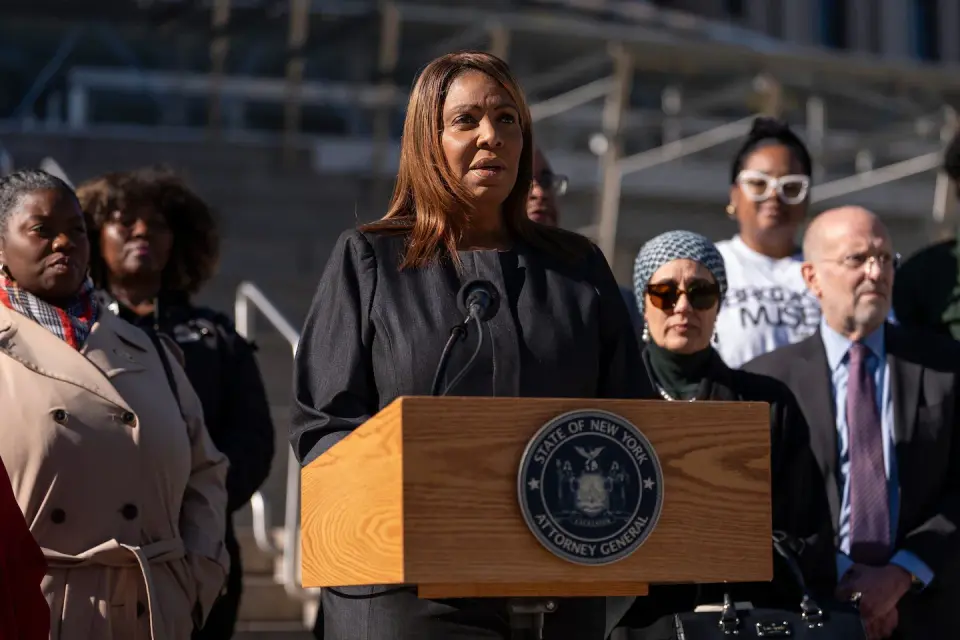
A New York judge is evaluating whether Attorney General Letitia James must be removed as special prosecutor in the Cornell University gang rape case. While James’s social media support for the accuser has drawn bias challenges from defense attorneys, the court is hesitant to rule without all accused parties involved. Meanwhile, Cornell has signed a new agreement with state police to handle future sexual assault investigations independently.
Key points
- Judge James R. Farrell questioned whether he could rule on the removal of AG James without all seven accused men joining the petition, citing fairness concerns.
- Defense attorneys argue James’s September 28 social media post expressing sympathy for the accuser demonstrates a presumption of guilt and bias.
- State officials contend the challenge is premature, noting that James is only in the preliminary investigation stage and has not yet issued an indictment.
- Cornell University President Michael Kotlikoff announced an agreement with the New York State Police to allow victims to choose state or campus police for future criminal investigations.
- The case stems from a 2024 alleged gang rape at a Chi Phi fraternity house, which gained national attention after a civil lawsuit was filed in October 2026.
Background
This dispute follows Governor Kathy Hochul’s October 1 executive order appointing James as special prosecutor after the local district attorney declined to bring criminal charges in 2024. The move drew criticism from Republicans and legal scholars who viewed James’s public statements as prejudging the outcome. Cornell has also faced internal scrutiny, with its Faculty Senate considering a no-confidence vote over the university’s handling of sexual assault cases, while former Deputy Attorney General Sally Yates leads an independent review of the school’s response.
How outlets are covering it
The Washington Post highlights Judge Farrell’s skepticism regarding the procedural fairness of ruling on one defendant without the others, noting his concern that James’s social media activity may conflict with ethical rules. CNN emphasizes the defense argument that James’s statements went beyond compassion to accepting the accuser’s narrative, while noting that James is not expected to attend the hearing. AP News focuses on the legal battle over whether social media posts can disqualify a prosecutor, contrasting the defense’s claim of 'unequivocal bias' with the state’s argument that the challenge is 'speculative' and 'meritless.' All sources agree that the core issue is whether James’s public support for the accuser compromises her impartiality, but they differ on the likelihood of her removal and the procedural hurdles involved.
Why it matters
The outcome could set a precedent for how social media statements by public officials are interpreted in criminal investigations, particularly in high-profile cases involving sexual assault. It also underscores the tension between state executive power and judicial oversight in appointing special prosecutors, with implications for future cases involving political figures and legal ethics.
What to watch
Defense attorneys have one week to either secure the participation of the other six accused men in the petition or file additional legal briefs. If the judge rules in favor of removal, Governor Hochul would need to appoint a new special prosecutor. Cornell’s new agreement with state police will take effect immediately, changing how future sexual assault cases are handled on campus.
- Judge considers whether Letitia James should be removed from Cornell rape case The Washington Post
- Judge sharply questions lawyers over request to remove Letitia James from Cornell sex assault investigation CNN
- Man accused in Cornell rape lawsuit wants Letitia James removed from investigation over her posts AP News
- Lawyers fighting N.Y. AG’s role in Cornell assault investigation say she isn’t ‘viable’ as prosecutor NBC News
- Cornell defendant in court to remove Letitia James as prosecutor NewsNation
Want the full story? Read the original reporting
Read on The Washington Post