
NYC Health Report Finds Congestion Pricing Had No Significant Impact on Air Quality
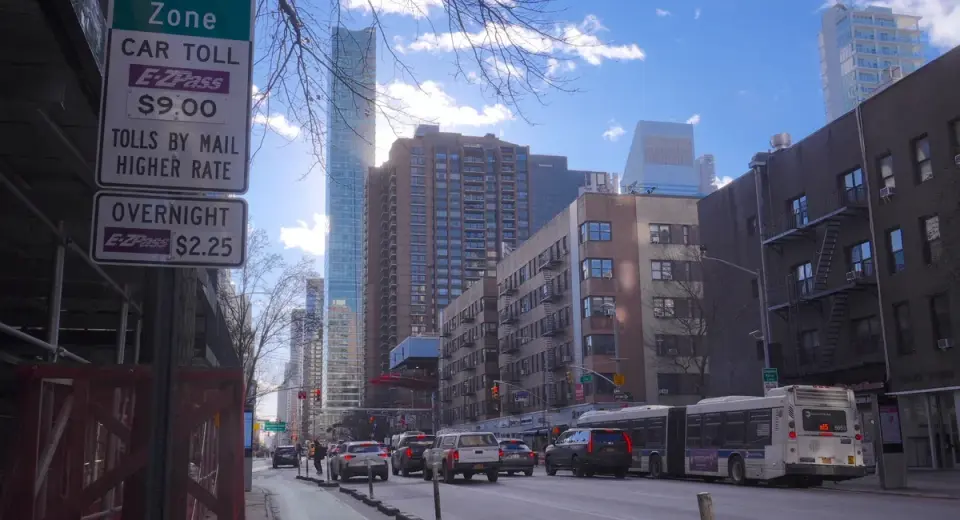
A new report by the NYC Health Department concludes that congestion pricing, implemented in January 2025, did not significantly improve air quality in Manhattan or surrounding environmental justice neighborhoods. While traffic entering the Congestion Relief Zone dropped by 11%, pollution levels remained stable or improved slightly, consistent with long-term citywide trends. Officials attribute this to vehicles contributing only a small fraction of total city pollution, though the program has generated over $6 billion for transit improvements.
Key points
- The NYC Health Department report, released in August 2026, found no statistically significant change in air quality within the Congestion Relief Zone or nearby environmental justice areas after one year of tolling.
- Traffic entering Manhattan south of 60th Street decreased by 11% following the implementation of the $9 peak-hour toll, but overall pollution levels remained stable or improved slightly.
- Vehicles account for approximately 14% of fine particulate matter and 20% of nitrogen oxide emissions in NYC, meaning reduced traffic has a limited impact on total air quality compared to other sources like building heating and cooking.
- The MTA has committed $70 million to pollution mitigation in the Bronx, including $20 million for cleaner refrigerated trailers at Hunts Point and $20 million for childhood asthma programs.
- The report confirms that congestion pricing has not increased pollution in areas like the Cross Bronx Expressway, contrary to earlier concerns from environmental assessments.
Background
Congestion pricing began in January 2025 after delays by Governor Kathy Hochul. The program aims to reduce traffic in Lower Manhattan and fund transit improvements. Prior to this report, a 2025 study by Columbia University researchers suggested air pollution rose in the South Bronx, while a Cornell University study found cleaner air in Lower Manhattan. The current report builds on these conflicting findings, providing a more comprehensive analysis using integrated monitors and control sites to isolate the toll's impact from other factors like weather and regional pollution trends.
How outlets are covering it
Gothamist and the NYC Health Department emphasize that the program has not worsened air quality in environmental justice neighborhoods and has generated significant funding for transit and pollution mitigation. Fox News highlights the lack of air quality improvement as a failure of the policy, noting that vehicles account for only 10% of the city's pollution and that critics argue the toll is a burden on working families. Patch focuses on the technical details of the study, noting that while traffic declined, other pollution sources like building heating and cooking remain dominant, explaining the minimal change in overall air quality. The sources agree on the lack of significant air quality improvement but differ in their interpretation of the program's overall value, with officials and Gothamist viewing it as a success due to transit funding, while Fox News and some critics view it as a failed environmental promise.
Why it matters
The findings challenge the environmental justification for congestion pricing, suggesting that the policy's primary benefits are financial and transit-related rather than air quality improvements. This could influence future debates on the program's continuation and expansion, as well as the allocation of funds for pollution mitigation in affected neighborhoods. The report also highlights the complexity of urban air quality, where multiple sources contribute to pollution, making single-policy interventions less effective in achieving broad environmental goals.
What to watch
The NYC Health Department plans to continue monitoring air quality in environmental justice neighborhoods monthly through the end of 2026, followed by quarterly monitoring through the NYC Community Air Survey. The MTA will continue to invest in transit improvements and pollution mitigation projects funded by congestion pricing revenue. Future reports may assess long-term trends and the impact of changes in traffic patterns and vehicle fleets on air quality.
- Congestion pricing hasn’t changed much about NYC’s air quality, city report finds Gothamist
- NYC drivers shell out $9 congestion toll. City admits it failed to improve air quality Fox News
- NYC congestion pricing report – Environment & Health Data Portal NYC.gov
- Car Pollution Declined. But NYC Air Quality Barely Changed, Report Finds Patch
- After 1 year, congestion pricing in Manhattan did not significantly improve air quality, city report finds Newsday
Want the full story? Read the original reporting
Read on Gothamist