Amazon Web Services CEO Matt Garman announced a $1 billion five-year investment in communities hosting data centers, alongside a pledge to end nondisclosure agreements (NDAs). The move aims to counter widespread public opposition and legislative moratoriums. Critics argue the funding is negligible compared to Amazon's $220 billion capital expenditure and fails to address core environmental concerns like water usage and pollution.
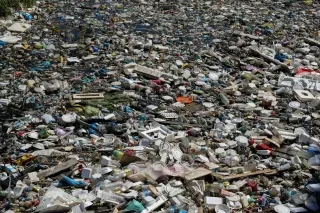
Redbird Reef, located 24 metres off Slaughter Beach, Delaware, is a massive artificial reef constructed from retired New York City subway cars, tanks, and vessels. While it generates $6 million annually for the local economy and supports diverse marine life, experts warn that storms can destroy these structures, turning them into hazardous debris. The site serves as a cautionary tale for the long-term environmental impact of artificial reef projects.
Amazon Web Services CEO Matt Garman announced a $1 billion five-year investment to support communities hosting data centers, aiming to counter growing opposition and legislative moratoriums. The plan includes funding for education, job training, and infrastructure, alongside a pledge to end nondisclosure agreements with local officials. While Amazon frames this as a geopolitical necessity to avoid falling behind China, critics argue the funding is negligible compared to Amazon's $220 billion capital expenditure plan and fails to address core environmental concerns like water usage and pollution from backup power plants.
Amazon Web Services CEO Matt Garman announced a $1 billion five-year investment in communities hosting data centers, alongside a pledge to end nondisclosure agreements (NDAs) with local officials. The move aims to counter growing public opposition and legislative moratoriums on AI infrastructure. While Garman framed the expansion as a geopolitical necessity to avoid falling behind China, critics argue the funding is negligible compared to Amazon's $220 billion capital expenditure plan and fails to address core environmental concerns like water usage and pollution.
President Trump approved new Corporate Average Fuel Economy (CAFE) standards on September 26, 2026, replacing Biden-era rules that required 50.4 miles per gallon by 2031. The new rules lower the target to 34.5 mpg, effectively ending federal mandates for electric vehicle adoption. While Trump framed this as a cost-saver for consumers and manufacturers, critics argue it weakens U.S. competitiveness against global EV trends and lacks enforcement power due to recent legislative changes.
The 2026 Planetary Health Check, released by the Potsdam Institute for Climate Impact Research, confirms that seven of nine critical Earth systems have breached their safe operating limits. This annual assessment, authored by 60 scientists, indicates that all transgressed boundaries are at record highs, raising the risk of irreversible planetary change. While stratospheric ozone and atmospheric aerosol levels have improved, other factors like ocean acidification, biodiversity loss, and chemical pollution have worsened. The report urges immediate action to reverse these trends within the current decade to prevent large-scale, persistent damage to Earth’s stability.
The 2026 Planetary Health Check, produced by the Planetary Boundaries Science Lab at the Potsdam Institute for Climate Impact Research (PIK), reports that seven of nine critical Earth system boundaries are breached at record highs. These include climate change, biosphere integrity, land system change, freshwater change, biogeochemical flows, novel entities, and ocean acidification, which crossed its threshold in 2025. Only stratospheric ozone depletion and atmospheric aerosol loading show improvement, though aerosol levels remain unsafe in some regions. Lead author Boris Sakschewski warns that the risk of irreversible change is rising as margins for error shrink. The report highlights recent extremes, including record ocean heat, Pakistan’s 2025 floods affecting 6.9 million people, and widespread European wildfires. Scientists note that carbon sinks may be weakening, potentially undermining net-zero goals, while emphasizing that solutions exist to return to a safe operating space.
A Washington Post report based on a leaked diplomatic memo shows the United States opposing binding limits on plastic production in global plastics treaty negotiations, seeking a broad national-security exemption to bypass the treaty and arguing for economic and petrochemical interests, as talks reach a critical phase.
The Trump administration rescinded the ESA harm rule, removing habitat-protection language that had limited habitat loss for listed species. A veteran law professor argues the rollback is likely unlawful and unlikely to survive lawsuits that challenge procedural and statutory grounds, including NEPA, the ESA, and the Administrative Procedure Act, and that Sweet Home v. Babbit remains a controlling precedent despite the post-Chevron shift in Loper Bright. Environmental groups have already filed suits and may seek preliminary injunctions to block the rule while litigation proceeds. With over two-thirds of listed species relying on nonfederal habitat, the outcome could hinge on whether courts uphold Sweet Home without Chevron deference, potentially sending the case to the Supreme Court.
The Interior Department finalized the repeal of the Endangered Species Act 'harm rule' that treated habitat destruction as harm to endangered species, arguing it aligns with the Act's intent and reduces regulatory burdens; the change could enable more mining, ranching and other development in protected areas, while opponents like Earthjustice vow to sue.
The little Z on Google Maps signals a Low Emission Zone (LEZ), usually in Europe, where vehicles must meet certain emission standards. When planning a route, Maps highlights LEZs it encounters, may provide a link with more information, or offer an alternate route to avoid the zone; the feature, introduced in June 2021, helps reduce pollution and cannot be turned off, though users can steer clear of LEZs or use Waze for different map layers. Some U.S. areas are testing similar Zero-Emission Delivery Zones (ZEDs).
President Trump on Friday pardoned 11 people, most convicted of Clean Air Act violations, including a major Republican donor, in a clemency move that underscores a pattern of rewarding allies while criticizing the Biden administration and drawing scrutiny over bypassing traditional review processes.
Trump issued a proclamation reopening most of Papahānaumokuākea, Rose Atoll, and the Marianas Trench to commercial fishing—allowing access in the Papahānaumokuākea region 50–200 miles offshore while preserving the core protected area—and saying the change will be shaped by federal rulemaking and science-based management. Environmental groups plan legal challenges, arguing the move oversteps authority and harms biodiversity; supporters say it boosts domestic seafood supply and will be managed by fisheries councils and enforcement.
Major environmental groups that publicly denounced RFK Jr. are quietly partnering with his Make America Healthy Again movement to push pesticide and public-health reforms, blending green policy expertise with a coalition that includes vaccine skeptics and conservative activists. The budding alliance could yield state-level pesticide wins but risks alienating traditional Democratic supporters and complicating the environmental movement’s science-driven stance.
Republicans pushed to codify Trump-era weakenings of the Endangered Species Act, but a House vote on the ESA Amendments Act was abruptly canceled amid concerns in tourism‑dependent districts; critics say the bill would undermine habitat protections and hinder species recovery, while pointing to a Gulf of Mexico drilling exemption as evidence of politics over science and warning it could imperil ecotourism economies like Florida’s even if a future administration reverses some actions.