
US Army to Detonate 5 Tons of Degraded Lead Azide in Iowa Amid Ongoing Legal and Health Disputes
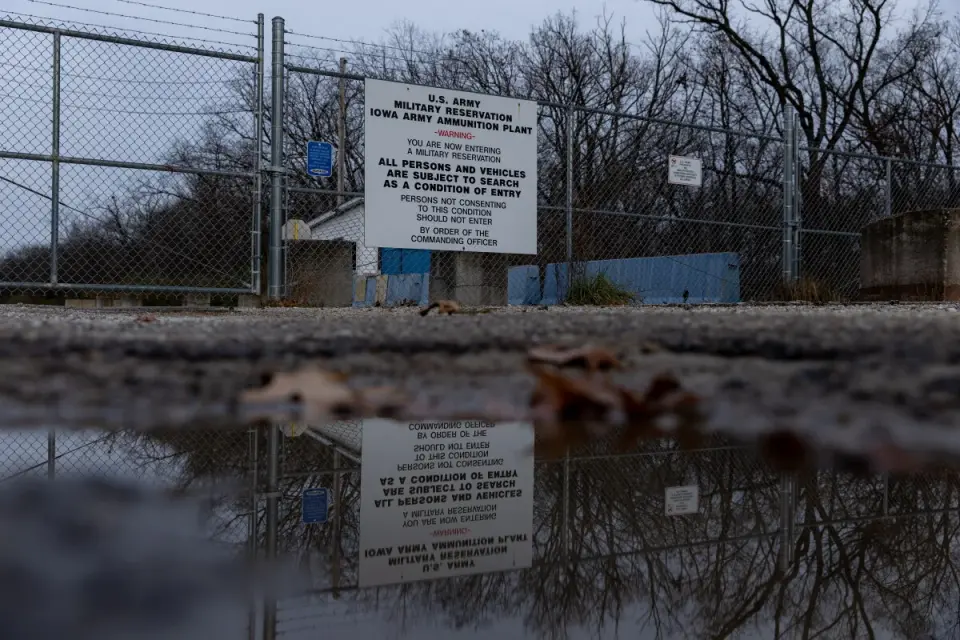
The U.S. Army is scheduled to detonate approximately five tons of degraded lead azide at the Iowa Army Ammunition Plant in Middletown on Wednesday morning. Officials state the chemical has crystallized and poses an imminent risk of spontaneous explosion, particularly as temperatures drop. Despite a federal appeals court ruling that reinstated the Environmental Protection Agency’s emergency permit, environmental groups continue to challenge the adequacy of cleanup measures. Residents within a five-mile radius were advised to evacuate, while those within 20 miles were told to shelter in place to avoid toxic lead dust. The Army has implemented extensive mitigation measures, including water walls and blast barriers, to contain the plume, though concerns remain regarding long-term environmental and health impacts on nearby communities and farmland.
Key points
- The detonation is scheduled for 9:00 a.m. local time on Wednesday at the Iowa Army Ammunition Plant in Middletown, Iowa.
- The stockpile consists of roughly five tons of lead azide, a compound used in munitions, which was found to be partially crystallized and highly sensitive to friction and cold temperatures during a March inspection.
- A federal appeals court reinstated the EPA’s emergency permit on Monday, overturning a previous stay that had paused the operation due to environmental concerns.
- The Army has established a five-mile evacuation zone and a 20-mile shelter-in-place advisory, with potential lead dust dispersal reaching up to 100 miles depending on wind conditions.
- Mitigation efforts include two-story concrete and sand barriers, ballistic gels, and a water wall containing over 100,000 gallons of water to suppress the dust plume.
- Environmental groups, including the Iowa Environmental Council, argue the legal fight is not over, citing concerns about inadequate cleanup provisions and the rejection of safer neutralization methods.
Background
The lead azide stockpile was consolidated at the Iowa Army Ammunition Plant in 2009 from various military bases, with some materials dating back over 60 years. The compound, used as a primary explosive for nearly a century, has been phased out due to its high sensitivity. The current crisis emerged after a routine inspection in March revealed the chemicals had degraded into a crystalline state, making them prone to spontaneous detonation. Previous attempts to neutralize the material were deemed unsafe because the barrels could not be opened or moved without triggering an explosion. The operation has faced multiple delays and legal challenges since late November, with courts initially halting the blast before reinstating the permit on Monday.
How outlets are covering it
The U.S. Army and EPA maintain that the controlled detonation is the only safe option, emphasizing that the material is too unstable to transport or treat chemically. Acting Army Secretary Adam Telle stated that inaction is no longer an option due to the risk of spontaneous explosion. Conversely, environmental groups and local residents express significant concern about the health and environmental consequences. The Iowa Environmental Council argues the EPA permit lacks sufficient provisions for post-blast cleanup and ongoing lead exposure protection. Local farmers and residents in areas like Fort Madison and Donnelson fear long-term contamination of their land and water, with some describing the situation as potentially 'apocalyptic.' While some residents in Middletown support the controlled blast to prevent an uncontrolled explosion, others remain anxious about the uncertainty and potential for lead poisoning, particularly for children and vulnerable populations.
Why it matters
The detonation highlights the complex balance between immediate safety risks and long-term environmental health concerns in military operations. The potential for lead dust to contaminate agricultural land and waterways in Iowa and Missouri raises significant public health issues, as lead exposure is linked to severe developmental and cognitive problems in children. The ongoing legal challenges and community anxiety underscore the difficulties in managing hazardous legacy materials and the importance of transparent communication and robust environmental safeguards in such operations.
What to watch
The Army will monitor wind conditions and the plume dispersion following the detonation, with the EPA conducting extensive sampling to assess contamination levels. Residents in affected areas are advised to follow shelter-in-place protocols and wet-clean surfaces to minimize lead exposure. The legal battle may continue as environmental groups seek to ensure adequate cleanup and protection measures are enforced. The Army has provided information on how to submit claims for property damage, and the EPA will continue monitoring the site and surrounding areas for any long-term environmental impacts.
- US stockpile of unstable and dangerous lead azide scheduled for detonation in Iowa AP News
- Feds have added mitigation strategies, local aid ahead of lead azide detonation Iowa Capital Dispatch
- Live updates: Army prepares to detonate several tons of lead azide in Iowa CNN
- 'This could be apocalyptic' - Iowans hunker down for controlled blast of explosives stockpile BBC
- Army’s Iowa Ammunition Plant Explosion on Schedule for Wednesday Morning The New York Times
Want the full story? Read the original reporting
Read on AP News