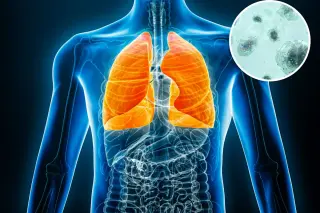
Experts warn that candles, diffusers and other scented products release VOCs and nanoparticles that can impair lung function and worsen respiratory issues; to minimize risk, choose fragrance products that are phthalate-free, ensure good ventilation, and consider safer, non-fragrance alternatives to keep your home feeling fresh without polluting the air.
A major study links real-world pesticide mixtures in Peru to about a 150% higher cancer risk, based on environmental exposure mapping and cancer registry data, and suggests early cellular changes precede cancer—calling for updated risk assessments that account for chemical mixtures and environmental factors.
A meta-analysis of 27 population studies (over 74,000 participants) finds higher salinity in drinking water—driven by seawater intrusion in coastal areas—associated with higher blood pressure (about 3.22 mmHg systolic and 2.82 mmHg diastolic) and a roughly 26% higher risk of hypertension, strongest near coasts. The findings highlight an environmental factor in cardiovascular risk, note the lack of WHO health-based drinking-water sodium standards, and call for more research on long-term outcomes. Checking local water quality and managing total dietary sodium may help reduce risk.
A Peru-wide study links exposure to 31 pesticides with about a 150% higher cancer risk in high-exposure areas, using six-year environmental dispersion models and national cancer registry data (2007–2020). Indigenous and rural communities face greater exposure, averaging 12 pesticides. Early molecular analyses suggest pesticides disrupt liver function and cellular identity long before cancer develops, indicating non-genetic pathways to cancer and challenging traditional single-chemical risk assessments. None of the chemicals are currently WHO-classified as known human carcinogens. The findings call for considering real-world chemical mixtures and environmental factors like climate shifts in prevention and policy.
A UCLA-led study published in Springer Nature Link found long-term exposure to chlorpyrifos associated with a more-than-2.5-fold increase in Parkinson's risk in humans, with mice and zebrafish experiments showing brain effects; the study is observational and cannot prove causation, and researchers note limitations such as unmeasured diet and lifestyle factors while regulators reassess chlorpyrifos use.
A U.S. study of more than 1.2 million people near 1,279 groundwater sites found that younger groundwater, especially from carbonate aquifers, is linked to higher Parkinson’s disease risk, while older groundwater may be protective in carbonate aquifers; results show association, not causation, and rely on approximations of exposure.
A large US study linked Parkinson’s disease risk to where and how people get their drinking water. People drinking from carbonate aquifers had a 24% higher PD risk than those using other aquifers and a 62% higher risk than those drinking from glacial aquifers. Newer groundwater (past 75 years) in carbonate systems was tied to about 11% higher risk than older water. The study analyzed 12,370 people with PD and over 1.2 million without, all within 3 miles of groundwater sampling across 21 major US aquifers, and noted limitations like assuming uniform aquifer characteristics within radius. Carbonate aquifers are common in the Midwest, South, and Florida, while glacial aquifers are more in the Upper Midwest and Northeast. The findings suggest groundwater age and source may influence long-term neurological health, warranting further research.
A large, preliminary U.S. study found an association between drinking-water sources and Parkinson’s disease: people using newer groundwater recharged in the past ~70–75 years and carbonate aquifers showed higher risk, while older groundwater and non-carbonate aquifers showed lower risk. The study, covering over 1.2 million people across 21 aquifers, does not prove causation and has limitations, but suggests groundwater age and source may relate to long‑term brain health and will be presented at the American Academy of Neurology meeting.
Public health and environmental groups filed a lawsuit against the EPA challenging the repeal of a greenhouse-gas rule that supported climate protections, arguing the rollback undermines emissions controls and public health safeguards.
A large US study of about 28 million Americans aged 65+ (2000–2018) links higher fine-particulate air pollution to increased dementia incidence, including Alzheimer’s, suggesting pollution may directly affect brain aging beyond other health factors; exposures were roughly twice the WHO annual guideline, with researchers noting potential mechanisms like brain inflammation and toxic protein deposits.
A study suggests microplastics may contribute to heart disease, with male mice showing increased artery plaque buildup, indicating potential sex-specific vulnerability and raising concerns about microplastics' health impacts on humans.
A new study reveals that most seafood consumed in the U.S. is imported and may contain higher levels of 'forever chemicals' (PFAS), raising concerns about increased exposure to these persistent pollutants.
A recent study links exposure to trichloroethylene (TCE), a common industrial chemical, with a small but measurable increased risk of Parkinson’s disease, especially for those living near TCE-emitting facilities, highlighting concerns about environmental neurotoxins and their long-term health impacts.
New research links long-term exposure to sulfur dioxide from fossil fuel combustion to an increased risk of developing ALS, highlighting the potential health impacts of air pollution from mining and energy production, though causation has not been established.
A recent study links exposure to trichloroethylene (TCE), a common industrial chemical, with a small but measurable increased risk of Parkinson’s disease, especially for those living near TCE-emitting facilities, highlighting environmental factors in neurodegenerative disease risk.