
Dolores Huerta, Architect of 'Sí, Se Puede' and UFW Co-Founder, Dies at 96
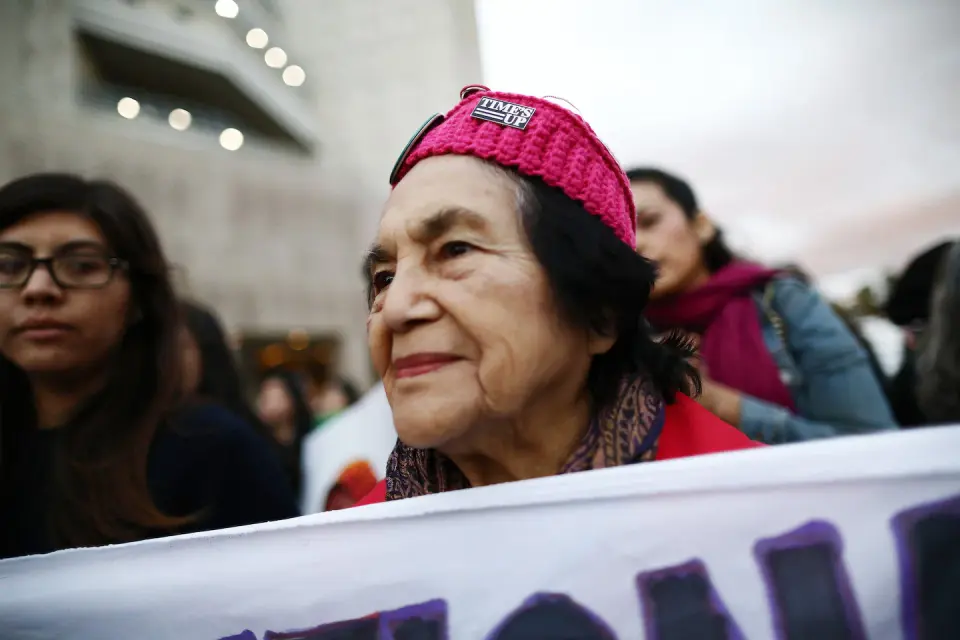
Dolores Huerta, the co-founder of the United Farm Workers and creator of the slogan 'Sí, se puede,' has died at age 96 from cancer. She passed away at her home in Bakersfield, California, on Wednesday. Huerta was a pivotal labor leader who negotiated key contracts for farmworkers and advocated for civil rights, women’s rights, and LGBTQ+ equality. Her legacy is complex, marked by her 2026 revelation that she was sexually abused by her longtime partner, Cesar Chavez, a secret she kept for decades. Tributes from political leaders and cultural figures highlight her impact on labor and civil rights movements.
Key points
- Dolores Huerta died at 96 from cancer at her home in Bakersfield, California, on Wednesday.
- She co-founded the United Farm Workers with Cesar Chavez and served as its vice president for nearly four decades.
- Huerta coined the rallying cry 'Sí, se puede' and negotiated pathbreaking contracts for California farmworkers.
- In 2026, she revealed that Chavez had sexually abused her, complicating her legacy as a labor icon.
- California Governor Gavin Newsom ordered flags flown at half-staff in her honor.
Background
Huerta’s career began as a school teacher in Stockton, California, where she noticed children of farmworkers arriving hungry and without shoes. This led her to become a community organizer. She co-founded the National Farmworkers Association, which later became the United Farm Workers, alongside Cesar Chavez. She received the Presidential Medal of Freedom in 2012 and was inducted into the California Hall of Fame in 2013. Her legacy has been complicated by recent revelations of sexual abuse by Chavez, which she disclosed in 2026 after keeping the secret for decades.
How outlets are covering it
The New York Times emphasizes Huerta’s role as a skilled organizer who coordinated strikes and negotiated contracts, contrasting her with Chavez, who was described as charismatic but abusive. The Washington Post highlights her early advocacy in Sacramento for legislation improving farmworker conditions. Rolling Stone focuses on cultural tributes, such as from singer Becky G, and Huerta’s ongoing activism through the Dolores Huerta Foundation. KCRA provides a broader view of political reactions, including statements from California Assembly Speaker Robert Rivas and U.S. Representatives Josh Harder and Mike Thompson, who praised her contributions to labor and civil rights. All sources agree on her significance but differ in emphasis: some focus on her labor achievements, others on her personal revelations or cultural impact.
Why it matters
Huerta’s death marks the end of an era for labor and civil rights movements in the United States. Her work helped secure better wages, working conditions, and legal protections for farmworkers, influencing broader labor and civil rights legislation. Her legacy also prompts ongoing discussions about the complexities of historical figures, particularly regarding the abuse she endured from Chavez. Her slogan 'Sí, se puede' remains a rallying cry for social justice movements, and her advocacy for women’s rights and LGBTQ+ equality continues to inspire activists.
What to watch
The Dolores Huerta Foundation is expected to announce plans to celebrate her life and legacy. California will continue to honor her memory with flags at half-staff. Her contributions to labor and civil rights will likely be commemorated through educational initiatives, public events, and ongoing advocacy efforts inspired by her work.
- Dolores Huerta, resolute champion of workers’ rights, dies at 96 The Washington Post
- Dolores Huerta, Who Founded United Farm Workers With Cesar Chavez, Dies The New York Times
- Becky G Remembers 'True Legend' Dolores Huerta: 'Knowing You is One of My Life's Greatest Joys' Rolling Stone
- Dolores Huerta, activist and labor leader who advocated for farmworkers, dies at 96 KCRA
- Dolores Huerta Spoke To Forbes About Her Legacy And Continued Activism 1 Year Before Her Death Forbes
Want the full story? Read the original reporting
Read on The Washington Post