
FCC Unanimously Approves Signal Jamming for State Prisons to Combat Contraband Phones
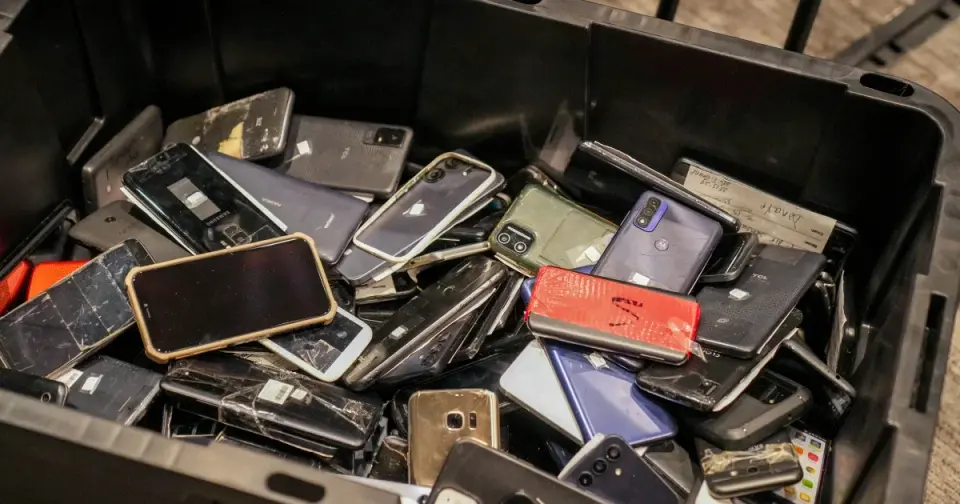
The Federal Communications Commission voted unanimously to allow state and local prisons to jam signals from contraband cellphones, a technology previously restricted to federal facilities. The decision removes a barrier imposed by a nearly century-old communications law, though it does not mandate the use of jamming devices. Officials cite the devices as the primary security threat in correctional facilities, enabling drug trafficking, riots, and violence against guards. The rule requires facilities to conduct tests to ensure external signals are not disrupted and to notify officials if equipment is moved. FCC Chairman Brendan Carr emphasized that the move provides a new tool for law enforcement, while critics argue it may interfere with legitimate communications.
Key points
- The FCC vote was unanimous, allowing state prisons to use signal-jamming technology without requiring them to do so.
- Prisons must conduct multiple tests to ensure cell signals outside their facilities are not affected and must notify officials if jamming devices are relocated.
- FCC Chairman Brendan Carr stated that approximately 25,000 cellphones are confiscated annually in state and local prisons.
- The technology was already permitted in federal facilities but required FCC approval for state prisons due to a nearly century-old communications law.
- South Carolina officials, including Corrections Director Joel Anderson and Gov.-elect Alan Wilson, led the advocacy effort for this change.
- Inmates are reported to pay between $5,000 and $8,000 for contraband phones, which are smuggled via hollowed-out items, corrupt employees, or drones.
Background
This decision follows years of advocacy by state prison officials and successful pilot tests in South Carolina. In 2008, the FCC allowed a one-time test of a jamming system at a maximum-security prison in the state. A second test occurred in 2019, following a 2018 riot in which seven inmates died, an event officials attributed to coordination via illegal cellphones. The FCC had previously held field hearings in South Carolina and met with Congress and industry representatives to address the issue. Prior to this vote, the FCC was expected to act on the matter, with Carr stating the agency was ready to take action to address the top security threat in correctional facilities.
How outlets are covering it
Supporters, including FCC Chairman Brendan Carr and South Carolina officials, argue that jamming is necessary to halt the use of contraband phones for drug rings, riots, and violence. Carr noted that industry opposition has receded as agencies experiment with targeted technologies. Former South Carolina corrections captain Robert Johnson, who survived a 2010 attack ordered by an inmate via a contraband phone, described the devices as 'weapons of mass destruction' and cited the $6,000 payment for his murder. Critics, including inmates' rights advocates and the telecommunications industry, oppose the measure. Advocates argue that high rates for official prison phones push inmates toward contraband devices to maintain family contact. The telecom industry warns that jamming risks interfering with legitimate communications, though Carr stated the opposition has softened due to recognition of the problem's scale and the development of more targeted technology.
Why it matters
The approval of signal jamming for state prisons marks a significant shift in correctional security policy, addressing a long-standing gap between federal and state capabilities. By removing the legal barrier for state facilities, the FCC aims to mitigate the risks posed by contraband phones, which are linked to serious violence and criminal activity. The decision reflects a growing consensus among federal and state officials that the security threat outweighs the potential risks to external communications, provided strict testing and notification protocols are followed. This move could lead to widespread adoption of the technology across the nation, potentially reducing the ability of inmates to coordinate illegal activities from within prison walls.
What to watch
State prisons are not required to use the jamming technology but may now do so if they choose. Facilities that opt to use the devices must conduct multiple tests to ensure that cell signals outside their facilities are not affected and must notify officials if the jamming devices are moved. The FCC has not specified a timeline for widespread adoption, but the removal of the legal barrier is expected to accelerate the deployment of the technology in state and local prisons across the United States. Further developments may include additional testing, potential adjustments to the rules based on real-world application, and ongoing discussions with the telecommunications industry to address concerns about interference with legitimate communications.
- FCC gives state prisons the go-ahead to jam signals from contraband cellphones NBC News
- FCC votes to allow state prisons to jam signals from contraband cellphones PBS
- 'They paid $6K to kill me': Former SC prison captain talks cellphone jamming in prisons WPDE
- State prisons get FCC approval to jam smuggled cellphone signals KTVU
- South Carolina leaders urge FCC to pass rules allowing prisons to jam contraband cell phones WLTX
Want the full story? Read the original reporting
Read on NBC News