
Washington state workers stage statewide walkouts over stalled contract talks
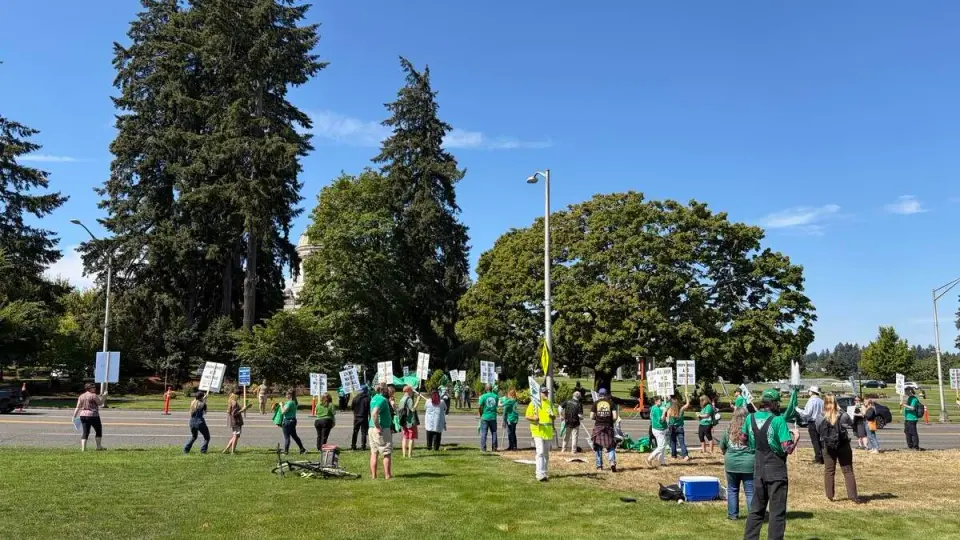
Thousands of Washington state employees staged walkouts across more than 100 sites on Monday, August 31, 2026, to protest stalled contract negotiations. The Washington Federation of State Employees (WFSE) argues that the state’s latest offer, a 2% raise, fails to address inflation and rising costs. Union leaders warn that low pay and years of budget cuts are causing high vacancy rates, which strain essential services like child welfare and public safety. While the governor’s office cites severe budget shortfalls and federal funding cuts, the union contends that the state is reacting to crises rather than preventing them through adequate staffing.
Key points
- WFSE members walked out at over 100 sites statewide, including in Olympia, Seattle, Spokane, and the Tri-Cities, using lunch breaks and vacation days to avoid disrupting operations.
- Negotiations began in April 2026, but the union claims the state’s latest proposal offers only a 2% raise, which does not keep pace with inflation.
- WFSE President Mike Yestramski stated that years of cuts and ballooning workloads in high-stakes jobs are creating a 'recipe for avoidable suffering and billions in liability.'
- The state Office of Financial Management warned of 'significant budget shortfalls' in the upcoming biennium, citing inflation, population growth, and federal funding cuts.
- Governor Bob Ferguson’s office stated that collective bargaining is challenging during a budget crisis and that the administration is focused on preserving core services for vulnerable populations.
Background
This labor dispute occurs amid a broader fiscal crisis in Washington, where the state has faced significant budget shortfalls and federal funding reductions. Earlier in 2026, the state grappled with record lawsuit payouts, particularly in child welfare cases, which the union argues stems from understaffing. The August 2026 primary elections also highlighted political divisions over budget priorities, setting the stage for contentious negotiations in the upcoming legislative session.
How outlets are covering it
The WFSE and its members emphasize that the 2% raise is insufficient given inflation and that low pay leads to high turnover, which degrades public services. They argue that the state is 'reacting not preventing' by allowing vacancies to persist. In contrast, the governor’s office and the Office of Financial Management highlight severe budget constraints, citing 'billions in budget reductions' and 'draconian cuts' from the federal government. They argue that the state must make 'difficult choices' to balance the budget while preserving core services, framing the negotiation as a challenge of limited resources rather than a lack of respect for workers.
Why it matters
The outcome of these negotiations will directly impact the quality and availability of essential public services, including healthcare, education, and public safety. If the state cannot retain experienced employees due to low pay, it may face increased reliance on costly contractors and longer wait times for residents. The dispute also highlights the tension between fiscal austerity and the need to maintain a stable public workforce in the face of rising costs and federal funding cuts.
What to watch
Contract bargaining for general government employees is scheduled for three days this week, with negotiations for community college and higher education employees to follow later in September. The union has indicated that the process has been 'frustratingly slow,' and it remains unclear when a final contract will be reached. The state legislature is also preparing for a new session where budget gaps will need to be addressed, potentially influencing the final terms of the agreement.
- Washington state employees walked out of Olympia offices on Monday. Here’s why The Olympian
- WA public employees in Tri-Cities join thousands statewide in walkout Tri-City Herald
- Thousands of state employees temporarily walk off the job as contract negotiations continue The Spokesman-Review
- WA state workers stage walkout to protest pay proposals from Ferguson The Seattle Times
- Thousands of Washington state employees to walk out Monday over stalled contract talks MyNorthwest.com
Want the full story? Read the original reporting
Read on The Olympian