
2026 Midterms: Record Turnout Defies Federal Interference, But Post-Election Battles Loom
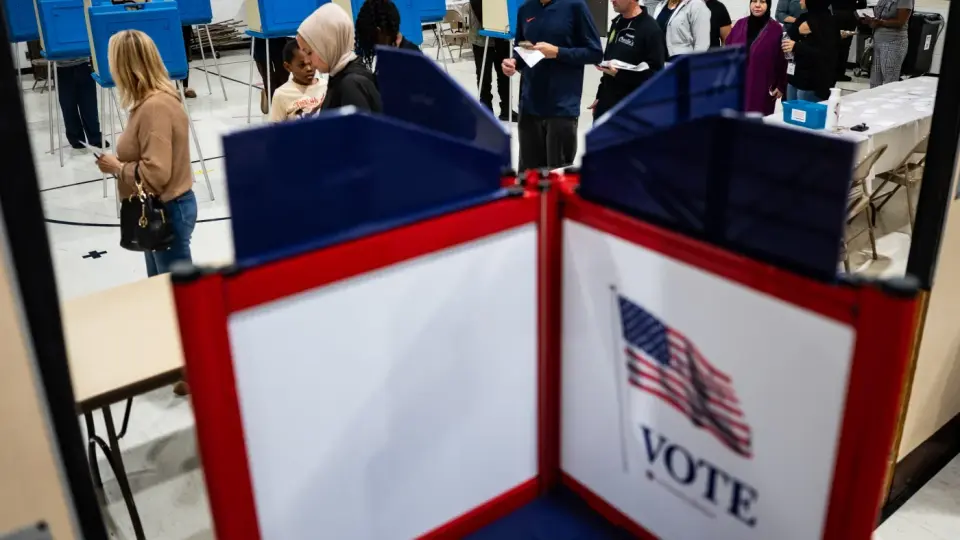
Tens of millions of Americans voted in the 2026 midterms with minimal disruption, despite aggressive federal efforts to interfere. President Trump accepted the results as Republicans lost control of both chambers. While courts blocked most pre-election schemes, advocates warn that post-election challenges to certification and ballot counting remain a significant risk.
Key points
- Voter turnout surged, with early voting numbers 34% higher than in 2022, driven largely by in-person participation.
- President Trump stated he was 'absolutely willing' to accept the results after it became clear Republicans would lose the House and Senate.
- The Department of Justice deployed approximately 1,000 monitors nationwide, but no widespread interference was reported, aside from isolated incidents in New Mexico.
- Federal courts blocked multiple administration initiatives, including voter purges in California and attempts to block Alaska Senate certification.
- Election experts warn that the administration may shift tactics to delay certification or challenge results after Election Day.
Background
Prior to the midterms, concerns mounted regarding federal interference, including a Texas voter registration glitch and ICE detention funding issues. Polling indicated a tight Senate race with seven competitive states, while defections from former Trump supporters in Georgia highlighted shifting political dynamics. These factors contributed to heightened scrutiny of election integrity leading up to November 3.
How outlets are covering it
NPR reported that Election Day proceeded relatively normally, noting that while the Justice Department sent monitors to every state, no major disruptions occurred. However, the New Mexico secretary of state reported that some monitors asked unusual questions in Bernalillo County. Democracy Docket argued that while the administration’s pre-election suppression tactics failed in court, the real danger lies in post-election subversion, such as delaying certification or seizing ballots. Just Security detailed the legal landscape, highlighting that courts blocked the DOJ’s attempts to purge voters in California and Washington, and that the Supreme Court denied emergency injunctions. These outlets agree that while the vote was cast, the fight over certification remains intense, with Democracy Docket emphasizing the risk of confusion and chaos, while Just Security focused on the specific legal victories that prevented federal overreach.
Why it matters
The 2026 midterms demonstrate the resilience of U.S. election infrastructure against federal interference, but the ongoing legal battles highlight the fragility of democratic processes. The shift from pre-election suppression to post-election challenges underscores the potential for prolonged uncertainty in election outcomes, affecting public trust and the seating of newly elected officials.
What to watch
Election officials and advocates are monitoring for attempts to delay certification or challenge close races. The Justice Department is expected to continue its review of election data for alleged illegal votes, while courts will likely face further litigation regarding the counting and certification of ballots. The outcome of these post-election battles will determine the final results and the timeline for the swearing-in of new officials.
- Tens of millions cast ballots for midterms despite worries of Trump's interference NPR
- Trump Justice Dept breaks with tradition to intervene in midterms Reuters
- Trump’s voter suppression crusade has failed. But his bid to subvert the midterms may just be getting started Democracy Docket
- 2026 Midterms: Election Integrity Litigation Tracker Just Security
- In Run-Up to Midterms, Legacy of 2020 Looms Large Over Justice Dept. The New York Times
Want the full story? Read the original reporting
Read on NPR