
5th Circuit Rules 2022 Spending Bill Unconstitutional Due to Proxy Voting
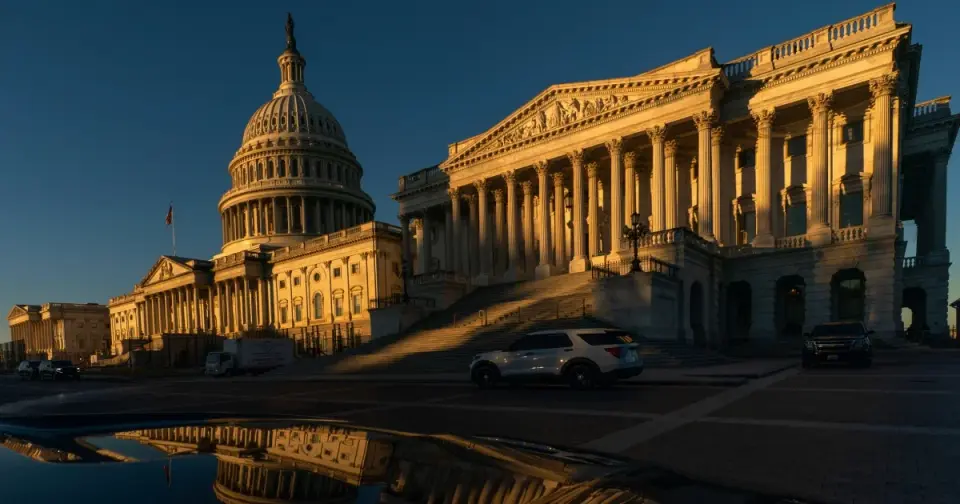
A federal appeals court has ruled that the House of Representatives unconstitutionally passed a $1.7 trillion spending bill in 2022 by using a pandemic-era proxy voting rule. The 5th U.S. Circuit Court of Appeals determined that this method violated the Constitution’s quorum clause, which requires a majority of members to be physically present. While the ruling invalidates the entire bill, the court limited its immediate effect to blocking enforcement of the Pregnant Workers Fairness Act in Texas. The decision is expected to be appealed to the Supreme Court and could trigger challenges to other laws passed during the same period.
Key points
- The 5th U.S. Circuit Court of Appeals voted 9-8 to uphold an injunction blocking the Pregnant Workers Fairness Act in Texas, ruling that the proxy voting rule used in 2022 violated the constitutional quorum clause.
- The $1.7 trillion spending package was passed by the House on a 225-201 vote, with 226 members voting by proxy under a rule implemented by Speaker Nancy Pelosi in May 2020 as an emergency measure during the pandemic.
- Judge Cory Wilson, a Trump appointee, wrote the majority opinion stating that 'proxy presence does not count' and that the quorum clause cannot be circumvented by congressional fiat, citing historical precedent and original understanding.
- Judge James Graves Jr., an Obama appointee, dissented, calling the ruling 'illogical' and questioning why the court would limit the invalidation to one provision of a multi-trillion dollar bill if the entire law was unconstitutionally passed.
- Legal experts note the decision may invalidate the law in Texas, Louisiana, and Mississippi, affecting approximately 20 million women, and could lead to broader challenges against other Biden-era legislation passed via proxy.
Background
This ruling follows a 2024 district court decision in favor of Texas’s challenge to the Pregnant Workers Fairness Act, which was later vacated when the full 5th Circuit agreed to hear the case. The proxy voting rule was adopted in May 2020 by Speaker Nancy Pelosi as an emergency response to the pandemic and was discontinued after Republicans took control of the House following the November 2022 elections. Recent political shifts, including a Democrat winning the Texas attorney general race, may impact future enforcement of the ruling, as the office that initiated the challenge will no longer be controlled by Republicans starting in January.
How outlets are covering it
NBC News and Bloomberg Law emphasize the constitutional significance of the quorum clause violation and the potential for broader challenges to other laws passed during the pandemic. The New York Times highlights the practical impact on pregnant workers in the South, noting the decision affects about 20 million women in Texas, Louisiana, and Mississippi. All sources agree on the 9-8 vote and the dissenting opinion by Judge Graves, but Bloomberg Law notes that other federal courts had previously rejected similar challenges based on the Speech or Debate clause, suggesting this ruling is a significant departure from prior precedent. The DOJ defended the law but did not respond to requests for comment, while the Texas AG’s office also declined to comment.
Why it matters
The ruling could invalidate multiple federal laws passed during the pandemic, including the Pregnant Workers Fairness Act, which provides accommodations for pregnant employees. It may lead to increased legal challenges against other Biden-era legislation and could impact federal funding and policy enforcement in states like Texas, Louisiana, and Mississippi. The case is expected to be appealed to the Supreme Court, which could set a precedent for the validity of proxy voting in Congress.
What to watch
The case is expected to be appealed to the Supreme Court. The DOJ and the Equal Employment Opportunity Commission are barred from enforcing the Pregnant Workers Fairness Act in Texas, but the ruling’s scope may expand if other challenges are filed. The change in Texas’s attorney general could affect future enforcement actions, and the decision may influence how Congress handles procedural rules in the future.
- House unconstitutionally passed spending bill in 2022, appeals court rules NBC News
- US House unconstitutionally passed spending bill in 2022, court rules Reuters
- Federal Court Halts Pregnant Workers’ Protection Law The New York Times
- Pandemic-era law passed unconstitutionally because of proxy voting, appeals court rules The Washington Post
- Congress Proxy-Voting Found Unconstitutional by Fifth Circuit Bloomberg Law News
Want the full story? Read the original reporting
Read on NBC News