
Abdul El-Sayed wins Michigan Senate seat, becoming first Muslim U.S. senator
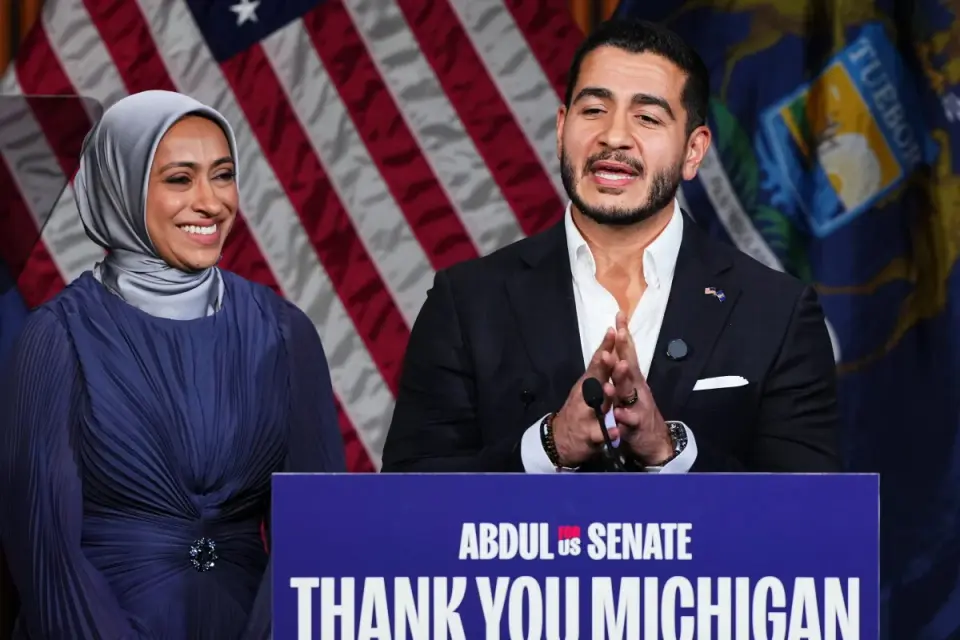
Abdul El-Sayed defeated Republican Mike Rogers to become the first Muslim elected to the U.S. Senate. His victory followed a contentious campaign marked by intense anti-Muslim rhetoric from President Donald Trump and GOP allies, who accused him of ties to terrorism and Sharia law. El-Sayed, a former epidemiologist, framed his win as a rejection of hate-based politics and a validation of his policy platform. Supporters in Dearborn, Michigan, celebrated the result as a historic milestone for Arab American representation, while civil rights leaders hailed it as a defeat for Islamophobic campaigning strategies.
Key points
- Abdul El-Sayed won the Michigan Senate race, defeating Republican Mike Rogers in the November 2026 midterms.
- El-Sayed is the first Muslim elected to the U.S. Senate, a historic first for American politics.
- The campaign was defined by severe anti-Muslim attacks, including President Trump labeling El-Sayed a 'jihadist' and accusing him of supporting terrorists.
- Republican lawmakers formed a 'Sharia-Free America Caucus' to depict Islamic religious codes as threats to the Constitution.
- El-Sayed emphasized his policy platform and coalition-building over his religious identity during the campaign, stating he ran to serve Michigan, not as a symbolic figure.
- Supporters in Dearborn, Michigan, credited his grassroots outreach and visibility for high voter turnout and support among Arab Americans.
Background
The 2026 Michigan Senate race intensified in October amid escalating anti-Muslim rhetoric. President Trump and Republican allies repeatedly accused El-Sayed of ties to the Muslim Brotherhood and Sharia law, despite his denials. A viral town hall incident involving a paid heckler and a $250,000 campaign expenditure against El-Sayed drew national attention. Polls showed a tight race until the final days, with El-Sayed holding a narrow lead. The campaign contrasted sharply with earlier midterms, where anti-Muslim sentiment surged after the 2025 election of New York City Mayor Zohran Mamdani.
Why it matters
El-Sayed's election marks a significant shift in American political representation, breaking a barrier for Muslim Americans in the highest legislative body. The victory suggests that voters in Michigan rejected Islamophobic campaigning strategies that had gained traction in previous cycles. It also signals a potential decline in the political viability of using religious identity as a primary attack vector, as seen in the simultaneous losses of anti-Sharia advocates in Texas. For Muslim Americans, the win offers a sense of inclusion and validation, countering decades of post-9/11 suspicion and marginalization in public life.
What to watch
El-Sayed will assume his Senate seat, focusing on his policy platform rather than symbolic representation. His victory may influence future campaigns for Muslim and other minority candidates, potentially reducing the effectiveness of Islamophobic rhetoric. The outcome could also impact the political standing of Republican leaders who championed anti-Sharia initiatives, such as Texas Governor Greg Abbott and Attorney General Ken Paxton, who lost their respective races. Civil rights groups may leverage this momentum to challenge further hate-based political strategies.
- ‘A beautifully American story’: El-Sayed's historic Senate victory resonates with Muslim Americans AP News
- Abdul El-Sayed’s Senate Win Is Big to Muslim Americans, but Not Because of Faith The New York Times
- El-Sayed: Michigan rejected ‘hateful, spiteful campaign’ The Hill
- El-Sayed’s first step to ‘transform’ politics: Erasing money’s influence The Washington Post
- El-Sayed Calls Out JD Vance in Victory Speech WSJ
Want the full story? Read the original reporting
Read on AP News