
Acton Confronts Ramaswamy’s Ad Controversy in Cincinnati Rally
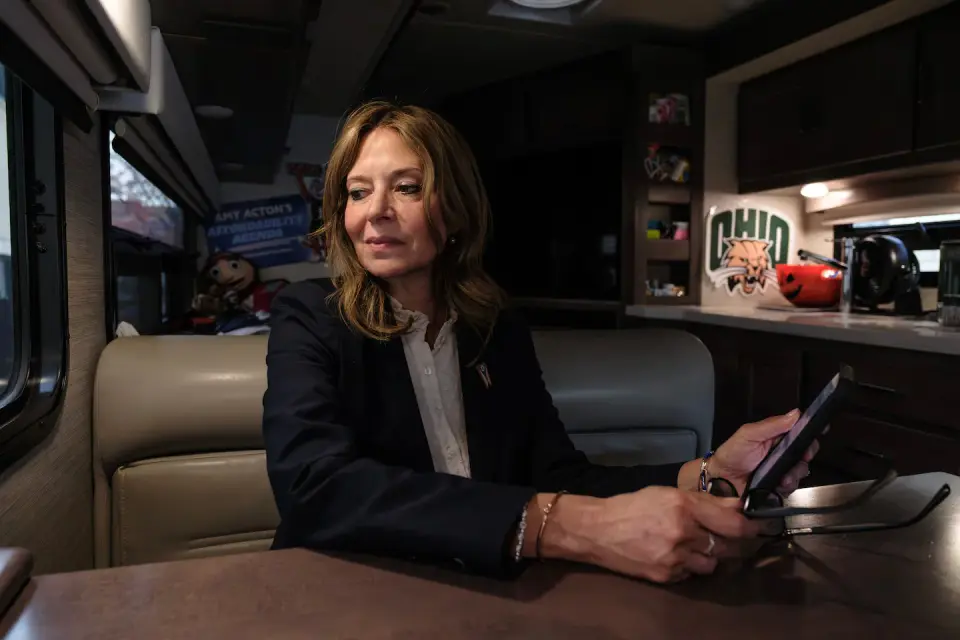
Democratic Ohio gubernatorial candidate Amy Acton addressed supporters in Cincinnati on October 28, responding to a controversial attack ad from Republican rival Vivek Ramaswamy. The ad, which cost $4 million, featured Acton’s estranged mother, Donna Arthur, accusing Acton of lying about her upbringing. Acton stated she has not seen her mother since 1978, following the sexual assault of Acton by her stepfather when she was 12. While Ramaswamy’s campaign defended the spot as necessary scrutiny, Acton called it an exploitation of childhood trauma. The controversy has drawn bipartisan criticism, including from President Trump, who defended Ramaswamy, and internal GOP leaders who urged him to withdraw the ad. Acton also discussed policy positions on education, medical debt, and energy during recent interviews, emphasizing her experience as a former health director under Governor Mike DeWine.
Key points
- Acton held a rally at the Woodward Theater in Cincinnati on October 28, where she thanked supporters and condemned Ramaswamy’s ad as a weaponization of her childhood trauma.
- Ramaswamy’s $4 million ad featured Acton’s mother, Donna Arthur, who accused Acton of lying; Acton noted she has not seen her mother since 1978 due to her stepfather’s sexual abuse of her at age 12.
- Acton proposed policies including free school meals, medical debt forgiveness, and an 'all of the above' energy approach, while opposing Ramaswamy’s proposal to eliminate the state income tax.
- The controversy has fractured the Republican Party, with President Trump defending Ramaswamy while Ohio Governor Mike DeWine and other GOP leaders urged him to withdraw the ad.
- Acton defended her decision to skip the debate, citing Ramaswamy’s tendency to use inflammatory tactics, and highlighted her experience running a $1.6 billion health agency during the pandemic.
Background
The Ohio gubernatorial race has become a national focal point in the 2026 midterms, with polls showing a tight contest one week before Election Day. The Ramaswamy-Acton race has been marked by intense personal attacks, including the $4 million ad featuring Acton’s mother, which sparked bipartisan condemnation. Earlier coverage noted that Ramaswamy’s former teacher and The Plain Dealer criticized the ad, while Vice President JD Vance defended Ramaswamy against GOP backlash. Acton’s campaign has also faced scrutiny over her 2020 resignation as Ohio Department of Health director, which she attributed to refusing to sign orders she felt would harm public health.
How outlets are covering it
The Washington Post highlighted Acton’s return to her former high school in Youngstown, emphasizing her personal narrative of resilience. The Cincinnati Enquirer focused on the Cincinnati rally, where Acton directly addressed the Ramaswamy ad and received support from Democratic candidates Sherrod Brown and Greg Landsman. The Dayton Daily News provided a detailed policy comparison, noting Acton’s stance on education funding, medical debt, and energy, while contrasting her positions with Ramaswamy’s. WLWT covered Acton’s response to the ad and her decision to skip the debate, noting her emphasis on her experience and the controversy surrounding the ad. The outlets differ in emphasis: The Post and Enquirer focus on the personal and political fallout of the ad, while the Dayton Daily News and WLWT provide more policy and campaign strategy details. All agree on the ad’s controversy but differ in framing Acton’s response as either a personal rebuttal or a policy-focused campaign strategy.
Why it matters
The Ohio gubernatorial race is a key indicator of the 2026 midterms, with implications for national politics and state policy. The Ramaswamy-Acton controversy has drawn national attention, highlighting issues of political ethics, personal trauma, and policy disagreements. The race’s outcome could influence the balance of power in Ohio’s legislature and impact national Democratic and Republican strategies. Acton’s policy proposals, such as medical debt forgiveness and education funding, reflect broader Democratic priorities, while Ramaswamy’s ad and tax proposals reflect Republican strategies. The controversy has also tested party unity, with internal GOP divisions over the ad and bipartisan criticism of its tactics.
What to watch
The race will likely continue to be dominated by personal attacks and policy debates in the final week before Election Day. Ramaswamy may face further internal GOP pressure to withdraw the ad, while Acton will likely continue to emphasize her policy positions and personal narrative. Polls will be closely watched to determine if the ad has shifted voter sentiment. The outcome of the Ohio Senate race, which could shift the balance of power in Congress, will also be a key focus. Post-election, the winner will face challenges in implementing policy proposals, particularly if the Ohio legislature remains dominated by Republicans.
- Ohio gubernatorial hopeful Amy Acton’s survivor story: ‘I was lucky’ The Washington Post
- Acton fires back at Ramaswamy ad at Cincinnati rally Cincinnati Enquirer
- We interviewed Amy Acton about education, taxes, working with GOP lawmakers: Here’s what she said Dayton Daily News
- Ohio governor's race: Amy Acton discusses campaign getting nation’s attention WLWT
- Amy Acton says she’s learning new things about her childhood in wake of attack ad with her mother NBC News
Want the full story? Read the original reporting
Read on The Washington Post