
Alaska Governor Launches Criminal Probe into Peltola Campaign Over Ballot Stacking Allegations
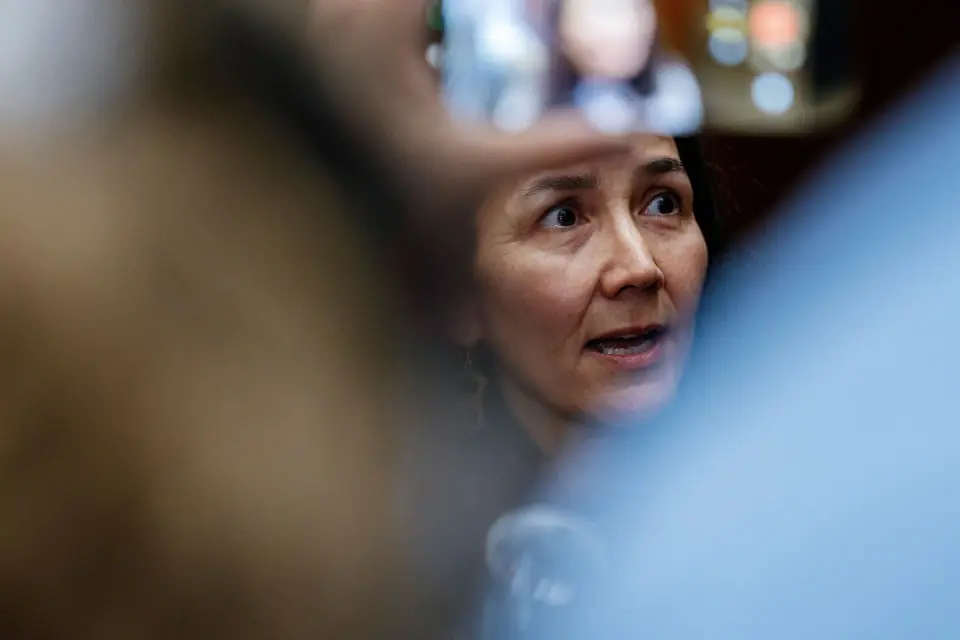
Alaska Governor Mike Dunleavy has ordered a criminal investigation into the campaign of Democratic Senate candidate Mary Peltola following a New York Times report alleging that her team and the Democratic Senatorial Campaign Committee recruited a namesake candidate to split the vote against incumbent Republican Dan S. Sullivan. President Trump has demanded Peltola’s removal from the ballot and prosecution, labeling the effort 'voter fraud at the highest level.' However, legal experts and Democratic strategists argue that ballot stacking is a common, legal tactic used by both parties, and the Alaska Supreme Court previously upheld the namesake candidate’s right to run. The probe comes as the Justice Department seeks to block certification of the election results if the incumbent loses.
Key points
- Gov. Dunleavy directed the Department of Public Safety to investigate whether the recruitment of Daniel J. Sullivan Jr. violated state laws or warrants civil action.
- The New York Times reported that Peltola aides and DSCC officials recruited a retired teacher from a remote fishing village who shares the incumbent’s name to dilute Republican support.
- President Trump called for Peltola and the namesake candidate to be removed from the ballot, though he provided no specific legal basis for the alleged crime.
- The Justice Department filed a lawsuit to prevent certification of the Alaska Senate race if Dan S. Sullivan loses, arguing the dual candidates could confuse voters.
- The Peltola campaign and DSCC denied involvement in the scheme, while the namesake candidate stated he was running in good faith as a moderate Republican.
- Alaska’s ranked-choice voting system may mitigate the impact of the namesake candidate, as votes for the duplicate name are likely to transfer to the incumbent if he is not eliminated early.
Background
This development occurs in the context of a highly contested 2026 midterm election in Alaska, where control of the U.S. Senate is at stake. The state’s ranked-choice voting system allows voters to rank candidates, which may reduce the effectiveness of ballot-stacking tactics. Earlier this year, the Alaska Supreme Court rejected Republican efforts to remove Daniel J. Sullivan from the ballot, ruling that state law did not allow judges to assess a candidate’s motives. The current probe follows a Justice Department lawsuit filed last week, which sought to block certification of results if the incumbent lost, a move critics called an unprecedented overreach. Additionally, Republican Senator Lisa Murkowski recently endorsed a Democratic gubernatorial candidate, highlighting deep local dissatisfaction with the outgoing Republican administration, though she criticized the Peltola campaign for alleged deception in the Senate race.
How outlets are covering it
The Washington Post and BBC report that Governor Dunleavy’s probe is a response to the New York Times’ investigation, which detailed messages and interviews suggesting Peltola’s team and the DSCC recruited the namesake candidate. The New York Times emphasizes that while the tactic is controversial, it is not illegal and has been used by both parties, including Republicans in Alaska. Al Jazeera notes that Trump’s demands for prosecution lack legal basis, as Attorney General Todd Blanche conceded in a Fox News interview that laws may not have been broken. The Peltola campaign and DSCC deny wrongdoing, calling the allegations a distraction, while Senator Sullivan’s camp accuses Peltola of 'gaslighting' Alaskans. Legal experts, including Scott Kendall, note that while the tactic may be a 'dirty trick,' it has a long history in American politics and may be mitigated by ranked-choice voting. The Justice Department’s lawsuit, which seeks to block certification if the incumbent loses, is viewed by critics as an attempt to disenfranchise voters, while supporters argue it protects election integrity.
Why it matters
The outcome of the Alaska Senate race could influence control of the U.S. Senate, which in turn affects the remaining two years of President Trump’s presidency. The probe and legal challenges threaten to delay the certification of results and could set a precedent for federal intervention in state election processes. If the namesake candidate draws significant support, it could impact the final outcome, though ranked-choice voting may limit this effect. The controversy also highlights ongoing debates over election integrity, ballot stacking, and the role of federal authorities in state elections, with potential implications for future midterms and the broader political landscape.
What to watch
The Department of Public Safety will conduct its investigation, with findings expected to determine whether criminal charges or civil actions are warranted. The Justice Department’s lawsuit to block certification of the Alaska Senate race will be heard by Chief Judge Sharon Gleason, who has given the DOJ until Thursday to respond to a motion to dismiss. The Peltola campaign and DSCC have requested to join the case, arguing that the state election office’s earlier attempt to block the namesake candidate was overruled by courts. The November 3 election will proceed as scheduled, with voters ranking candidates in a ranked-choice system. The outcome of the race and the legal challenges could have significant implications for the balance of power in Congress and the administration’s agenda.
- Alaska governor orders investigation into Democrat’s Senate campaign The Washington Post
- Alaska Governor Orders Criminal Investigation Into Peltola Campaign The New York Times
- Trump demands Alaska candidates be removed over alleged ballot scheme Al Jazeera
- Alaska governor orders probe into Democratic campaign's alleged links to rival candidate BBC
- Live updates: Alaska governor orders investigation into Peltola campaign after bombshell report CNN
Want the full story? Read the original reporting
Read on The Washington Post