
Federal SWAT teams guard wall contractors on Tohono O’odham tribal land
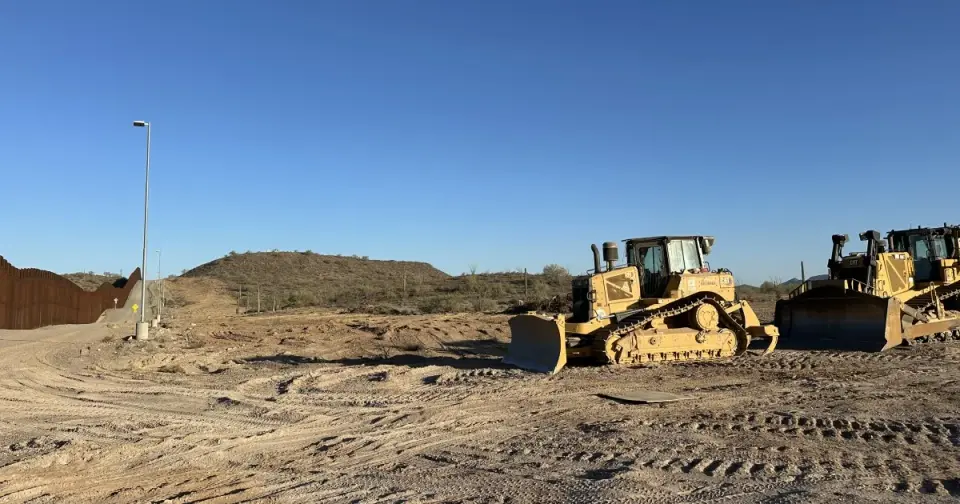
Customs and Border Protection agents, including a SWAT team, entered the Tohono O’odham Nation early Tuesday to guard wall contractors performing pre-construction work. The tribe claims the federal presence prevents its police from issuing trespassing citations, while the administration asserts the project is legally authorized and necessary for security.
Key points
- Approximately 20 masked and armed CBP agents, including a SWAT team and Bureau of Indian Affairs officers, arrived at three sites on the reservation before dawn on Tuesday.
- The agents guarded contractors drilling for soil samples and performing other pre-construction tasks for a border wall project spanning 62 miles of the Arizona-Mexico border.
- The Tohono O’odham Nation states that a CBP vehicle blockade is preventing tribal police from issuing citations or removing the contractors, despite earlier 'No Trespassing' signs.
- CBP Commissioner Rodney Scott stated the project targets a dangerous smuggling corridor and is funded by Congress and affirmed by a federal court.
- The tribe is exploring legal options to appeal a recent federal court decision that denied a preliminary injunction to stop the construction.
Background
This incident follows a federal court ruling on August 14, 2026, where Judge Richard Leon denied the Tohono O’odham Nation’s request to halt border wall construction. The court relied on a 1907 Theodore Roosevelt proclamation to allow federal use of land near the border, despite tribal objections. The tribe had previously posted 'No Trespassing' signs and argued that the wall would destroy sacred sites and ancestral lands.
How outlets are covering it
The Tohono O’odham Nation and Al Jazeera emphasize the violation of tribal sovereignty, noting that federal agents blocked tribal police from enforcing trespassing laws. They highlight the tribe’s argument that the wall destroys sacred sites and that cross-border detentions have already dropped by 95% through other means. Conversely, KJZZ and the Trump administration, via CBP Commissioner Rodney Scott, frame the construction as a necessary security measure against drug trafficking and cartel activity, asserting that the project is legally authorized and funded by Congress. While both sources agree on the presence of armed agents, the tribe focuses on the lack of consent and environmental harm, whereas the administration focuses on the legal and security justifications.
Why it matters
The deployment of armed federal agents to guard construction on tribal land escalates a long-standing dispute over Indigenous sovereignty and border security. It highlights the tension between federal authority and tribal rights, potentially setting a precedent for how future infrastructure projects on Native lands are handled. The tribe’s decision to appeal the court ruling indicates that the legal battle over the wall’s construction is far from over.
What to watch
The Tohono O’odham Nation is expected to pursue legal appeals against the federal court’s decision to allow construction. Tribal leaders may continue to monitor the situation and potentially escalate diplomatic or legal challenges. The construction of the wall, which includes two parallel steel sections in some areas, is likely to proceed as pre-construction work continues, pending further legal outcomes.
- Tohono O'odham: Armed, masked federal agents enter tribal land with border wall contractors KJZZ
- Tribe accuses US federal agents of ‘trespassing’ on indigenous border land Al Jazeera
- Masked CBP agents enter tribal land as contractors prep for border wall BorderReport
- Border Patrol SWAT team blocks Arizona tribal police from trespassing border wall contractors Arizona Mirror
- Trump administration starts building border wall project in Arizona over tribe’s objections KXAN Austin
Want the full story? Read the original reporting
Read on KJZZ