
Atlanta 'No Kings' Rally Shifts Focus to Midterm Voter Mobilization
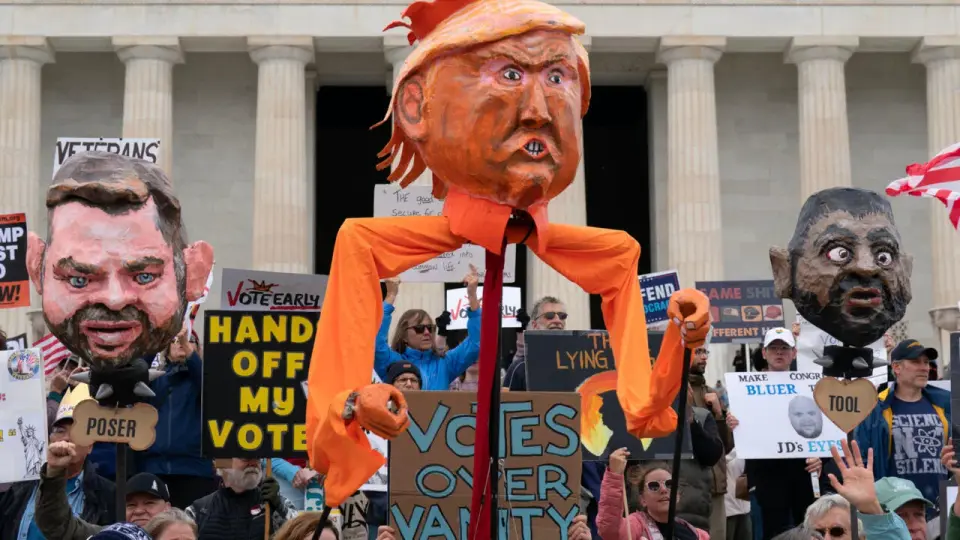
The fourth round of 'No Kings' protests concluded with a focus on voter mobilization rather than mass confrontation. In Atlanta, approximately 300 demonstrators marched to encourage early voting and election observation ahead of the November 3 midterms. Organizers emphasized community engagement over large-scale rallies, while many prominent Democratic candidates skipped the events to avoid alienating moderate voters in competitive states.
Key points
- Atlanta rally drew around 300 people, marching from Piedmont Park to St. Mark’s church to promote early voting and election observation.
- Organizers described the event as a 'hyperlocal' community engagement effort, aiming to connect neighbors and drive turnout rather than holding massive flagship rallies.
- Prominent Democratic Senate nominees in Georgia and Texas, including Jon Ossoff and James Talarico, did not attend the rallies, citing a strategy to focus on economic issues in competitive states.
- Protesters expressed concerns about ICE enforcement, the war in Iran, and the security of mail ballots, reflecting anxiety about election integrity.
- The White House mocked the rallies, arguing that the focus on voting contradicted the 'No Kings' name, while Republicans generally remained muted compared to previous protests.
Background
This event follows a series of 'No Kings' protests that began in February 2025 after President Trump posted an AI-generated image of himself as a monarch. Previous rallies in March 2026 focused heavily on immigration crackdowns and the Iran war. Recent background indicates a challenging political climate for Democrats, with Trump’s approval on cost-of-living issues at 17% and concerns over voter suppression in states like Georgia, where Republicans previously rejected redistricting changes to avoid backlash.
How outlets are covering it
France 24 highlighted the local impact in Atlanta, noting the presence of labor organizer Kelsea Bond and the specific focus on voting rights and ICE criticism. The New York Times provided a national overview, emphasizing that the rallies were smaller and more subdued than previous iterations, with a strategic shift toward 'hyperlocal' voter activation. The NYT noted that many prominent Democrats skipped the events to avoid alienating moderate voters in key Senate races, a nuance not detailed in the France 24 report. Both sources agreed that the primary goal was voter mobilization, but the NYT stressed the absence of major candidates, while France 24 focused on the grassroots energy and specific policy grievances like the Iran war and ICE enforcement.
Why it matters
The shift in 'No Kings' protests from mass confrontation to targeted voter mobilization signals a strategic pivot by progressive groups ahead of the critical November 3 midterms. The absence of major Democratic candidates suggests a tension between grassroots activism and mainstream electoral strategy in competitive states. The focus on election observation and early voting reflects growing concerns about election integrity and potential interference, which could influence turnout and public trust in the upcoming elections.
What to watch
Organizers will continue to promote early voting and election observation in the weeks leading up to November 3. The focus will likely remain on local community engagement and addressing concerns about mail ballot security. The outcome of the midterms, particularly in closely watched Senate races in Georgia and Texas, will determine the balance of power in Congress and the ability of Democrats to challenge Trump’s policies.
- ‘Standing up for democracy’: Atlanta ‘No Kings’ rally draws Trump critics ahead of midterms France 24
- 4 Takeaways From a Voting-Focused ‘No Kings’ Day The New York Times
- No Kings rallies across U.S. urge voters to cast ballots early ahead of midterms PBS
- Arizona No Kings crowds channel anger at Trump and Republicans into early votes Arizona Mirror
- For Trump opponents, the midterms have already begun as ‘No Kings’ rallies push early voting Inquirer.com
Want the full story? Read the original reporting
Read on France 24