
Black Voter Surge Defeats GOP Redistricting in Historic 2026 Midterm Tsunami
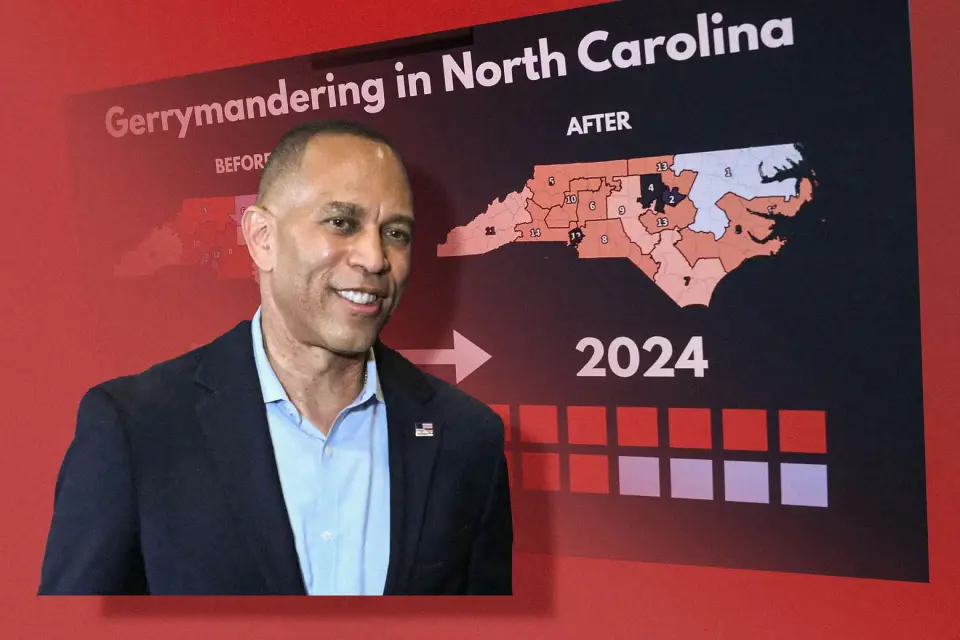
In a historic 2026 midterm election, Democrats secured control of both House and Senate chambers, driven by a massive surge in Black voter turnout that defied Republican redistricting efforts. Despite the Supreme Court’s April 2026 ruling in Louisiana v. Callais that weakened the Voting Rights Act, Black voters turned out at record levels, helping elect historic firsts including the first Black woman governor and the first Muslim senator. The results demonstrated that high voter engagement could overcome structural attempts to dilute minority political power, with Black voters supporting Democrats at 91 percent, significantly higher than other groups. This 'tsunami' of support reversed expectations of declining Black representation and forced a reevaluation of the impact of recent judicial and legislative actions on electoral maps.
Key points
- Democrats won control of the House, Senate, and a majority of state legislative chambers in the 2026 midterms, a victory not seen in generations.
- Black voter turnout reached approximately 48.8 percent of eligible voters, the second-highest midterm turnout in over a century, rivaling 2008 presidential levels.
- The Supreme Court’s April 2026 decision in Louisiana v. Callais weakened the Voting Rights Act, allowing partisan gerrymandering that targeted Black and Latino voters.
- Despite redistricting efforts that reassigned over 25 million people, Black voters supported Democrats at 91 percent, outpacing other racial groups.
- Historic firsts were achieved, including Keisha Lance Bottoms as the first Black woman governor, Abdul El-Sayed as the first Muslim senator, and Chris Pappas as the first openly gay male senator.
- Republican redistricting schemes aimed to flip 15 seats but succeeded in at most three, with Black candidates winning contested seats in states like Louisiana and Alabama.
Background
The 2026 midterms occurred after a series of actions in 2025 and 2026 that sought to dilute Black and Latino voting power. In July 2025, the Justice Department pressured Texas officials to break up majority-Black and Latino districts. In August 2025, President Trump declared Republicans entitled to five more congressional seats, prompting redistricting in multiple states. In April 2026, the Supreme Court ruled in Louisiana v. Callais that district maps violate the Voting Rights Act only if there is an 'objective likelihood' of intentional racial discrimination, effectively permitting partisan gerrymandering that disproportionately affects Black voters. Prior to the election, experts predicted a drop in Black representation, with some estimating that 20 of the 62 Congressional Black Caucus members could lose their seats. The 2026 results contradicted these predictions, showing that high turnout and strategic campaigning could overcome structural barriers.
How outlets are covering it
Slate Magazine emphasized the role of Black voters as the 'driving force' behind the Democratic victory, highlighting the contrast between the Supreme Court’s ruling in Louisiana v. Callais and the actual electoral outcomes. The outlet noted that Black voters were 'set up to fail' by redistricting efforts but responded with a 'tsunami' of turnout. ABC News focused on the historic firsts achieved by diverse candidates, including the first Black, Native American, and Latina female governors, and the first Muslim and openly gay male senators. The New York Times highlighted the role of community networks, such as Black churches and historically Black colleges, in mobilizing voters across the South, noting that Black voters chose Democrats at higher rates than in 2024. CNN provided a comprehensive list of historic firsts, emphasizing the diversity of newly elected lawmakers and the significance of these wins in the context of the Trump administration’s policies. All sources agreed on the historic nature of the Democratic victory and the pivotal role of Black voters, but differed in emphasis: Slate focused on the political implications of the Voting Rights Act ruling, ABC and CNN highlighted the diversity of new officeholders, and the New York Times focused on grassroots mobilization efforts.
Why it matters
The 2026 midterms demonstrated that high voter turnout and strategic campaigning could overcome structural attempts to dilute minority voting power, even after the Supreme Court weakened the Voting Rights Act. The results challenged the narrative that redistricting would permanently reduce Black representation and showed that community networks could mobilize voters effectively. The historic firsts achieved by diverse candidates signaled a shift in American political representation, with the first Black woman governor, first Muslim senator, and first openly gay male senator taking office. These outcomes have implications for future elections, as they suggest that voter engagement and grassroots organizing can counteract legislative and judicial efforts to restrict voting rights. The results also highlighted the importance of the Voting Rights Act and the need for Congress to curb the power of the court and protect the power of the people, as noted by Slate Magazine.
What to watch
The Democratic majority in Congress is expected to use its power to curb the influence of the Supreme Court and protect voting rights, as suggested by Slate Magazine. The historic firsts achieved in the 2026 midterms may influence future elections, as diverse candidates and high voter turnout could become more common. The results may also lead to a reevaluation of the impact of redistricting and the Voting Rights Act, with potential legislative actions to restore or strengthen voting rights protections. The 2026 midterms may also influence the 2028 presidential election, as the success of diverse candidates and high voter turnout could shape the political landscape and the strategies of both parties. The results may also lead to increased focus on community networks and grassroots organizing as key factors in mobilizing voters and achieving political change.
- The Blue Tsunami Was the Revenge of the Black South Slate Magazine
- These candidates made history in the 2026 midterm elections ABC News - Breaking News, Latest News and Videos
- Across the South, Black Voters Help Propel Democratic Wins The New York Times
- The historic firsts of the 2026 election CNN
- Donald Trump told us diversity is bad for America. Voters disagreed. The Boston Globe
Want the full story? Read the original reporting
Read on Slate Magazine