House Democrats have expanded their 'Red to Blue' target list to 46 districts, including six new deep-red seats, as they project a potential 240-seat majority in the 2026 midterms. While the DCCC cites polling advantages and cost-of-living issues to justify the aggressive strategy, Republicans counter that the party is chasing unrealistic goals despite a significant fundraising deficit.
President Donald Trump is deploying unprecedented federal resources to influence the 2026 midterm elections, including taxpayer-funded ads, direct cash payments, and aggressive voter roll purges. While courts have blocked most structural changes to voting rules, the administration's actions have sparked legal battles and raised concerns about democratic norms.
A CBS News/YouGov poll indicates Democrats have secured a narrow advantage for the House majority, driven by voter dissatisfaction with rising prices and the Iran conflict. While Republicans face a significant turnout deficit among 'reluctant' voters, they retain a massive financial advantage and rely on redistricting in states like Florida and Alabama to offset losses. The race remains tight, with 19 toss-up seats potentially deciding control.
With four weeks left until Election Day, House Republicans are entering 'triage mode' as internal polling shows President Trump’s approval sinking in traditionally red districts. While Speaker Mike Johnson insists the majority is secure, many GOP strategists are now focusing on limiting Democratic gains to a slim margin rather than holding power. Democrats are favored in 75% of House simulations, with key losses expected in Iowa, New Jersey, and Nebraska. The party’s massive cash advantage and aggressive redistricting in Texas and Florida remain their primary defensive tools, but rising gas prices and inflation are driving voters away from the GOP across the country.
President Donald Trump will hold a midterm rally at the Freeman Coliseum in San Antonio on October 7, 2026, to support Republican candidates in key Texas congressional districts. The event aims to shore up the GOP’s fragile House majority amid competitive races in newly redrawn districts, particularly the 35th and 23rd, where Latino voter shifts and controversial candidates are creating unexpected challenges for Republicans.
Early voting data indicates a significant Democratic advantage in voter motivation, with higher ballot request shares in key states like Virginia, Iowa, and Pennsylvania compared to 2024. However, this enthusiasm faces structural challenges, including Republican-controlled redistricting and a substantial financial advantage. While Democrats lead in primary turnout and early mail ballots, the Senate map remains difficult, requiring wins in red states like Georgia and Michigan to secure a majority.
Republican-led redistricting in Texas and Florida, designed to secure up to nine additional House seats, is facing unexpected resistance. Despite favorable maps, candidates are struggling due to voter dissatisfaction with inflation, tariffs, and immigration policies. Key races in the Rio Grande Valley and South Florida remain competitive, with some Republicans distancing themselves from Trump’s agenda to broaden their appeal.
With 36 days until Election Day, Democrats are optimistic about flipping seats in Republican-held districts due to low presidential approval and economic concerns. Key battlegrounds include Texas, Florida, and the Pacific Northwest, where redistricting and local issues like the Iran war and cost of living are driving voter behavior. While Republicans hold a structural advantage, a potential 'wave' could shift control of Congress if Trump-leaning voters abstain or switch parties.
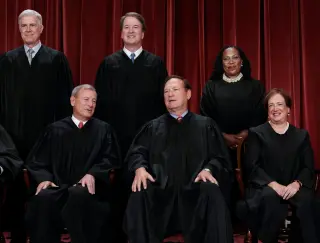
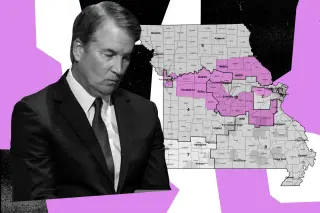
The U.S. Supreme Court issued its third ruling this month blocking a Republican-drawn congressional map in Missouri, preserving the 2022 map for the November 2026 midterms. The unsigned decision invoked the 'Purcell principle' to prevent last-minute changes that would cause voter confusion, as absentee ballots had already been mailed. This ruling clarifies that the principle applies to state court actions, not just federal ones, and ends a legal saga that saw conflicting orders from the 8th Circuit and district courts.
The U.S. Supreme Court has definitively blocked the use of a Republican-drawn congressional map in Missouri for the November 2026 midterms. The Court’s unanimous, unsigned ruling on September 25, 2026, overrode lower federal court orders that had attempted to enforce the new map, which would have shifted the state’s House delegation from a 6-2 Republican majority to 7-1. By invoking the 'Purcell principle,' the justices ruled that changing district lines so close to an election—where absentee ballots are already being mailed—would cause 'electoral chaos.' This marks the third time this month the Supreme Court has intervened to preserve the 2022 map, which includes a Democratic-leaning district in the Kansas City area held by Rep. Emanuel Cleaver. While the decision ends the immediate legal battle, it highlights ongoing tensions between state and federal courts regarding election rules.
The U.S. Supreme Court has definitively blocked Missouri from using a new congressional map drawn in 2025 to favor Republicans in the November 2026 midterms. The Court’s third intervention this month mandates the use of the 2022 map, citing the 'Purcell principle' to prevent electoral chaos after voting has already begun. This decision preserves the current 6-2 Republican-Democratic split in Missouri’s House delegation, specifically protecting the Kansas City-based district held by Democrat Emanuel Cleaver from being absorbed into a more conservative district. While the 2025 map was backed by President Trump and state officials, the Court ruled that changing boundaries now would disenfranchise voters and violate federal deadlines for military ballots.
The U.S. Supreme Court has blocked Missouri from using a new congressional map favoring Republicans for the third time this month, ending a legal dispute that created uncertainty for the November midterm elections. The court ruled that switching maps at this late stage would cause electoral chaos, as absentee voting has already begun. The decision preserves the 2022 map, which includes a Democratic-leaning district, and was a loss for President Trump and Missouri Governor Mike Kehoe, who had pushed for the new boundaries. Challengers, including the group People Not Politicians, celebrated the ruling as a victory for voters over political manipulation.
The US Supreme Court has rejected a third attempt by Missouri Republicans to use a new congressional map for the November 2026 midterms. The court ruled that switching maps now would cause 'electoral chaos' as voting has already begun. Missouri will use the 2022 map, preserving a 6-2 Republican-Democratic split in the House.
The Cook Political Report moved 15 House races toward Democrats, indicating Republicans are likely to lose their majority in November. Democrats need only three net gains to control the chamber, with projections suggesting they will secure 220 to 230 seats. This shift follows a drop in President Trump's approval ratings and economic dissatisfaction, which is hurting Republican incumbents even in districts he won in 2024. While Democrats celebrate the momentum, Republicans argue they retain superior ground games and financial resources. Key battlegrounds include Arizona’s 1st, New Jersey’s 7th, and Ohio’s 7th, where recent controversies and polling shifts have altered the landscape. The outcome remains uncertain but trends toward a slim Democratic majority.
The 8th Circuit Court of Appeals ordered Missouri to use a Republican-favored 2025 congressional map for the November 2026 midterms, directly contradicting a recent Supreme Court stay. This move aims to secure an additional House seat for the GOP but faces immediate legal challenges from referendum backers who argue it violates federal orders and state law.