
Black voter surge in the South defies GOP redistricting and drives historic Democratic wins
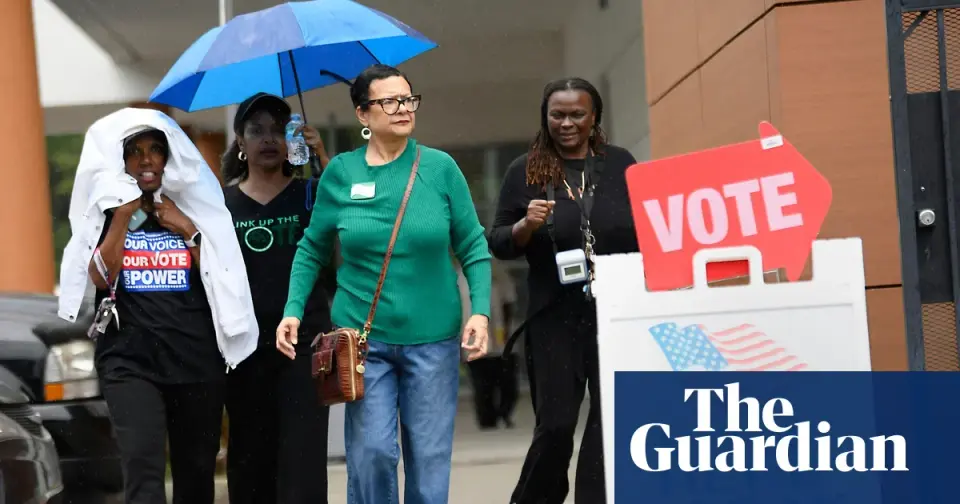
In the 2026 US midterm elections, Black voters in the South turned out at record levels, helping Democrats flip key seats in Alabama, Texas, Florida, and Georgia. This surge occurred despite the Supreme Court’s April ruling in Louisiana v. Callais, which weakened the Voting Rights Act, and subsequent Republican efforts to redraw maps to dilute Black political power. Organizers and politicians described the outcome as a 'Blacklash' against voter suppression, with high early voting and primary participation proving that structural barriers could not stop the momentum of Black voters.
Key points
- Black voter turnout in Alabama increased by 65% overall and 81% in Shomari Figures’s district, helping him win by nearly eight points despite a redrawn map.
- The Supreme Court’s April 2026 decision in Louisiana v. Callais effectively gutted a major provision of the Voting Rights Act, prompting Republican-led redistricting in Alabama, Tennessee, Louisiana, and Texas.
- Democrats flipped or held seats in Alabama, Texas, and Florida, with Keisha Lance Bottoms becoming the first Black woman governor in the US in Georgia.
- Black voters cast more early ballots in Louisiana than in any midterm or gubernatorial election in the past decade, with turnout in primaries exceeding their population share.
- Organizers cited decades of mobilization efforts, including HBCU student marches and church-based outreach, as key factors in overcoming voter suppression and disinformation.
Background
The 2026 midterms followed a period of intense Republican redistricting efforts in the South, aimed at consolidating party power after the Supreme Court’s April 2026 ruling in Louisiana v. Callais, which weakened the Voting Rights Act. Prior to this, Republicans in Texas had already redrawn maps following directives from President Trump. The 2024 elections saw some Black representation gains, such as Shomari Figures’s election in Alabama, but the 2026 results marked a significant shift, with Black voters supporting Democrats at 91 percent, a rate significantly higher than other groups. This surge reversed expectations of declining Black representation and forced a reevaluation of the impact of judicial and legislative actions on electoral maps.
How outlets are covering it
The Guardian emphasized the role of decades-long organizing efforts and the resilience of Black voters in the face of voter suppression, highlighting specific turnout increases in Alabama and Louisiana. The New York Times focused on the strategic mobilization by community networks, including Black churches and HBCUs, and the impact of anger over redistricting and federal program cuts. MS NOW challenged the narrative of Black voter apathy, arguing that the high turnout disproves stereotypes and calls for more attention to voter suppression rather than abstention. Politico framed the surge as a 'Blacklash' driven by anger at Trump’s policies and the Supreme Court’s decision, noting that Black voters were 'fired up' and ready to turn a good night for Democrats into a 'Blue Tsunami.' All sources agreed on the historic nature of the turnout and its impact on Democratic victories, but differed in emphasis: The Guardian and MS NOW focused on the moral and historical significance, while The New York Times and Politico highlighted the strategic and political implications.
Why it matters
The 2026 midterms demonstrate that high Black voter turnout can overcome structural attempts to dilute minority political power, even after the Supreme Court weakened the Voting Rights Act. The results signal a shift in Southern political dynamics, with Democrats flipping key seats in states previously considered safely Republican. This outcome challenges the effectiveness of redistricting as a tool for political consolidation and highlights the importance of community-based mobilization in protecting voting rights. The surge also raises questions about the future of the Voting Rights Act and the potential for further legal challenges to protect Black political power in the South.
What to watch
The 2026 midterms set the stage for ongoing debates about the Voting Rights Act and the future of redistricting in the South. Democrats are likely to push for new legislation to restore protections for Black voters, while Republicans may continue to challenge the Supreme Court’s ruling. The high turnout also suggests that Black voters will remain a key bloc in future elections, potentially influencing national and state-level politics. Organizers and politicians are expected to continue mobilizing efforts to protect representation and combat voter suppression, with a focus on maintaining the momentum seen in the 2026 midterms.
- Black voter turnout surges in US south despite Republican redistricting drive: ‘They could not stop the momentum’ The Guardian
- Black Southerners Voted at Unusually High Levels — and They Voted for Democrats The New York Times
- Opinion | Black voters showed up. It’s time to put the ‘couch’ talk to bed. MS NOW
- The ‘Blacklash’ Is Here Politico
- Black voters deliver a GOP reckoning Axios
Want the full story? Read the original reporting
Read on The Guardian