
Tennessee’s Redrawn 9th District Sparks Record Black Turnout in Memphis Primaries
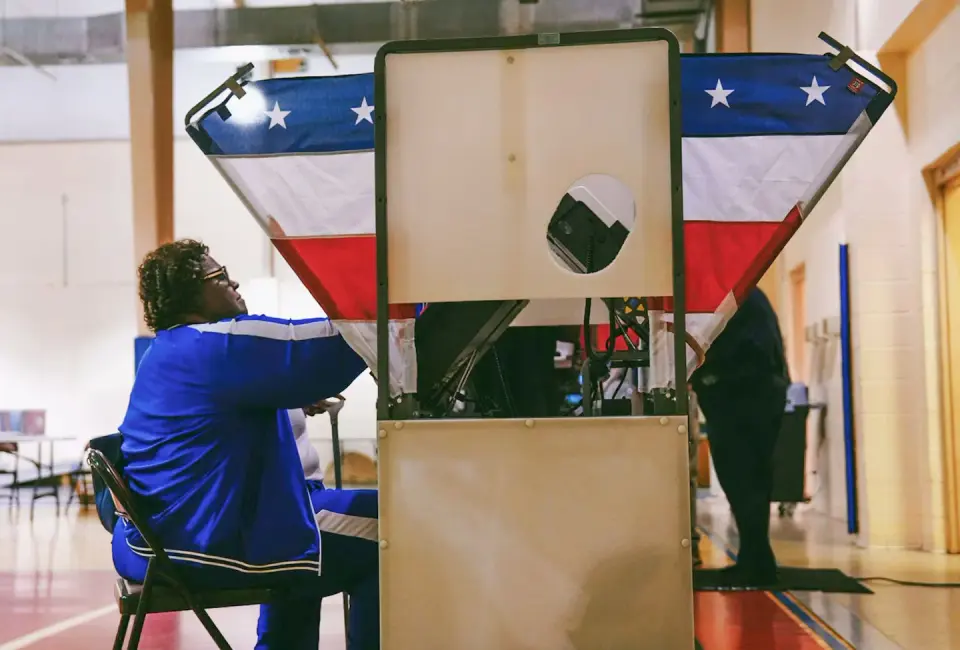
Democratic turnout in Shelby County, Tennessee, surged to a decade-high level during Thursday’s primaries, driven by anger over the state’s dismantling of its only majority-Black congressional district. The Republican-led legislature redrew the map after the Supreme Court weakened Voting Rights Act protections, splitting Memphis voters into three rural-heavy districts. While the new 9th District now tilts heavily Republican, the high turnout signals a potential mobilization for November, though the seat remains a steep uphill battle for Democrats.
Key points
- Turnout in three Democratic House primaries in Shelby County reached 20% of active registered voters, more than double the 2024 rate.
- The new 9th District stretches 200 miles from Memphis to Nashville, with 71% of its voters being new to the area, according to the Associated Press.
- State Rep. Justin Pearson won the Democratic nomination, framing his campaign as a defiance against the erosion of minority voting protections.
- Republican nominee Brent Taylor, endorsed by President Trump, will face Pearson in a district now rated Solid Republican by the Cook Political Report.
- Organizers credit the surge to grassroots efforts, including faith-based rallies and door-to-door canvassing, rather than just the redistricting itself.
Background
This development follows a broader national trend where red states have redrawn congressional maps to secure Republican majorities in the 2026 midterms. Tennessee’s actions occurred after the Supreme Court’s April decision to weaken minority voter protections under the Voting Rights Act. Similar redistricting efforts in Louisiana and Alabama have also diluted Black voting power, though South Carolina and Georgia abandoned similar plans after facing significant voter backlash and protests.
How outlets are covering it
The Washington Post and Al Jazeera emphasize the redistricting as a direct catalyst for the turnout surge, citing anger over the dismantling of the majority-Black district. However, Republican strategist Ward Baker disputes this, arguing the high turnout is simply due to the first contested primary in years and the wide margin of Republican voters. The Daily Memphian focuses on Pearson’s local fame and the logistical efforts of the Shelby County Voter Alliance, while The Guardian highlights the broader national implications for Trump’s plan to maintain House control. All sources agree that the new district’s geographic expansion into rural areas makes the November general election a difficult challenge for Democrats.
Why it matters
The Tennessee primaries serve as a critical test of whether voter mobilization can counteract structural redistricting designed to dilute minority influence. If the high turnout in Shelby County does not translate to November, it may signal the effectiveness of the new maps in securing a clean sweep for Republicans. Conversely, sustained engagement could force Democrats to compete in districts previously considered safe Republican territory, potentially impacting the overall balance of power in the House.
What to watch
Democrats and faith leaders are planning additional 'Souls to the Polls' rallies to maintain momentum for the November general election. The focus will shift from primary enthusiasm to general election turnout, with organizers aiming to double the participation levels seen in the primaries. The outcome of the 9th District race will be a key indicator of the long-term impact of the Supreme Court’s Voting Rights Act decision on minority representation.
- Voter turnout surges in Tennessee after Black-majority district is erased The Washington Post
- Two fighters to face off in 9th District House race WREG.com
- Justin Pearson and Brent Taylor win primaries for key Tennessee House seat The Guardian
- Pearson headed to Democratic District 9 nomination Daily Memphian
- Inside the results: How redistricting shaped Tennessee’s primary election Al Jazeera
Want the full story? Read the original reporting
Read on The Washington Post