
California High Court Skeptical of Sheriff’s Ballot Seizure in Prop 50 Dispute
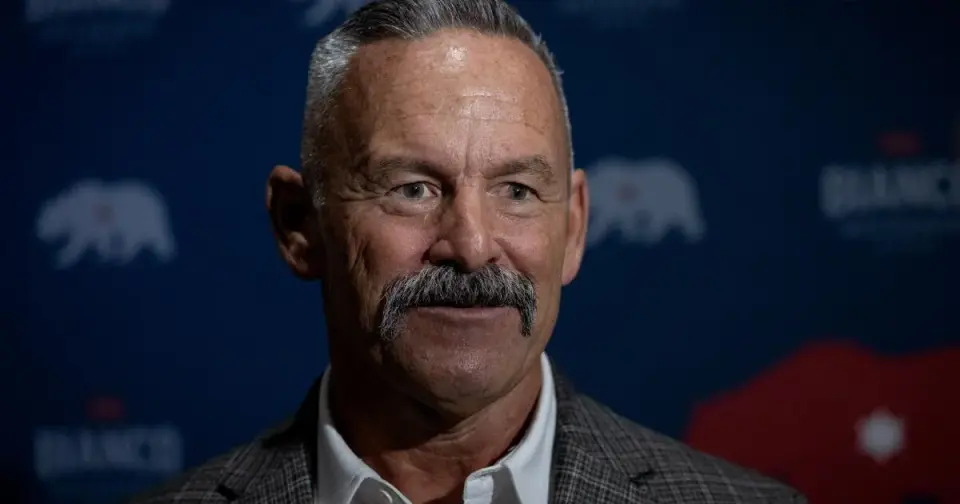
The California Supreme Court appeared poised to order the return of 650,000 ballots seized by Riverside County Sheriff Chad Bianco, rejecting his claim that criminal search warrants override state election laws. Justices questioned the sheriff’s authority to bypass the attorney general’s oversight and criticized the lack of legal basis for the seizure, which stemmed from a debunked 46,000-vote discrepancy in the 2025 Proposition 50 special election.
Key points
- Riverside County Sheriff Chad Bianco seized approximately 650,000 ballots from the November 2025 Proposition 50 special election in February 2026, claiming an investigation into voter fraud.
- The seizure followed a 46,000-vote discrepancy between an informal handwritten tally and the official count, which election officials attributed to a failed pilot program rather than fraud.
- California Attorney General Rob Bonta ordered Bianco to stand down, but the sheriff refused, arguing his criminal search warrant authority superseded state election codes and the AG’s supervisory role.
- The California Supreme Court heard arguments in two cases: one brought by the UCLA Voting Rights Project on behalf of voters, and another by the AG’s office challenging the sheriff’s power.
- Justices expressed skepticism over Bianco’s legal theories, particularly the claim that the AG’s 'direct supervision' of sheriffs is merely advisory, and noted that Bianco did not seek a legal opinion before the seizure.
- Bianco’s attorney admitted that artificial intelligence was used to generate citations in a court filing, leading to the inclusion of false information, which drew sharp criticism from the justices.
Background
This dispute arises from the 2025 Proposition 50 special election, which aimed to redraw California’s congressional districts in response to redistricting efforts in Texas. The measure was approved by Riverside County voters, potentially creating up to five additional Democratic-leaning seats. Bianco, a Republican who placed fourth in the 2026 gubernatorial primary, used the seizure to gain national attention. The case is part of a broader national debate over election security and voting rights, occurring alongside federal moves to restrict mail-in voting and challenges to the Trump administration’s mail ballot overhaul.
How outlets are covering it
The Los Angeles Times and Democracy Docket emphasize the justices’ skepticism and the 'bizarre' nature of Bianco’s legal arguments, particularly the claim that the AG lacks authority to halt a sheriff’s investigation. The AP News and KTVU focus on the procedural aspects, noting the two separate lawsuits and the AG’s order to stand down. All sources agree that the underlying 46,000-vote discrepancy was explained by election officials as a result of a failed pilot program, not fraud. Bianco’s camp, however, maintains that the discrepancy proves criminal wrongdoing and that the seizure was a lawful exercise of criminal search-warrant authority. The UCLA Voting Rights Project and the AG argue that state election laws explicitly prohibit moving ballots and that the AG has direct supervisory power over sheriffs. Bianco’s attorney, Bradley W. Hertz, conceded that the sheriff did not seek a legal opinion before the seizure and that AI-generated citations in a filing were inaccurate, a point highlighted by Democracy Docket as a significant credibility issue.
Why it matters
The ruling will determine whether a county sheriff can use criminal search warrants to seize voted ballots, potentially undermining state election laws and the attorney general’s oversight authority. A decision in favor of returning the ballots could set a precedent limiting law enforcement’s ability to interfere with election materials, while a ruling upholding the seizure could embolden similar actions in future elections. The case also highlights the risks of using AI in legal filings and the tension between local law enforcement and state oversight in election administration.
What to watch
The California Supreme Court is expected to issue a decision in several weeks. If the court rules against Bianco, the ballots will likely be returned to Riverside County Registrar of Voters Art Tinoco. If the ruling is appealed, it could go to the U.S. Supreme Court. The outcome will also influence how the Trump administration’s mail-in ballot overhaul is implemented in California and other states, as the AG’s office has signaled it will continue to challenge federal efforts to restrict mail voting.
- California Supreme Court appears skeptical of sheriff’s authority to seize ballots Los Angeles Times
- California Supreme Court hears arguments over sheriff’s seizure of ballots AP News
- California Supreme Court puzzled by GOP sheriff’s ‘bizarre’ defense for seizing ballots Democracy Docket
- CA Supreme Court considering ballot issue KTVU
- Was sheriff’s seizure of 650,000 ballots legal? California Supreme Court weighs case Sacramento Bee
Want the full story? Read the original reporting
Read on Los Angeles Times