
California voters reject billionaire wealth tax in costly 2026 election
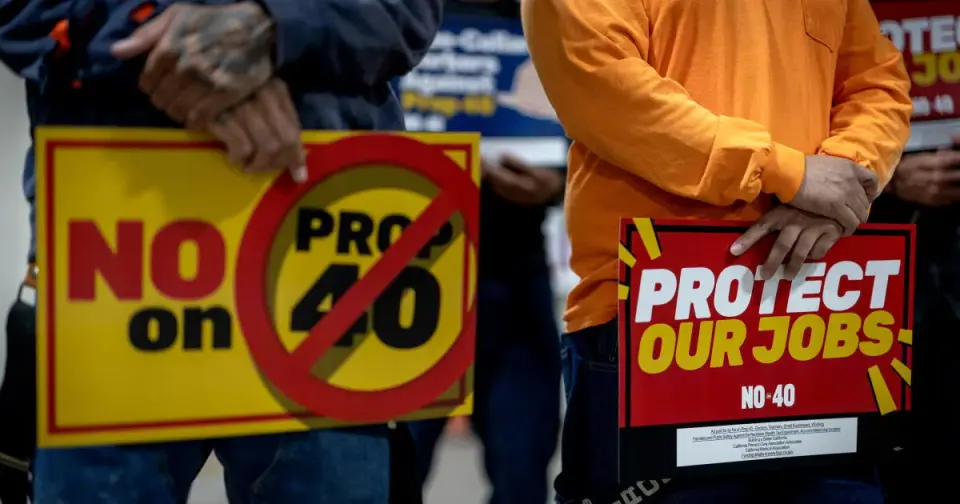
California voters have officially rejected Proposition 40, a proposed one-time 5% tax on billionaires, with approximately 53% voting against the measure. The defeat follows a record-breaking campaign that cost over $400 million, with opponents vastly outspending supporters. While the tax aimed to offset federal healthcare cuts, critics argued it would trigger capital flight. Union leaders vow to reintroduce the proposal in 2028, and national debates on wealth taxation continue.
Key points
- Proposition 40 failed with 53% of voters rejecting the one-time 5% tax on California billionaires, according to the Associated Press.
- The campaign was the most expensive in California history, with over $400 million spent, 90% of which opposed the measure.
- Google co-founder Sergey Brin was the largest individual donor to the opposition, contributing at least $132 million.
- The tax was designed to raise $100 billion to offset federal healthcare funding cuts, with 90% of proceeds going to healthcare.
- SEIU-UHW West pledged to place a similar billionaire tax on the 2028 ballot if state leaders do not address healthcare funding.
- Opponents, including Governor Gavin Newsom and Planned Parenthood, feared the tax would cause billionaires to leave the state and reduce revenue.
Background
Prior coverage indicated Proposition 40 was trailing by a wide margin in early results, with some analysts suggesting the threat of the tax had already caused capital flight that might cost the state more in lost income tax revenue than the measure would have generated. Earlier reports also highlighted that California's billionaires are more likely to be registered Democrats or independents, complicating the political narrative around the vote.
How outlets are covering it
The Los Angeles Times and BBC reported the official rejection, noting that while the measure failed statewide, it found support in Los Angeles and San Francisco. The Guardian emphasized the 'poison pill' strategy of Propositions 41 and 42, which would have blocked the tax even if it passed. Business Insider framed the defeat as a victory for free enterprise but noted that 46% support suggests the debate on wealth taxation is not over. Opponents, including the California Medical Association, called the tax a 'reckless experiment,' while supporters, including SEIU-UHW, argued that 'billionaire-funded propaganda' influenced the outcome. Newsom opposed the state-level tax but advocated for a federal wealth tax, a position supported by some critics of Prop 40's specific structure.
Why it matters
The rejection of Proposition 40 leaves California without a new revenue source to offset an estimated $100 billion in federal healthcare funding cuts. The outcome may influence national conversations on wealth taxation, with figures like Bernie Sanders and Ro Khanna pushing for a federal 5% tax on billionaires. The massive spending disparity and the potential for capital flight highlight the complex relationship between state fiscal policy and the ultra-wealthy, with implications for future state and federal tax debates.
What to watch
SEIU-UHW West has vowed to place a billionaire tax proposal on the 2028 ballot if Sacramento does not find alternative ways to support the public health sector. National efforts to pass a federal wealth tax, such as the 'Make Billionaires Pay Their Fair Share Act,' may face constitutional challenges. The debate over wealth taxation is expected to become a key issue for 2028 presidential candidates, with some strategists suggesting a plan for taxing the ultra-rich will be a prerequisite for dominant candidates.
- Billionaire tax rejected on concern squeezing California's ultra-rich would harm the economy Los Angeles Times
- California Voters Reject Prop. 40 Billionaire Tax Measure The New York Times
- California voters fail to pass proposed one-time tax on billionaires’ wealth The Guardian
- Californians reject wealth tax for billionaires BBC
- Silicon Valley's billionaires won the tax battle. The war on wealth is just beginning. Business Insider
Want the full story? Read the original reporting
Read on Los Angeles Times