
CBP Chief Defends Big Bend Wall Amid Supreme Court Fight
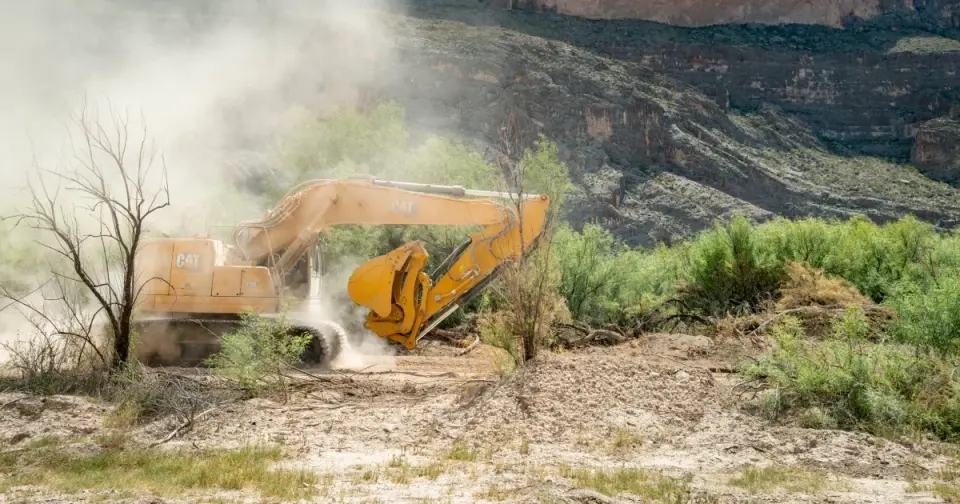
Customs and Border Protection Commissioner Rodney Scott defended the $46 billion border wall project, calling border fortification 'non-negotiable' despite a federal court pause in Texas's Big Bend region. The administration has asked the Supreme Court to overturn the injunction, arguing that halting construction would create a 300-mile gap exploitable by cartels. Scott claims the agency is ahead of schedule, aiming to complete primary barriers by December 2027, while acknowledging that tall steel walls will not be built inside Big Bend National Park due to ongoing legal challenges.
Key points
- Scott stated that leaving Big Bend without infrastructure while fortifying other areas would result in the region being 'completely overrun.'
- The administration claims it is constructing approximately 12 miles of barrier per week and is ahead of schedule for a December 2027 completion of the primary wall.
- A federal judge previously halted construction in the region, citing potential irreparable harm and voiding environmental waivers, a decision the administration labeled 'baseless.'
- Opponents, including a bipartisan coalition of landowners and environmentalists, argue the project is a waste of taxpayer money in an area with historically low migrant crossings.
- Scott confirmed that while tall steel walls are excluded from Big Bend National Park due to lawsuits, the agency is engaging with locals to find alternative construction solutions.
Background
This dispute follows a September 2026 lawsuit by Texas landowners and environmental groups, who argued the Big Bend sector accounts for only 1.3% of border apprehensions. In early October, Judge Kathleen Cardone issued a preliminary injunction blocking the $7.5 billion expansion, voiding federal waivers that bypassed environmental laws. The current Supreme Court petition represents the latest escalation in a conflict that began with local protests and legal challenges over property rights and environmental damage.
How outlets are covering it
NBC News and The Guardian highlight Scott's defensive stance, emphasizing his assertion that the project is justified despite bipartisan opposition and environmental concerns. The New York Times focuses on the legal strategy, noting Solicitor General D. John Sauer's characterization of the lower court's decision as 'baseless' and the risk of a 300-mile security gap. SCOTUSblog provides the procedural context, confirming the administration's request to the Supreme Court's interim docket to resume construction. While all sources agree on the existence of the court-ordered pause, they differ in emphasis: The New York Times and SCOTUSblog focus on the legal mechanics and the Supreme Court's potential intervention, whereas NBC News and The Guardian center on the political and operational arguments made by CBP leadership.
Why it matters
The outcome of this legal battle will determine whether the Trump administration can proceed with its signature border infrastructure project in a sensitive national park. It tests the limits of executive power regarding environmental waivers and property rights, with implications for the broader $46 billion border wall initiative and the administration's ability to override judicial injunctions in other regions.
What to watch
The Supreme Court will review the administration's emergency application to lift the injunction. If granted, construction could resume in the Big Bend region, potentially leading to further legal challenges from local landowners and environmental groups. Scott has indicated that the agency will continue outreach to locals to determine how to build infrastructure without damaging the national park, though no specific timeline for these discussions has been provided.
- Trump’s border chief defends planned wall in Texas’ Big Bend despite court-ordered pause NBC News
- Trump Administration Asks Supreme Court to Allow Border Wall Construction The New York Times
- Trump’s top border official defends Big Bend border wall plan despite mounting opposition The Guardian
- Border wall dispute arrives on interim docket SCOTUSblog
- Trump administration asks Supreme Court to lift halt on Big Bend border wall AP News
Want the full story? Read the original reporting
Read on NBC News