
One Year After D.C. Takeover: Data Shows Crime Dropped, But Cost and Impact Remain Debated
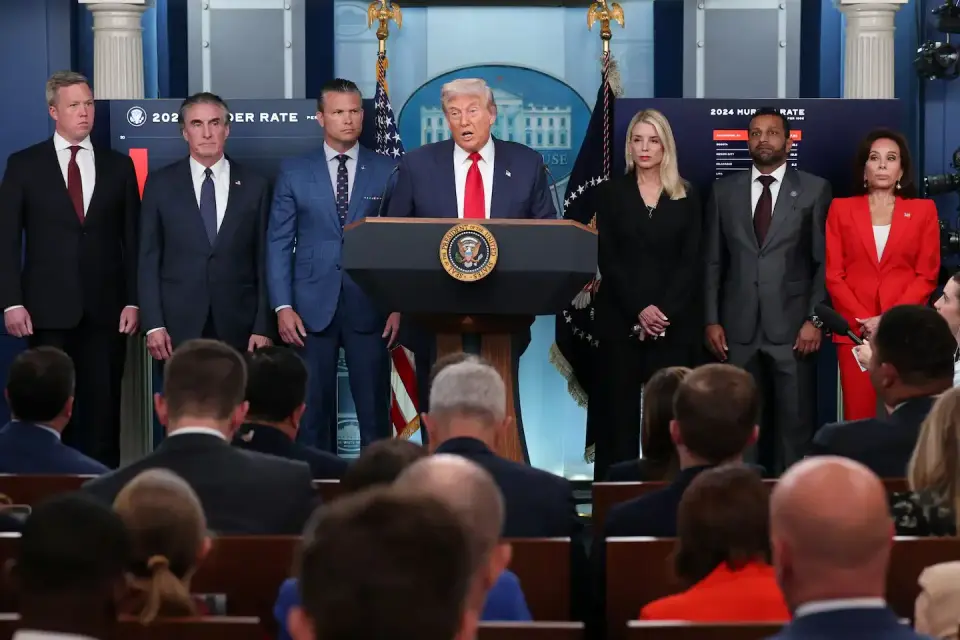
One year after President Trump deployed federal forces to Washington, D.C., to combat crime, the situation remains complex. While crime rates have fallen, a Washington Post analysis suggests these declines predate the intervention. The deployment, now involving roughly 4,000 National Guard troops, is projected to cost $1.4 billion through 2029. Critics argue the military presence is ineffective and strains local resources, while supporters cite the drop in violent crime.
Key points
- The Washington Post analysis of arrest records indicates that federal partnerships accounted for only 30% of arrests, and crime trends were already declining before the deployment.
- The National Guard presence in D.C. has shrunk from a peak of 5,000 troops to approximately 4,000, but is expected to remain through the end of Trump's term.
- The deployment is projected to cost an additional $1.4 billion through 2029, with a new $292 million contract to move troops into apartments to save costs.
- Critics, including Senator Chris Coons, argue that funding local police would be more effective than deploying untrained military personnel.
- Two National Guard members were killed or critically wounded in an attack near the White House in November 2025, highlighting the risks of the deployment.
Background
This story follows the August 2025 deployment of federal law enforcement and National Guard troops to Washington, D.C., initiated by President Trump following a violent incident. The deployment, dubbed 'Make DC Safe and Beautiful,' was part of a broader federal push to address crime in major cities, though similar efforts in Los Angeles and Chicago faced legal challenges and were eventually withdrawn. The current situation in D.C. is unique due to the federal government's broader authority over the district.
How outlets are covering it
The Washington Post emphasizes that while crime has dropped, the decline was already underway before the federal intervention, and the administration's claims of 'no crime' are overstated. ABC News highlights the unprecedented scale and cost of the deployment, noting that the National Guard is being used for domestic policing despite being trained for overseas conflicts. The New York Times frames the deployment as a significant encroachment on D.C.'s self-government, questioning its effectiveness and the long-term implications for the city. All three sources agree that the deployment has been expensive and controversial, but they differ on the degree to which it has contributed to the reduction in crime.
Why it matters
The D.C. deployment represents a significant shift in the use of military forces for domestic law enforcement, raising questions about the effectiveness, cost, and constitutional implications of such actions. The ongoing debate over the deployment's impact on crime rates and its financial burden on the federal budget has broader implications for how the federal government interacts with local jurisdictions and the role of the National Guard in domestic affairs.
What to watch
The National Guard presence in D.C. is expected to continue through the end of Trump's term, with the force potentially expanding into areas with higher crime rates. The administration is likely to seek further funding to sustain the deployment, while critics may continue to challenge its legality and effectiveness. The outcome of the trial for the suspect in the November 2025 attack on National Guard members may also influence public opinion and policy regarding the deployment.
- A year after D.C. takeover, Trump says crime has plummeted. It’s not that simple. The Washington Post
- A year into Trump’s unprecedented deployment, National Guard is entrenched in DC ABC News - Breaking News, Latest News and Videos
- Armed troops have patrolled D.C. for 1 year now. It's challenging democratic norms NPR
- Trump administration touts more than 16,000 arrests as the federal surge in DC reaches its first year WUSA9
- One Year Later, Trump’s ‘Takeover’ Has Changed D.C. Is It Better Off? The New York Times
Want the full story? Read the original reporting
Read on The Washington Post