
DOJ Attorney General Blanche refuses to rule out federal intervention in state election certification
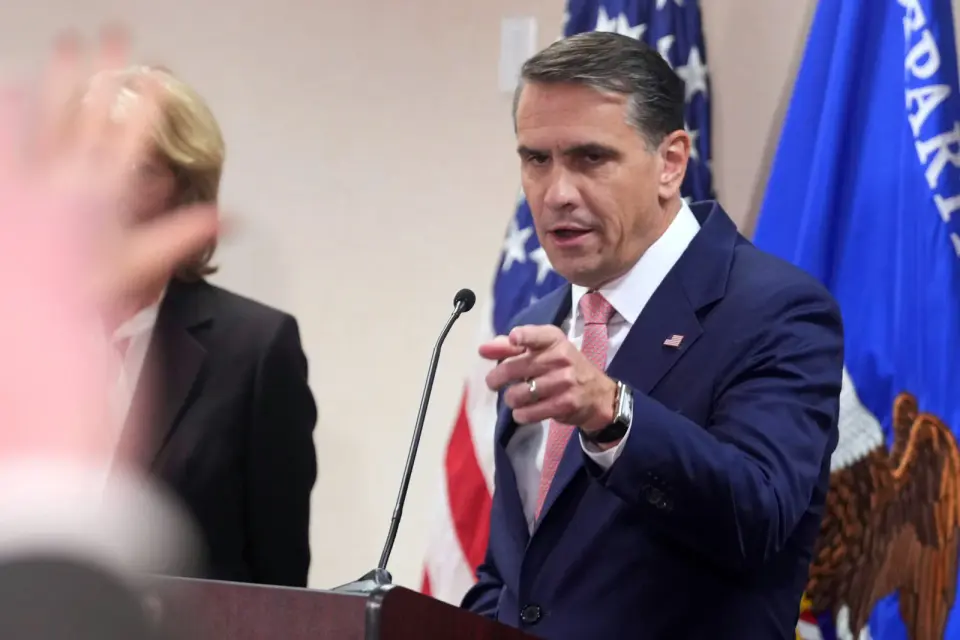
U.S. Attorney General Todd Blanche stated on October 22 that the Department of Justice (DOJ) has not ruled out intervening in state election certification processes for the 2026 midterms. While asserting that improper interference is not the department's intention, Blanche acknowledged potential 'doomsday scenarios' that could trigger federal action. This statement follows a recent legal battle with California, where the DOJ sued to block the counting of ballots from 20,000 alleged noncitizens. The DOJ is currently weighing similar litigation against other states with all-mail voting systems, including Colorado, Hawaii, Nevada, Oregon, Utah, Vermont, and Washington, despite constitutional limits on federal election authority.
Key points
- Attorney General Todd Blanche confirmed the DOJ is examining a 'number of states' for potential lawsuits similar to its recent action against California.
- Blanche refused to rule out federal intervention in the state certification process, citing hypothetical 'doomsday scenarios,' though he denied planning to block elections.
- The DOJ previously sued California and Los Angeles County to halt the counting of ballots from 20,000 individuals alleged to be noncitizens, a move California called 'absurd.'
- Federal law enforcement arrested 11 people and charged 28 individuals from the alleged noncitizen list, which was compiled from unverified sources.
- A federal judge in California blocked certain DOJ field operations in nine states, citing fears of voter intimidation and suppression ahead of the midterms.
- The DOJ's role in elections is constitutionally limited to safeguarding civil rights and prosecuting violations, with no authority to challenge ballots or delay certification.
Background
This development follows a series of escalating legal conflicts between the Trump administration and state election officials in late 2026. In October, the DOJ targeted California's voter rolls, threatening criminal charges against election workers and suing to block ballot processing. These actions were part of a broader 'Unlawful Voter Initiative' that linked anti-immigration efforts to election integrity, leading to door-to-door investigations and data collection from right-wing activists. Previous archive coverage noted that the administration had also faced legal challenges regarding voter registration backlogs in Texas and the use of the 'Anti-Weaponization Fund,' highlighting a pattern of federal-state tensions over election administration and data integrity.
How outlets are covering it
Outlets diverge significantly in their framing of Attorney General Blanche's statements. Democracy Docket and The Independent emphasize the unprecedented nature of the DOJ's actions, describing the California lawsuit as an 'assault' on the election system and noting that the DOJ's role is strictly limited by law. They highlight the legal risks and the potential for disenfranchisement. NBC News and Fox News present a more neutral stance, reporting Blanche's refusal to rule out intervention while noting his insistence that the DOJ does not intend to 'improperly interfere.' Fox News frames the situation as a response to potential 'doomsday scenarios' and emphasizes the DOJ's goal of ensuring only eligible citizens vote. All sources agree that the DOJ is weighing litigation against other all-mail voting states, but they differ on the legitimacy and legality of such actions, with Democrats and voting rights groups characterizing the moves as intimidation and unconstitutional overreach.
Why it matters
The potential for federal intervention in state election certification poses a significant threat to the integrity and legitimacy of the 2026 midterm elections. If the DOJ were to successfully block or delay certification in multiple states, it could undermine public confidence in the electoral process and lead to widespread disputes over the results. The constitutional limits on federal election authority mean that any such intervention would likely face intense legal challenges, but the mere threat of such action could chill voter turnout and create a climate of uncertainty. This situation highlights the growing polarization over election integrity and the role of federal agencies in state-administered elections, with potential implications for future democratic processes and the balance of power between federal and state governments.
What to watch
The DOJ is expected to continue its legal strategy, potentially filing additional lawsuits against states with all-mail voting systems, including Colorado, Hawaii, Nevada, Oregon, Utah, Vermont, and Washington. The administration may also appeal the federal judge's order blocking certain field operations in nine states. Democrats and voting rights groups are preparing legal countermeasures, with Senate Minority Leader Chuck Schumer stating that Democrats are 'ready' for whatever the administration attempts. The outcome of the California lawsuit and any subsequent cases will be critical in determining the scope of federal intervention and the legal precedents set for future elections. The situation will likely remain a focal point of political and legal debate in the lead-up to the November 3 midterms.
- Blanche threatens ‘a number of states’ with California-style voting lawsuits Democracy Docket
- Blanche won’t rule out DOJ post-election action in a ‘doomsday’ scenario NBC News
- Blanche won't rule out DOJ blocking election certification in 'doomsday' scenario Fox News
- Todd Blanche won’t rule out DOJ action to stall midterm election results The Independent
- Blanche Says More States Could Face DOJ Suits Over Elections Bloomberg.com
Want the full story? Read the original reporting
Read on Democracy Docket