
DOJ invokes executive privilege to shield Trump’s Kennedy Center decisions from congressional scrutiny
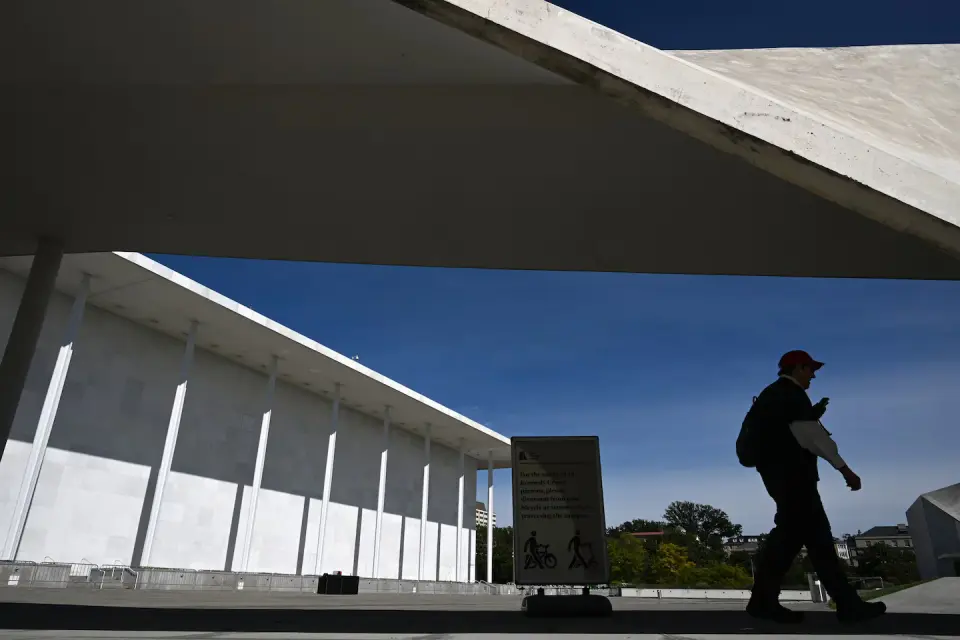
The Justice Department is using executive privilege to block testimony about President Trump’s involvement in the Kennedy Center’s closure and renovation plans, a move legal experts call unprecedented. While the National Symphony Orchestra continues to rehearse in the shuttered building, the administration argues the center is structurally unsafe, creating a stark contradiction between official claims and ongoing operations.
Key points
- DOJ attorney William Jankowski instructed Kennedy Center executive director Matt Floca not to answer questions about communications with Trump and Commerce Secretary Howard Lutnick during depositions, citing presidential communications privilege.
- Rep. Joyce Beatty (D-Ohio) is suing the Trump-controlled Kennedy Center board over decisions to close the complex for renovations and potential demolition.
- Legal scholars, including Jonathan Shaub and Mark Rozell, argue that executive privilege does not apply to a president’s actions in a separate institutional role, calling the claim without historical precedent.
- The National Symphony Orchestra continues to hold weekly rehearsals in the Kennedy Center’s main concert hall, despite Trump’s recent statements that the building is a 'great danger' and in a 'virtual state of collapse.'
- The case has stalled the discovery phase, though a judge recently ordered the center to turn over additional financial records while allowing more time to resolve the privilege dispute.
Background
This dispute follows earlier filings in August 2026 where DOJ lawyers warned that the Kennedy Center was financially unsustainable without presidential intervention, even suggesting an outdoor amphitheater if the building had to be torn down. The current legal fight centers on whether presidential secrecy protections extend to Trump’s role as chairman of an arts organization that operates outside the executive branch, despite receiving federal funding.
How outlets are covering it
The Washington Post and The New York Times highlight the contradiction between the administration’s safety claims and the National Symphony Orchestra’s continued rehearsals. The Post emphasizes the legal novelty of the privilege claim, while the NYT focuses on the physical reality of musicians practicing in a building described as 'deadly.' The Independent mirrors the NYT’s focus on the safety paradox. Legal experts cited by the Post, such as Jonathan Shaub and Mark Rozell, criticize the DOJ’s stance as an attempt to 'gerrymander' privilege, noting that the protection generally applies only to official presidential duties, not separate institutional roles.
Why it matters
This case tests the boundaries of executive privilege, potentially setting a precedent for whether presidents can shield communications from congressional oversight when acting in non-executive capacities. It also raises questions about the transparency of federally funded institutions controlled by political allies and the safety standards applied to public venues.
What to watch
The judge has granted the Kennedy Center additional time to respond to the executive privilege claims, though he has already ordered the release of more financial information. The outcome will determine whether Beatty’s lawsuit can proceed with full discovery or if the administration’s secrecy protections will limit congressional oversight of the center’s operations.
- Kennedy Center doesn’t have to answer questions about Trump’s role, DOJ asserts The Washington Post
- Judge orders to Kennedy Center to turn over financial records as DOJ fights to keep Trump’s role secret Yahoo
- If the Kennedy Center Is ‘Dangerous,’ Why Is the Symphony Rehearsing There? The New York Times
- Trump says the Kennedy Center is ‘a great danger.’ Don’t tell the National Symphony Orchestra The Independent
- Kennedy Center closure report must be unsealed, judge rules All Rise News
Want the full story? Read the original reporting
Read on The Washington Post