
DOJ leadership exodus follows midterm losses as 'grand conspiracy' probe chief resigns
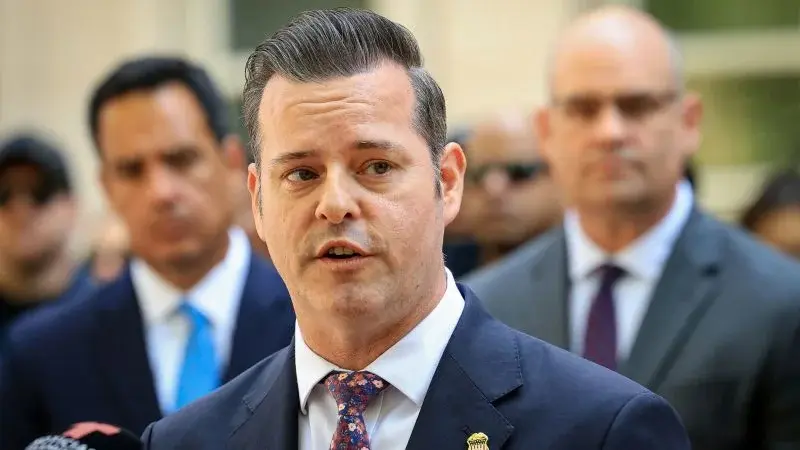
Three senior Justice Department officials, including U.S. Attorney Jason Reding Quiñones, resigned within days of the 2026 midterm elections. Quiñones, who led the controversial 'grand conspiracy' investigation into former officials who probed President Trump, stepped down after failing to deliver on promised indictments. His departure follows the resignations of National Security Division chief John Eisenberg and Civil Rights Division head Harmeet Dhillon, signaling a major leadership shakeup in the administration's legal team following Republican electoral losses.
Key points
- Jason Reding Quiñones, U.S. Attorney for the Southern District of Florida, resigned from the Justice Department on Friday, November 6, 2026.
- Quiñones led the 'grand conspiracy' investigation targeting former government officials involved in probes of President Trump from 2016 to 2024, but no charges were ever filed in that case.
- Attorney General Todd Blanche announced Quiñones's departure, citing his work on violent crime, drug trafficking, and the indictment of former Cuban President Raúl Castro, while omitting mention of the 'grand conspiracy' probe.
- John Eisenberg, head of the National Security Division, and Harmeet Dhillon, head of the Civil Rights Division, also resigned in the same week, marking a significant leadership turnover.
- The resignations followed Republican losses in the 2026 midterm elections, with some officials expected to return to private law firm jobs while others faced pressure from department leadership over unmet promises.
- Democrats, now poised to control oversight, are expected to investigate the actions of Quiñones and Dhillon, though the administration may appoint acting leaders to fill vacancies due to a Democratic Senate.
Background
The 'grand conspiracy' investigation had faced prior instability, including the resignation of prosecutor Joseph diGenova in September 2026 and former White House official Kurt Olsen in the same month. The probe, which sought to tie actions dating back to the 2016 campaign to more recent investigations, had not resulted in any criminal charges. Quiñones's tenure was marked by high-profile promises to bring cases within months, which failed to materialize, leading to tensions with department leadership.
How outlets are covering it
CNN emphasized that Quiñones was pushed out under pressure from department leadership despite his willingness to pursue controversial investigations, noting that his frequent travel to Washington and failure to deliver on promised cases led to his dismissal. The New York Times highlighted the 'grand conspiracy' inquiry as a centerpiece of Trump's retribution campaign, noting that Quiñones's office had more than 200 lawyers when he arrived but fell to slightly more than half that number by fall 2026 due to firings and resignations. NBC News focused on the lack of success in the 'grand conspiracy' probe, noting that no charges had been brought directly in connection with the effort, and quoted former Justice Department lawyer Stacey Young, who called Quiñones a 'Don Quixote' for tilting at the windmill of the so-called grand conspiracy. All three outlets agreed that the resignations were linked to the midterm losses and the anticipated Democratic oversight, but differed in emphasis: CNN focused on internal pressure, The New York Times on staffing reductions, and NBC News on the probe's lack of results.
Why it matters
The resignations signal a significant shift in the Justice Department's leadership and strategy following Republican midterm losses. The departure of Quiñones, who led the 'grand conspiracy' investigation, marks the end of a controversial effort to prosecute former officials who probed President Trump. The shakeup may impact the administration's ability to pursue other high-profile cases and could lead to increased Democratic scrutiny of the department's actions. The resignations also raise questions about the future of the 'grand conspiracy' probe and other controversial investigations, as the administration may struggle to confirm new officials with a Democratic Senate.
What to watch
The administration is expected to appoint acting leaders to fill the vacancies left by Quiñones, Eisenberg, and Dhillon, as confirming new officials may be difficult with a Democratic Senate. Democrats are likely to launch investigations into the actions of Quiñones and Dhillon, particularly regarding the 'grand conspiracy' probe and other controversial cases. The Justice Department may face further leadership turnover as some officials return to private law firm jobs, while the administration seeks to restore control over the department and pursue its legal agenda for the remainder of Trump's term.
- Three Justice Department officials, including man behind Trump’s ‘grand conspiracy’ probe, resign since brutal midterm losses CNN
- U.S. Attorney Who Oversaw Centerpiece of Trump’s Revenge Campaign Resigns The New York Times
- DOJ National Security, Conspiracy Probe Leaders Step Down Bloomberg.com
- Trump DOJ appointee who led ‘grand conspiracy’ probe of Trump foes resigns NBC News
- Top US official, involved in crack down on anti-Israel campus protests, among wave of Justice Department resignations The Times of Israel
Want the full story? Read the original reporting
Read on CNN