
DOJ Seeks to Segregate Alaska Ballots in Probe of 'Dan Sullivan' Voter Confusion Scheme
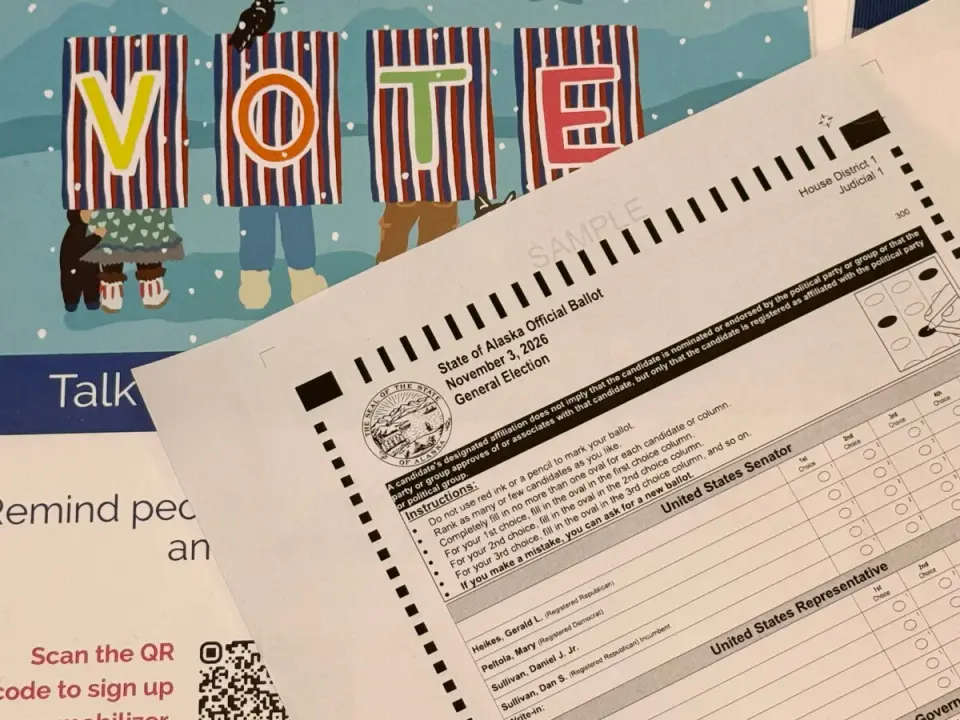
The Justice Department has filed a request to isolate and preserve all ballots ranking candidate Dan J. Sullivan in the Alaska Senate race, citing a 'substantial risk' that the name similarity with incumbent Dan S. Sullivan will mislead voters. Assistant U.S. Attorney Bryan Wilson stated the move is to investigate potential voter confusion, while Alaska state attorneys argue existing ballot distinctions and ranked-choice voting mitigate the issue. This legal action follows a New York Times report alleging Democratic candidate Mary Peltola’s campaign recruited the namesake candidate, a claim Peltola denies. Simultaneously, the DOJ warned state election officials that failing to retain records for 22 months is a federal crime, and a federal appeals court rejected a DOJ demand to set aside disputed ballots in California. These developments occur amid a sharp sell-off in tech stocks and a surge in early voting nationwide.
Key points
- Alaska Assistant U.S. Attorney Bryan Wilson filed a request on Friday to segregate all ballots ranking Dan J. Sullivan to investigate whether the ranking resulted from voter confusion.
- The Justice Department asserts a 'substantial risk' that the candidacy of Dan J. Sullivan will mislead voters and compromise electoral integrity, seeking to preserve records for potential criminal investigation.
- Alaska state attorneys countered that election officials already took steps to distinguish the two candidates on the ballot and that the state's ranked-choice voting system addresses confusion concerns.
- The New York Times reported that Mary Peltola’s campaign appeared involved in recruiting Dan J. Sullivan, though Peltola denied knowledge of any such effort.
- The DOJ sent letters to all 50 states warning that failing to retain election records for 22 months is a federal crime, a move critics described as an attempt to intimidate state officials.
- A federal appeals court rejected the DOJ’s request for California to set aside disputed ballots, ruling that segregating specific ballots without feasible identification would have catastrophic effects on the election system.
Background
This escalation follows earlier reports that the DOJ issued 40 subpoenas and amended a civil lawsuit in the Alaska race, alleging a conspiracy to confuse voters. Governor Mike Dunleavy had also ordered a state criminal investigation into Peltola’s campaign. The controversy centers on whether the presence of a second candidate with the incumbent's name constitutes a lawful ballot strategy or an illegal attempt to siphon votes, a debate that has intensified ahead of the November 3 midterm elections.
Why it matters
The outcome of the Alaska Senate race could determine control of the U.S. Senate, making the integrity of the vote critical. The DOJ’s unprecedented move to segregate ballots and its warnings to state officials highlight the federal government’s aggressive stance on election administration, potentially setting a precedent for future disputes. Simultaneously, the rejection of the DOJ’s demand in California signals judicial resistance to federal interference in state-run elections, reflecting a broader tension over the boundaries of federal power in the 2026 midterms.
What to watch
The Justice Department is expected to continue its criminal investigation into the alleged scheme, potentially leading to charges if evidence of voter deception is found. The Alaska state investigation and federal litigation will likely proceed through Election Day, with results potentially delayed if legal challenges are not resolved. The DOJ’s warnings to state officials may lead to increased scrutiny of record-keeping practices across the country, while the California ruling may prompt further legal battles over ballot verification in other states.
Want the full story? Read the original reporting
Read on AP News