
Early Vote Data Shows Democratic Surge in Key Midterm Battlegrounds
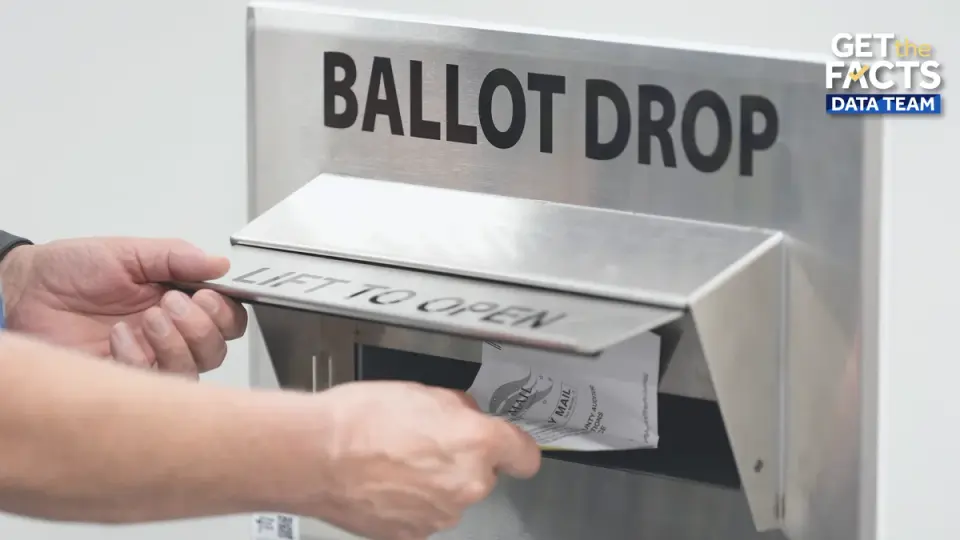
With 15 days remaining until the November 3, 2026, midterm elections, early voting has reached 9.5 million ballots nationwide. While total mail-in ballots requested exceed 55 million, data from Iowa and North Carolina indicates a significant Democratic advantage in early in-person turnout, contrasting with lower Republican participation rates compared to previous cycles.
Key points
- Nationally, 9,549,628 mail-in and early in-person votes have been cast, with 55,383,560 mail-in ballots requested or sent, according to NBC News.
- In North Carolina, early in-person turnout saw a 47% increase compared to the first day of the 2022 midterms, with registered Democrats outvoting Republicans by nearly 28 points.
- Iowa data shows a 23-point Democratic edge over Republicans in early voting, up from a 3-point advantage in 2024, with Democratic turnout at 85% of 2024 levels versus 52% for Republicans.
- The University of Florida Election Lab tracks early voting data since 2008, noting that 31 states plus Washington, D.C., allow voters to register under a party affiliation, which helps analyze partisan trends.
- CNN reports that while initial Democratic advantages in states like Ohio and Virginia have narrowed over time, they continue to outpace 2024 differentials on a day-to-day basis.
Background
This surge in early voting follows President Trump's October 4, 2026, appeal to his base to vote early, a shift from his previous opposition to mail-in ballots. The current data contrasts with the 2024 cycle, where early voting dynamics were different, and highlights the impact of party registration data in states like Iowa and North Carolina for tracking partisan motivation.
How outlets are covering it
NBC News and WYFF emphasize the scale of early voting, with NBC highlighting the 9.5 million votes cast and 55 million mail-in ballots requested. CNN focuses on the partisan disparity, noting that Democrats are more motivated to vote early than Republicans in key states like Iowa and North Carolina. WYFF notes that not all states have opened early voting yet, while CNN points out that initial Democratic advantages in some states have narrowed over time but remain higher than in 2024.
Why it matters
The early voting data provides critical insights into voter motivation and partisan engagement ahead of the 2026 midterms. The significant Democratic advantage in early in-person voting in states like Iowa and North Carolina could influence the outcome of competitive Senate races and the overall balance of power in Congress. Understanding these trends helps predict the final election results and the political landscape for the next two years.
What to watch
With 15 days remaining until Election Day, the focus will shift to the final push for voter turnout, particularly among Republicans, who have shown lower early voting rates. Campaigns will likely intensify efforts to mobilize their bases, and the data from early voting will be closely monitored for any shifts in partisan advantage. The outcome of the midterms will determine the balance of power in Congress and influence the political agenda for the next two years.
- 2026 Midterm Elections: Early voting tracking map by state, party WYFF
- Tracking the 2026 Early Vote: Midterm Elections NBC News
- Early voting surges across key battleground states ahead of midterms NewsNation
- Map Shows When Early Voting Starts in Each State for Midterm Elections Newsweek
- Early voting data shows signs of Democratic advantage in two states CNN
Want the full story? Read the original reporting
Read on WYFF