
Early Vote Surges to 43 Million as Democrats Lead in Key Battlegrounds
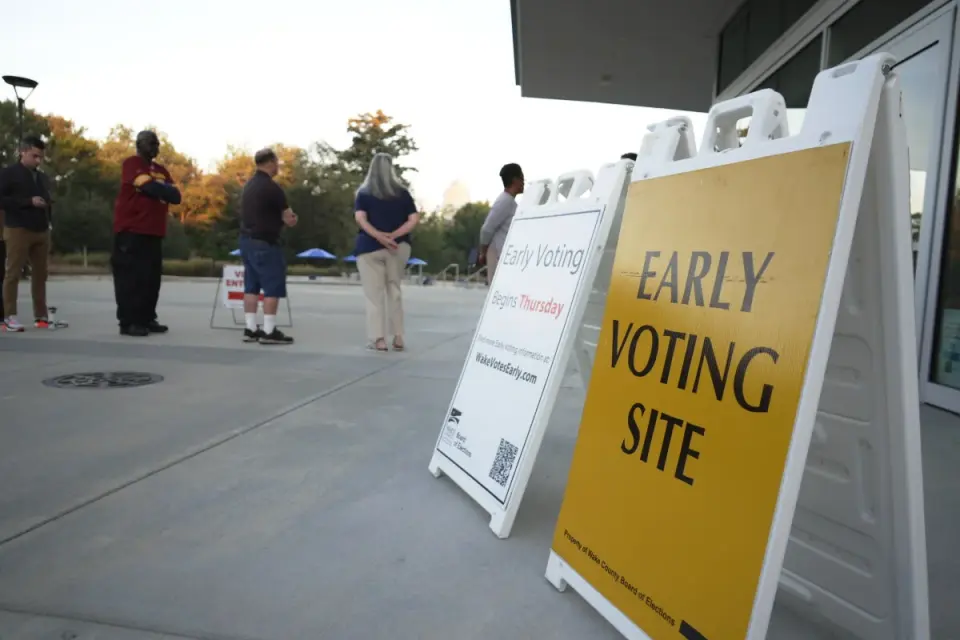
More than 43 million Americans have cast early ballots for the 2026 midterms, significantly outpacing 2022 levels. Turnout is particularly high in competitive Senate states like Texas, where 6.3 million voters have participated. Democrats currently lead early voting shares in key battlegrounds, though analysts caution that final results remain uncertain.
Key points
- National early vote totals exceed 43 million, nearly 10 million more than at the same point in 2022.
- Texas leads with over 6.3 million early votes, a 50% increase from 2022, driven by competitive Senate and governor races.
- Democrats hold a 45% share of early votes in states tracking party affiliation, compared to 31% for Republicans.
- Turnout is surging among Hispanic, Black, and unaffiliated voters, particularly in border counties in Texas.
- Many states are seeing a shift from mail ballots to in-person early voting, potentially due to concerns about postal service disruptions.
Background
This surge occurs two years into President Donald Trump’s second term, with Republicans currently holding both chambers of Congress. The 2026 midterms are critical for determining control of Congress and key state offices. Previous cycles saw record turnout in 2018, but 2026 early voting numbers are already approaching or exceeding those levels in several states.
How outlets are covering it
AP News emphasizes the sheer volume of early votes and the 50% increase in Texas, highlighting the competitive nature of Senate races. BBC focuses on the demographic breakdown, noting that Hispanic and Black communities are driving much of the surge, while white voter turnout remains on par with 2022. ABC News provides a deeper analysis of voter habits, showing that Democrats are outperforming Republicans among less frequent voters in Texas and Georgia, a shift from 2022. Axios highlights the 'referendum on Trump' theory, suggesting that unaffiliated and minority voters are turning out in record numbers, while also noting that MIT’s Charles Stewart is more cautious, suggesting the surge may simply reflect a shift away from Election Day voting rather than a partisan advantage. The RNC and White House maintain that Trump is the 'unmatched motivator' for Republicans, implying that late surges could still occur.
Why it matters
Early voting trends can signal voter enthusiasm and potential outcomes, but they do not guarantee final results. The surge in early votes, particularly among Democratic-leaning demographics, suggests a strong mobilization effort by Democrats. However, Republicans have historically seen late surges on Election Day. The outcome of these midterms will determine the balance of power in Congress for the next two years and could impact the trajectory of President Trump’s second term.
What to watch
Early voting will taper off in the days leading up to November 3, as states cut off early voting options. The final outcome will depend on Election Day turnout, particularly among Republican voters who may have been less inclined to vote early. Campaigns will likely focus on mobilizing their base in the final days.
- Early voting jumps across Senate battlegrounds as millions more Americans vote ahead of Election Day AP News
- More than 43 million ballots cast so far in midterms early voting surge BBC
- What Early Voting Data Is Showing About the Midterm Elections Time Magazine
- Democratic enthusiasm seen among less-frequent voters in key states of Texas and Georgia, analysis shows ABC News - Breaking News, Latest News and Videos
- Midterm voters show up early — and in droves Axios
Want the full story? Read the original reporting
Read on AP News