
El-Sayed Raises $2.4M After Stevens’ CNN Interview Fails to Explain GOP Endorsement
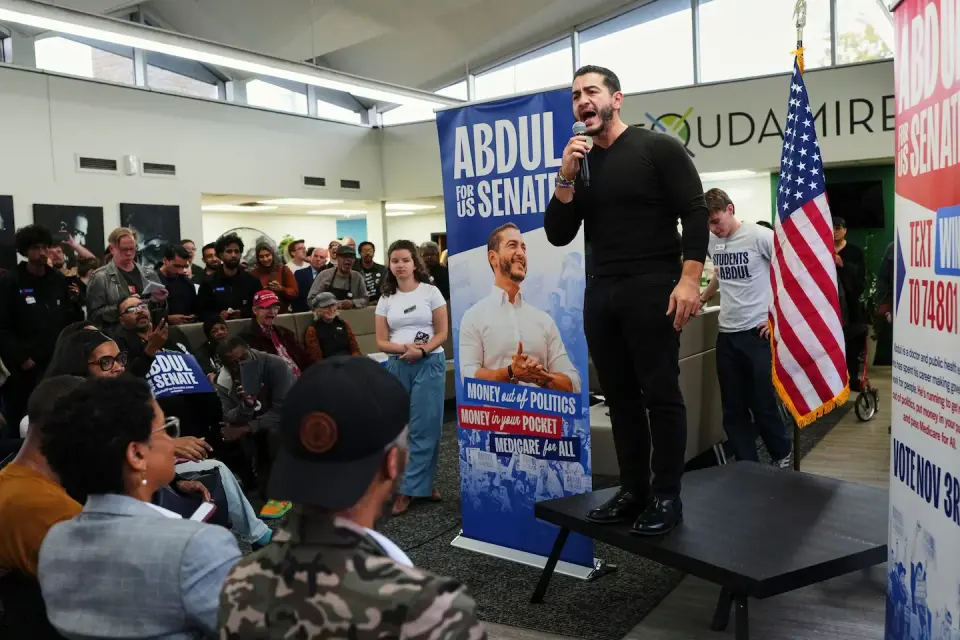
The El-Sayed campaign reported a $2.4 million fundraising surge following Rep. Haley Stevens’ endorsement of Republican Mike Rogers. Stevens’ subsequent CNN interview, where she struggled to justify her defection, drew sharp criticism from Democratic leaders and observers.
Key points
- El-Sayed’s campaign reported raising $2.4 million in a single day after Stevens endorsed Rogers.
- Stevens appeared on CNN to explain her endorsement but failed to provide a coherent rationale for her change of heart.
- Congresswoman Debbie Dingell called the interview 'one of the most painful' she has ever watched.
- Stevens’ endorsement was driven by disputes over Israel policy and an outside advertisement, according to previous reports.
- The move triggered staff resignations and her expulsion from the Michigan Democratic Party.
Background
On November 1, Rep. Haley Stevens (D-Mich.) formally endorsed Republican Senate candidate Mike Rogers, two days before the election. This decision followed a public rift with Democratic nominee Abdul El-Sayed, stemming from disputes over Israel policy and an advertisement Stevens deemed antisemitic. The endorsement caused immediate staff resignations in Stevens’ office and led to her expulsion from the Michigan Democratic Party. Democratic leaders, including Chuck Schumer, condemned the move as a 'despicable betrayal.'
How outlets are covering it
The Washington Post focused on the financial impact of the endorsement, highlighting the $2.4 million fundraising surge for El-Sayed. Variety, in contrast, emphasized the political damage to Stevens, describing her CNN interview as 'unsettling' and 'incoherent.' Variety noted that Stevens was unable to explain why her issues with El-Sayed were surmountable in one moment but worth a public defection the next. The outlet also pointed out that Stevens’ staff had largely quit, leaving her unprepared for the interview. Both outlets agreed that the endorsement was a significant intra-party fracture, but they differed in their focus: The Post on the financial boost for El-Sayed, and Variety on the political fallout for Stevens.
Why it matters
The Stevens endorsement and subsequent interview highlight the deep divisions within the Michigan Democratic Party and the potential impact of such fractures on the Senate race. The fundraising surge for El-Sayed suggests that the endorsement may have galvanized Democratic voters, while the failed interview could have damaged Stevens’ credibility and the broader Democratic message. The race is viewed as pivotal for Senate control, making any intra-party disputes significant.
What to watch
The election is two days away, and the impact of Stevens’ endorsement on undecided voters remains to be seen. El-Sayed’s campaign will likely continue to leverage the fundraising surge and the criticism of Stevens’ interview to rally support. Stevens’ political relevance is expected to fade quickly, as she is a lame duck and her endorsement has drawn widespread condemnation.
- El-Sayed campaign reports $2.4 million fundraising day as Stevens endorses GOP rival The Washington Post
- Inside the chaos before Haley Stevens’s shocking Senate endorsement in Michigan The Washington Post
- Haley Stevens’ Unsettling CNN Interview Proves Why She’s Unfit for Public Office Variety
- Haley Stevens' act of rare courage should be celebrated | Finley The Detroit News
- Rising: November 2, 2026 The Hill
Want the full story? Read the original reporting
Read on The Washington Post