
El-Sayed Rejects Fox Question on 2012 Letter, Citing 'Dual Loyalty' Tactics
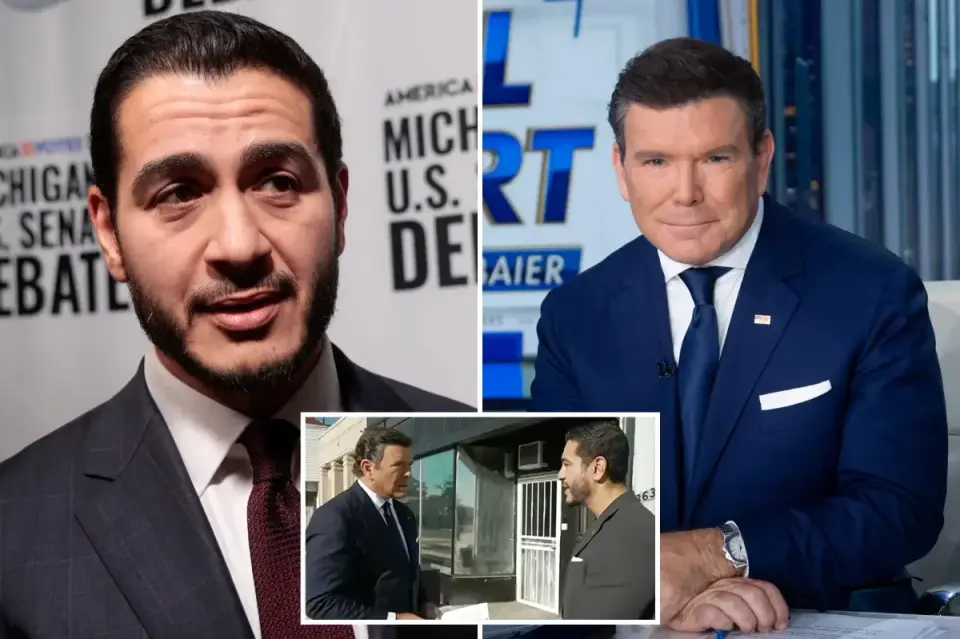
Democratic Michigan Senate candidate Abdul El-Sayed refused to answer a Fox News question about a 2012 letter signed by him, calling it a 'dual loyalty' trap. Republicans argue the letter supports the Muslim Brotherhood, while El-Sayed denies any affiliation and frames the scrutiny as Islamophobic.
Key points
- El-Sayed interrupted Fox News host Bret Baier during an interview, refusing to address a 2012 letter he signed that urged Egyptian President Mohamed Morsi to purge media and police.
- The letter was signed by El-Sayed and over 30 others and was published on Al-Ahram Gate; it preceded a crackdown on journalists in Egypt under Morsi’s government.
- Republican opponent Mike Rogers argues El-Sayed has not disavowed the Muslim Brotherhood, claiming the candidate adopted the group’s ideology by supporting the purge.
- El-Sayed stated he is not a member of the Muslim Brotherhood and pledged loyalty to the US Constitution, accusing Rogers of mimicking his campaign’s tactics.
- The Muslim Brotherhood is designated a terrorist organization by Egypt, Saudi Arabia, and the UAE, but not by the United States.
Background
This controversy intensifies the Michigan Senate race ahead of the November 3 election, where polls show a tight contest. Previous debates and town halls have featured similar questions about El-Sayed’s ties to the group, with El-Sayed consistently framing these inquiries as Islamophobic 'dual loyalty' attacks. His family’s Egyptian immigrant background and his half-sister’s past social media posts have been cited by Republicans to suggest a connection, though El-Sayed denies any affiliation.
How outlets are covering it
The New York Post frames the exchange as El-Sayed being defensive and interrupting the journalist, highlighting his refusal to engage with the specific question about the 2012 letter. CNN, however, analyzes the linguistic nuance of the word 'disavow,' arguing that asking El-Sayed to disavow the Muslim Brotherhood implies a prior affiliation that he is being forced to reject, a tactic used to put Muslims on the defensive. While the Post emphasizes the immediate clash, CNN contextualizes the question within a broader pattern of religious bigotry and compares it to historical 'disavowal' demands in US politics.
Why it matters
The dispute highlights a key strategy in the 2026 midterms, where Republican candidates and President Trump have sought to associate a Muslim candidate with a controversial transnational organization. The outcome of the Michigan race may hinge on whether voters accept El-Sayed’s rebuttal of 'dual loyalty' claims or view the 2012 letter as evidence of ideological alignment with the Muslim Brotherhood.
What to watch
El-Sayed is expected to continue campaigning in Michigan, including a planned appearance with former President Barack Obama in Detroit. The campaign will likely continue to debate the interpretation of the 2012 letter and the definition of 'disavowal' in the lead-up to the November 3 election.
- El-Sayed refuses to answer questions about Muslim Brotherhood letter: ‘I’m not interested’ New York Post
- Examining the Muslim Brotherhood claims in Michigan’s Senate race The Washington Post
- Republican 'Muslim Brotherhood' attacks on El-Sayed in Michigan seek to exploit Democratic fault lines Reuters
- Abdul El-Sayed Confronts Attacks on His Faith and Family Ties The New York Times
- What Republicans mean when they ask Abdul El-Sayed to ‘disavow’ the Muslim Brotherhood CNN
Want the full story? Read the original reporting
Read on New York Post