
El-Sayed's 'Disavowal' of Muslim Brotherhood Sparks Debate Over Religious Bigotry in Michigan
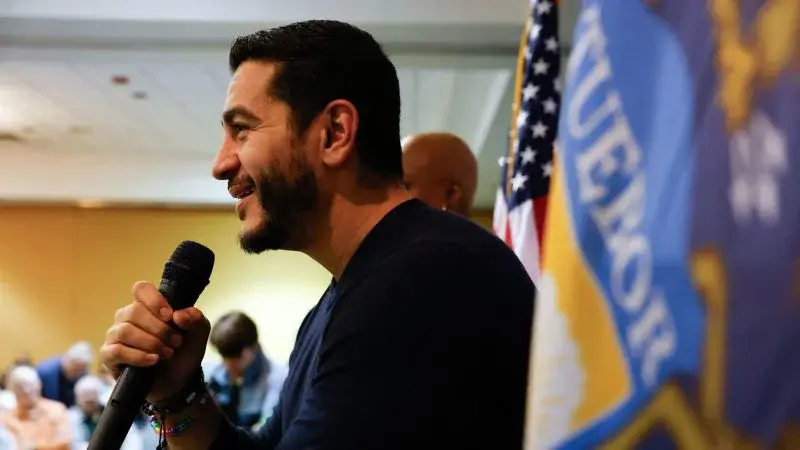
Michigan Democratic Senate nominee Abdul El-Sayed faced intense scrutiny over alleged ties to the Muslim Brotherhood, culminating in a viral town hall exchange where he disavowed the group. Republicans, including President Trump and challenger Mike Rogers, have linked El-Sayed to the organization through his family history and past writings. El-Sayed rejected these claims as Islamophobic 'dual loyalty' attacks, asserting his allegiance to the U.S. Constitution. The controversy has intensified ahead of the November election, with El-Sayed currently trailing slightly in polls.
Key points
- El-Sayed disavowed the Muslim Brotherhood at a town hall in Caro, Michigan, on October 17, 2026, responding to a question from GOP activist Thomas Teepell.
- Republicans, including President Trump and Mike Rogers, have cited El-Sayed's half-sister's social media posts and his mother's past activism as evidence of ties to the organization.
- El-Sayed framed the questioning as an Islamophobic 'dual loyalty' attack, comparing it to John F. Kennedy's 1960 response regarding his Catholic faith.
- PolitiFact rated Rogers' claim that El-Sayed failed to disavow the Muslim Brotherhood as 'False,' noting El-Sayed's clear affirmative response.
- The controversy has intensified ahead of the November election, with El-Sayed currently trailing slightly in polls against Republican challenger Mike Rogers.
Background
The Muslim Brotherhood controversy in Michigan's Senate race has been a central issue in the 2026 campaign, with Republicans repeatedly linking El-Sayed to the organization through his family history and past writings. El-Sayed has consistently denied any organizational ties, framing the attacks as Islamophobic and emphasizing his allegiance to the U.S. Constitution. The controversy has drawn comparisons to historical instances of religious bigotry, including John F. Kennedy's 1960 presidential campaign and Barack Obama's 2008 campaign.
How outlets are covering it
CNN emphasizes the linguistic distinction between 'condemn' and 'disavow,' highlighting how the latter implies a stronger connection to the group. Semafor focuses on the broader Republican strategy of demonizing 'the other' and the shifting media dynamics that allow such attacks to become mainstream. Fox News frames the exchange as a defensive rebuttal to baseless accusations, while MS NOW highlights El-Sayed's effective use of the Constitution to counter religious bigotry. The outlets disagree on the effectiveness of El-Sayed's response, with some praising his eloquence and others questioning the impact on voters.
Why it matters
The Muslim Brotherhood controversy in Michigan's Senate race highlights the ongoing tensions between religious freedom and political attacks on candidates based on their faith. The case underscores the importance of constitutional protections against religious tests for office and the need for candidates to navigate complex issues of identity and allegiance in a polarized political landscape. The outcome of the race may have broader implications for how religious bigotry is addressed in American politics.
What to watch
The Michigan Senate race will be decided in November 2026, with El-Sayed currently trailing slightly in polls against Republican challenger Mike Rogers. The outcome of the race may have broader implications for how religious bigotry is addressed in American politics and the effectiveness of constitutional protections against religious tests for office. El-Sayed's ability to navigate the controversy and maintain voter support will be crucial in determining the outcome of the race.
- What Republicans mean when they ask Abdul El-Sayed to ‘disavow’ the Muslim Brotherhood CNN
- El-Sayed’s alleged ties to Muslim Brotherhood shake up Michigan Senate race The Hill
- View / What the GOP activist who confronted El-Sayed really got wrong Semafor
- El-Sayed erupts at GOP rival over Muslim Brotherhood accusations in fiery Senate debate Fox News
- Opinion | Abdul El-Sayed had an easy response to 'Tommy's' viral gotcha moment: the U.S. Constitution MS NOW
Want the full story? Read the original reporting
Read on CNN