
FCC Chair Carr Threatens Broadcasters Over 'Fake Polls' as Press Freedom Clash Intensifies
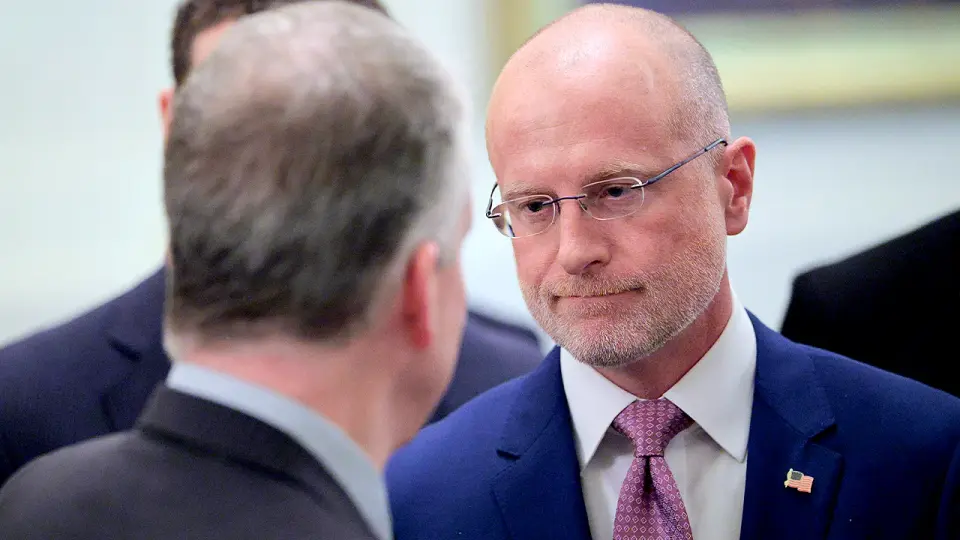
FCC Chairman Brendan Carr signaled that the agency may issue guidance against broadcast networks airing 'fake polls' ahead of the 2026 midterms, arguing that licensed broadcasters have a public interest obligation distinct from cable or digital platforms. This move follows President Donald Trump’s public threat to report NBC host Kristen Welker to the FCC for her coverage of his primary endorsement record. While Carr frames the action as a necessary reminder of regulatory duties, critics and opposing outlets argue the agency is being weaponized to punish journalists for unfavorable reporting, raising serious First Amendment concerns.
Key points
- FCC Chairman Brendan Carr stated on 'The Sunday Briefing' that the agency is considering issuing guidance to remind broadcast TV networks of their obligations regarding 'fake polls' that could suppress voters before the fall midterms.
- Carr argued that broadcast television operates under different federal requirements than cable or online platforms because stations receive taxpayer-subsidized distribution and must serve the public interest rather than partisan interests.
- The comments followed President Trump’s August 30 criticism of NBC News host Kristen Welker, who noted 'mixed results' in Trump’s primary endorsements; Trump threatened to report her to the FCC for 'rebuke or punishment.'
- NBC News defended Welker, stating, 'Kristen is one of the best in the business, and we stand by her,' while FCC Commissioner Anna Gomez publicly rejected the idea of penalizing journalists, calling such threats dangerous to democracy.
- Carr previously accused broadcasters of 'running hoaxes and news distortion' in March and ordered them to 'correct course' before license renewals, a move ABC later challenged in court as a retaliatory campaign.
Background
This development follows a series of regulatory shifts by the FCC under Carr’s leadership. In August 2026, the FCC voted to eliminate the 39% national TV ownership cap, replacing it with case-by-case merger reviews, a move critics argued could boost consolidation. Earlier in July, ABC filed a 119-page complaint against the FCC’s review of eight Disney-owned licenses, labeling it a political censorship push. These actions have set the stage for the current dispute over content regulation and press freedom.
How outlets are covering it
Fox News presents Carr’s comments as a legitimate enforcement of public interest obligations, emphasizing that broadcasters receive subsidized distribution and must avoid partisan bias. Carr’s framing focuses on the distinction between broadcast and cable platforms. In contrast, Salon and the Chicago Tribune characterize the FCC’s actions as a weaponization of federal regulatory power to punish specific journalists and outlets for unfavorable coverage. Salon highlights Trump’s 'frantic' attacks on the press as a sign of political desperation, while the Chicago Tribune argues that Carr’s threats violate the First Amendment and ignore the FCC’s historical inability to police editorial content. The outlets disagree on whether the FCC is protecting democratic integrity or engaging in viewpoint censorship.
Why it matters
The potential FCC guidance on 'fake polls' and the broader conflict over press freedom could set a precedent for how federal agencies interact with media during election cycles. If the FCC successfully imposes content-based restrictions on broadcasters, it could chill journalistic independence and influence the 2026 midterm elections. The outcome of this dispute may also affect future regulatory frameworks for broadcast media and the balance between public interest obligations and First Amendment protections.
What to watch
The FCC is expected to issue formal guidance on 'fake polls' in the coming weeks, which could lead to further legal challenges from broadcasters and media organizations. ABC has already sued to block the license review, and similar legal actions may follow if the FCC moves forward with content-based enforcement. The 2026 midterm elections will be a key test of whether these regulatory actions impact voter information and media coverage.
- FCC boss signals major crackdown on TV networks pushing 'fake polls' ahead of the midterms Fox News
- Carr: FCC ‘looking at a lot of actions’ to stop broadcasters’ partisan coverage The Hill
- Trump’s attacks on the press suddenly sound more frantic Salon.com
- FCC warns news outlets not to air 'fake polls' ahead of midterms yahoo.com
- Steve Chapman: Donald Trump’s war on NBC, ABC and freedom of the press Chicago Tribune
Want the full story? Read the original reporting
Read on Fox News