
Final Senate Debates: Michigan and Kansas Candidates Clash Over Iran, Fuel Prices, and Loyalty
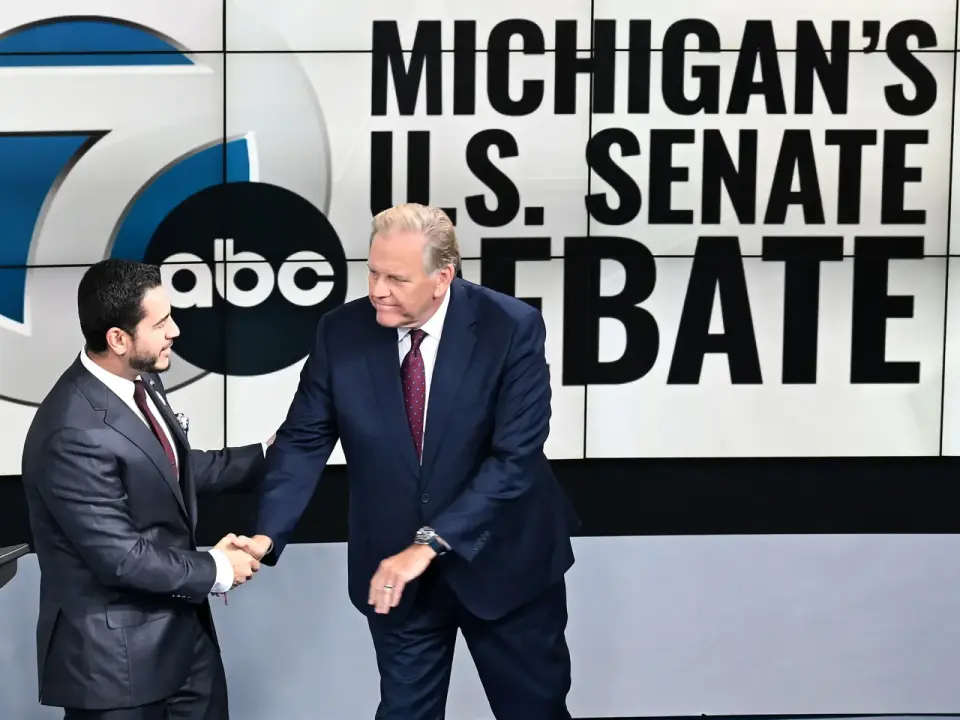
In the final pre-election debates, Michigan’s Abdul El-Sayed and Mike Rogers clashed over the Iran war and loyalty, while Kansas’s Roger Marshall and Adam Hamilton debated diesel prices and ICE tactics. Both races are pivotal for Senate control, with voters weighing economic costs against foreign policy stances.
Key points
- Michigan’s El-Sayed accused Rogers of supporting the Iran war, linking it to rising fuel costs, while Rogers questioned El-Sayed’s national security credentials.
- Kansas’s Marshall defended Trump’s Russian fuel deal and border policies, whereas Hamilton criticized ICE raids and US weapons use in Gaza.
- Rogers distanced himself from Trump on Canadian tariffs but maintained support for other administration policies, aiming to attract moderate Democrats.
- Hamilton positioned himself as a centrist, rejecting labels as a socialist and distancing himself from Democratic leadership figures like Chuck Schumer.
- Both debates highlighted the impact of the Iran conflict on domestic costs, with candidates blaming either the war or other factors for soaring diesel and gasoline prices.
Background
These debates occurred less than two weeks before the November 3, 2026, midterm elections, following earlier clashes in October where fact-checkers noted mixed evidence on policy pivots and personal attacks. The races are critical for determining Senate majority control, with Republicans currently holding 53 seats and Democrats 45, plus two independents.
How outlets are covering it
Al Jazeera emphasized Rogers’ attempt to distance himself from Trump on tariffs while El-Sayed tied him to the Iran war. CNN highlighted Rogers’ focus on questioning El-Sayed’s loyalty and Muslim Brotherhood ties, contrasting with El-Sayed’s 'MAGA bingo' rebuttal. NBC News noted the Michigan debate was less heated than the first, while Kansas focused more on centrist positioning by Hamilton and Marshall’s support for Trump’s agenda. All sources agreed on the centrality of fuel prices and immigration, but differed on the intensity of personal attacks and the degree of candidate separation from Trump.
Why it matters
The outcomes in Michigan and Kansas will determine which party controls the Senate, influencing legislative power on economic, foreign, and domestic policies. Voter sentiment on the Iran war, fuel costs, and immigration enforcement is shaping decisions in these pivotal races, with potential implications for national security and economic stability.
What to watch
Voters will cast ballots on November 3, 2026, with early voting already underway in some states. Trump is expected to campaign in Michigan on Sunday, potentially influencing turnout. The results will determine Senate majority control and shape the legislative agenda for the next two years.
- Michigan Senate debate: Key takeaways from El-Sayed, Rogers clash Al Jazeera
- Fights over loyalty to America, party and Trump dominate Michigan and Kansas Senate debates CNN
- Final Michigan Senate debate takeaways and rural America’s data center boom: Morning Rundown NBC News
- MAGA Bingo and Questions of Loyalty: 5 Michigan Senate Debate Takeaways The New York Times
- In final Michigan Senate debate, GOP’s Rogers says Jewish voters ‘afraid’ of El-Sayed The Times of Israel
Want the full story? Read the original reporting
Read on Al Jazeera