
Florida GOP sues to block ads citing expunged Hope Florida grand jury findings
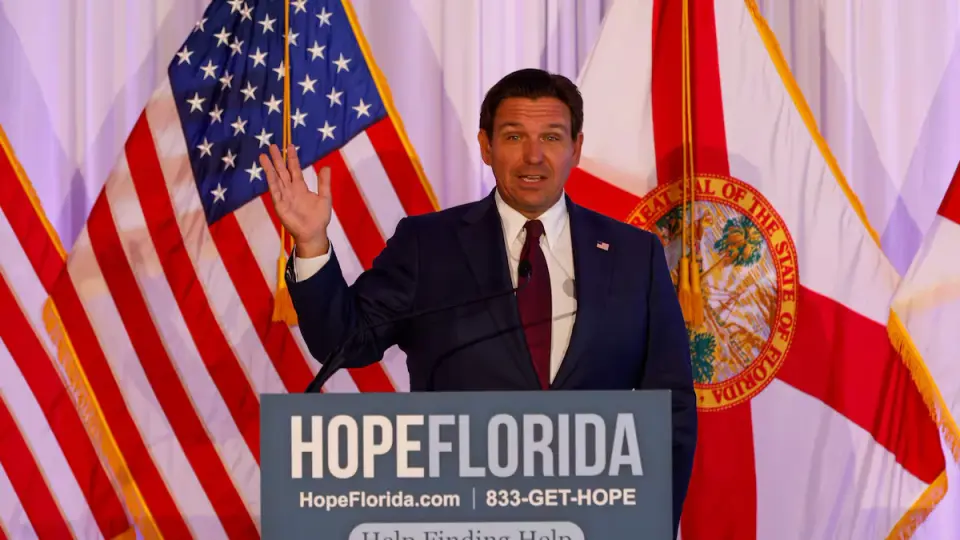
The Republican Party of Florida has filed a lawsuit to block a Democratic campaign ad referencing a grand jury report on the Hope Florida scandal, arguing that airing the ad violates a recent court order expunging the report. The suit targets television stations and Democratic candidates, seeking an injunction before the November 3 election. Democrats and legal experts argue the move constitutes unconstitutional prior restraint, while Republicans claim broadcasting the report's contents is a criminal offense under Florida law.
Key points
- The Republican Party of Florida (RPOF) filed a lawsuit in Highlands County on Friday night seeking a temporary restraining order to stop the airing of a 30-second Democratic ad.
- The ad, approved by gubernatorial candidate David Jolly and others, states that a leaked grand jury report found $10 million in Medicaid settlement funds were diverted to political committees controlled by Attorney General James Uthmeier.
- The RPOF argues that a First District Court of Appeal ruling on Oct. 7, which ordered the grand jury report expunged, makes broadcasting its content a first-degree misdemeanor and criminal contempt of court.
- The lawsuit names the Florida Democratic Party, three Democratic statewide candidates, and 11 television stations in the Orlando and Tampa Bay markets, including WFTV, WESH, and WFLA.
- The RPOF also sent letters to station managers threatening criminal prosecution and referred the matter to the Florida Department of Law Enforcement and statewide prosecutors.
- The Florida Democratic Party called the lawsuit an attempt to bury the truth, while legal experts cited the First Amendment and the doctrine of prior restraint in opposing the injunction.
Background
This dispute follows a series of events regarding the Hope Florida scandal, which involves allegations that $10 million from a Medicaid fraud settlement was misappropriated for political purposes. A grand jury report detailing these findings was leaked and published in August 2026. On Oct. 7, 2026, a Florida appeals court ordered the report expunged, ruling that the grand jury had overstepped its authority and that the funds were never public money. The current lawsuit is a direct response to Democratic candidates using the report's findings in their campaign advertisements ahead of the November 3 midterm elections.
How outlets are covering it
The Republican Party of Florida, through its counsel, asserts that the Oct. 7 court ruling rendered the grand jury report's contents illegal to broadcast, framing the ad as a criminal violation of Florida law. They argue that the injunction is necessary to prevent irreparable harm to the election process. In contrast, the Florida Democratic Party, led by Chair Nikki Fried, characterizes the lawsuit as a politically motivated attempt to suppress the truth and silence voters. Legal experts, including attorney Andrea Flynn Mogensen, argue that the RPOF's request for an injunction constitutes prior restraint, a form of censorship that violates the First Amendment. The Florida Center for Government Accountability (FLCGA) questioned the venue choice of Highlands County, suggesting it may be an attempt to find a sympathetic judge. The outlets also differ in their emphasis: the Tampa Bay Times focuses on the legal filing and the candidates involved, while WGCU and Florida Today highlight the threat of criminal prosecution for media stations and the First Amendment implications. The Yahoo source, which appears to be a technical error page, provides no substantive content for synthesis.
Why it matters
This lawsuit has the potential to set a precedent for the limits of political speech and media freedom in the United States. If the court grants the injunction, it could effectively silence a major issue in the Florida gubernatorial and attorney general races, potentially influencing the outcome of the Nov. 3 election. The case also raises significant questions about the enforceability of court-ordered expungements and the boundaries of grand jury secrecy laws in the context of public discourse and elections.
What to watch
The next step is for a judge in Highlands County to rule on the RPOF's request for a temporary restraining order. The defendants, including the Florida Democratic Party and the television stations, have not yet responded to the complaint. The court's decision will determine whether the ad can continue to air before the Nov. 3 election. Additionally, the Florida Department of Law Enforcement and statewide prosecutors may decide whether to pursue criminal charges against the media stations based on the RPOF's referral.
- Republicans sue Jolly, Dems and TV stations over Hope Florida grand jury ads Tampa Bay Times
- Breaking: Republicans want Hope Florida story silenced and jail for anyone who talks about it WGCU
- GOP threatens media with criminal prosecution if Hope Florida TV ad runs Florida Today
- Hope Florida: Legal? Maybe. Just? Not a chance. | Letters Yahoo
- 1st DCA orders Jack Campbell to explain Hope Florida grand jury leak under oath Florida Politics
Want the full story? Read the original reporting
Read on Tampa Bay Times