
Former Chicago FBI Chief Sues DOJ, Alleging He Was Scapegoated for Broadview Six Collapse
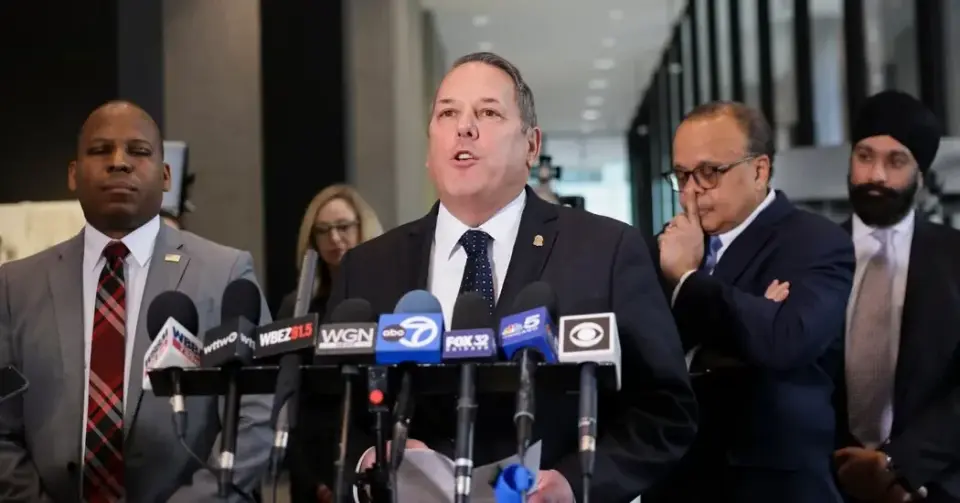
Douglas DePodesta, the former FBI special agent in charge for Chicago, has filed a lawsuit against the Department of Justice and U.S. Attorney Andrew Boutros. DePodesta alleges he was forced to resign in July 2026 after Boutros falsely blamed him for the collapse of the 'Broadview Six' prosecution. The suit claims Boutros orchestrated DePodesta's removal to deflect criticism over prosecutorial misconduct and politically motivated charges against anti-ICE protesters.
Key points
- Douglas DePodesta, a 24-year FBI veteran who led the Chicago field office from August 2024 to July 2026, sued the DOJ, FBI, and top officials including Kash Patel and Todd Blanche.
- The lawsuit alleges that U.S. Attorney Andrew Boutros pressured DePodesta to open politically motivated investigations into protesters during the 2025 'Operation Midway Blitz' immigration crackdown.
- DePodesta claims Boutros falsely accused him of conspiring with his sister-in-law, a defense attorney representing one of the 'Broadview Six' defendants, to destroy the case.
- The 'Broadview Six' case, involving six protesters charged with conspiracy to impede a federal agent, collapsed in May 2026 after Judge April Perry discovered apparent prosecutorial misconduct in grand jury transcripts.
- DePodesta seeks reinstatement, back pay, compensatory damages, and a declaration that his termination violated due process and free speech rights.
- The suit contradicts a March 2026 statement by Boutros’s office to Judge Perry, which claimed there were no communications with the White House or DOJ headquarters regarding the case.
Background
This lawsuit follows a series of scandals involving the 'Broadview Six' case, which saw the resignation of lead prosecutor Sheri Mecklenburg in September 2026. The case, which targeted six protesters outside an ICE facility in Broadview, Illinois, collapsed in May 2026 after Judge April Perry found misconduct. The broader context includes ongoing scrutiny of the Trump administration's aggressive prosecution of left-wing activists, with Boutros’s office facing a credibility crisis and a potential special prosecutor inquiry.
How outlets are covering it
The New York Times and The Guardian emphasize the political motivation behind the prosecutions and the alleged scapegoating of DePodesta by Boutros. WBEZ Chicago highlights the legal implications of the suit, noting that it contradicts Boutros’s previous denials of external influence on the case. The Chicago Sun-Times focuses on the specific allegations of false statements to the court and the potential for new revelations about behind-the-scenes communications between Boutros and DOJ officials. All sources agree that DePodesta was forced out of his position, but they differ in emphasis: The Times and Guardian focus on the political nature of the prosecutions, while WBEZ and Sun-Times focus on the legal contradictions and the impact on the ongoing court proceedings.
Why it matters
This lawsuit marks a significant escalation in the 'Broadview Six' scandal, potentially exposing internal conflicts within the DOJ and the FBI. It challenges the integrity of the prosecution and raises questions about the role of political pressure in federal law enforcement. The outcome could influence ongoing investigations into prosecutorial misconduct and the broader handling of politically charged cases under the Trump administration.
What to watch
The case will likely proceed to discovery, potentially revealing new details about communications between Boutros and DOJ officials. Judge April Perry has already ordered Boutros and three other prosecutors to testify under oath on November 16. The lawsuit could lead to a special prosecutor investigation if the court finds evidence of misconduct. DePodesta’s claims of defamation and due process violations may also result in civil damages if proven.
- Former Chicago FBI Chief Sues DOJ, Says He Was Wrongly Blamed for Botched Broadview Six Case The New York Times
- Ex-Chicago FBI boss sues Trump admin saying he was wrongly blamed for botched ‘Broadview 6’ case WBEZ Chicago
- Former FBI boss' lawsuit undermines Boutros' denial of Washington's role in 'Broadview 6' case Chicago Sun-Times
- Ex-head of Chicago FBI alleges Trump admin. forced 'politically motivated investigations' against ICE protesters ABC7 Chicago
- Ex-FBI chief in Chicago sues DoJ, claiming he was pressured to investigate Trump’s foes The Guardian
Want the full story? Read the original reporting
Read on The New York Times