
GAO rules Trump's $810M spending cuts unconstitutional
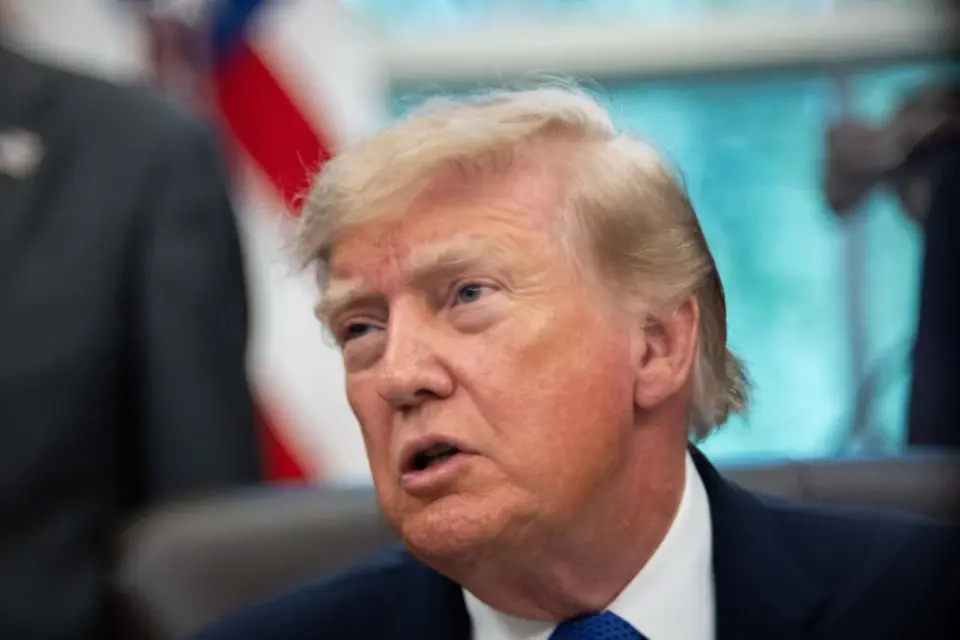
The Government Accountability Office (GAO) declared President Trump's unilateral cancellation of $810 million in federal funding unconstitutional. The watchdog stated that the executive branch cannot override Congress's 'power of the purse' through 'pocket rescissions,' a tactic used to bypass the standard 45-day congressional review period. While the White House justified the cuts as necessary due to reduced border crossings, the GAO's ruling highlights a significant legal and constitutional dispute over executive authority.
Key points
- The GAO's General Counsel, Edda Emmanuelli Perez, stated that any withholding of appropriated funds beyond their expiration date subverts the constitutional process.
- The $810 million in cuts primarily targeted Health and Human Services programs for refugees and unaccominated minors, as well as Department of Education and Justice initiatives.
- The White House argued the funds were no longer necessary due to diminished illegal border crossings, while the GAO insisted Congress did not cede its budgetary power.
- The GAO has not taken legal action against the administration, partly due to a lack of a Senate-confirmed leader since December 2025.
- Democrats in Congress are pushing for legislation to explicitly ban the 'pocket rescission' tactic, while Republicans have largely defended the administration's budgetary maneuvers.
Background
This dispute follows a September 26 announcement by the Trump administration to cancel $810 million in congressionally approved spending. The move, which bypassed the standard 45-day congressional review period by timing the cancellation near the end of the fiscal year, sparked bipartisan condemnation and legal disputes. It is part of a broader pattern of executive actions that critics argue undermine the separation of powers and the constitutional balance between the executive and legislative branches.
How outlets are covering it
The GAO and Democratic lawmakers, such as Rep. Brendan Boyle and Sen. Jeff Merkley, view the pocket rescission as an unconstitutional overreach that ignores Congress's authority. In contrast, the White House, represented by budget director Russ Vought, defends the cuts as necessary and justified by changing circumstances, such as reduced border crossings. The Washington Post editorial board frames the move as part of a larger failure to address the country's fiscal trajectory, while Politico notes the practical limitations of the GAO's ruling, citing previous Supreme Court rulings on standing.
Why it matters
The GAO's ruling sets a precedent for the limits of executive power in budgetary matters. If the administration continues to use pocket rescissions, it could lead to further legal challenges and a potential constitutional crisis. The outcome of this dispute will influence future debates over the balance of power between the executive and legislative branches and the role of the GAO in overseeing federal spending.
What to watch
Congress is expected to debate legislation to explicitly ban the pocket rescission tactic. The GAO may face pressure to take legal action against the administration, although its ability to do so is limited by its current leadership vacuum. The White House is likely to continue defending its budgetary maneuvers, potentially leading to further legal and political disputes.
- Watchdog says Trump can’t cancel more than $800M in spending approved by Congress AP News
- Federal watchdog says Trump’s $810M funding cancellation is unconstitutional Politico
- Opinion | Trump chooses the worst way to cut federal spending The Washington Post
- What to know about the $810 million in spending canceled by President Trump npr.org
- Sen. Tim Kaine urges lawmakers to oppose Trump's $810M budget cuts affecting public services 13newsnow.com
Want the full story? Read the original reporting
Read on AP News