
GOP Clings to Polling Error Theory as Voter Anger Over Costs Deepens
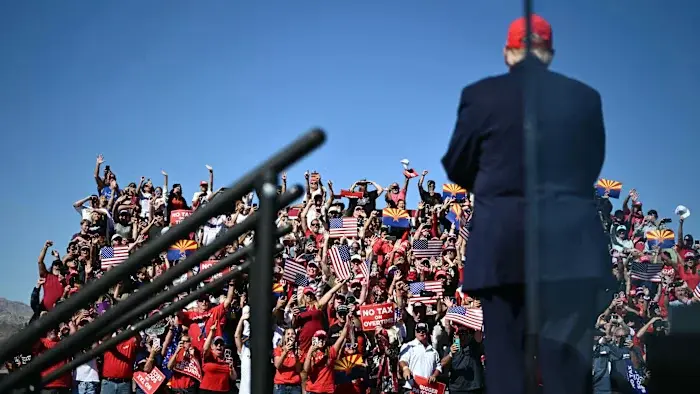
With two weeks until the US midterm elections, Republican strategists are betting that current polls underestimating their support are wrong, citing historical sampling errors. While Democrats lead in most key House and Senate races, GOP insiders point to low response rates among conservative voters and early voting trends in Georgia as signs of a potential upset. However, focus groups reveal deep frustration among working-class Republicans over rising costs and perceived corruption, suggesting the party faces a genuine crisis of confidence rather than just a polling artifact. The outcome hinges on whether unmeasured voters turn out, with Republicans hoping to retain the Senate while Democrats aim for a decisive House majority.
Key points
- House Speaker Mike Johnson and other GOP leaders argue polls are 'wrong' due to under-sampling of Republicans who distrust pollsters, a tactic that worked in 2016 and 2024.
- Democrats currently lead in almost all key House races and several Senate states, but Republicans hope narrow margins in Maine, Alaska, Ohio, Iowa, and Texas allow for a polling error to flip results.
- Focus groups in red states show Republican voters blaming 'corrupt politicians' and 'billionaires' for high gas and grocery prices, a shift from traditional GOP messaging.
- A Pew survey indicates only 77% of 2024 Trump voters plan to support a Republican for Congress, down from 87% of 2024 Harris voters supporting a Democrat, signaling coalition splintering.
- Republican super PACs have cut funding for two incumbents, while Democrats are targeting seats in Texas, Arizona, Colorado, and Pennsylvania, with Illinois Governor JB Pritzker leading a $20 million effort to flip red districts.
Background
Recent months have seen rising inflation and frustration with the Iran war eroding support for the Republican coalition, particularly in rural areas. In September, a pollster’s optimistic forecast for Senate expansion sparked backlash at a donor retreat, highlighting internal GOP anxiety. Additionally, a Trump-linked PAC aired an erroneous ad in Arizona, underscoring the chaotic nature of the final campaign stretch. These developments suggest that while polling may be flawed, the underlying economic discontent is real and could impact turnout.
How outlets are covering it
The Financial Times and Politico emphasize the historical precedent of polling errors in presidential years, with GOP insiders arguing that low response rates among conservatives skew results. They point to early voting trends in Georgia and better-than-expected polls in New Hampshire and Minnesota as evidence of a potential Republican surge. In contrast, CNN and The Cook Political Report focus on the tangible anger among working-class voters, noting that focus groups reveal frustration with corruption and high costs, which may drive voters away from Republicans regardless of polling accuracy. The Cook Report highlights the splintering of the 2024 coalition, with 10% of Trump voters now supporting Democrats or third parties, suggesting a structural shift rather than a temporary polling anomaly. Democrats, per CNN, are confident in a decisive House win, targeting specific incumbents in swing states, while Republicans remain divided between those who believe polls are wrong and those who acknowledge the 'bad time' for the party.
Why it matters
The outcome of the 2026 midterms will determine whether Republicans can maintain control of the Senate and potentially the House, or if Democrats achieve a 'wave' victory. If polls are accurate, Democrats will likely dominate Congress, limiting Trump’s legislative agenda. If polls are wrong, Republicans could retain power, allowing them to continue their current policies. The debate over polling accuracy also reflects broader concerns about the reliability of election forecasting in an era of declining trust in institutions and rising economic anxiety, which could have long-term implications for democratic participation and political polarization.
What to watch
The next two weeks will focus on final campaign efforts, including Vice President JD Vance’s visit to North Carolina and continued ad spending in battleground states. Early voting trends and turnout data from key states like Georgia, Texas, and Maine will be closely monitored to assess whether polling errors are occurring. The final results on November 3 will determine the balance of power in Congress and the political landscape for the remainder of Trump’s second term.
- Could Republicans prove the pollsters wrong in the midterms? Financial Times
- ‘These are really tough times’: House Republicans confront voter fury over Trump’s Washington in final midterm stretch CNN
- As Trump’s 2024 Coalition Splinters, These Are the House GOP Candidates in the Most Danger Cook Political Report
- The GOP’s midterm lifeline: Maybe the polls are wrong Politico
- Trump Aides Admit the House Is a Lost Cause WIRED
Want the full story? Read the original reporting
Read on Financial Times