
GOP Faces Internal Fracture and Strategic Crisis After Historic Midterm Collapse
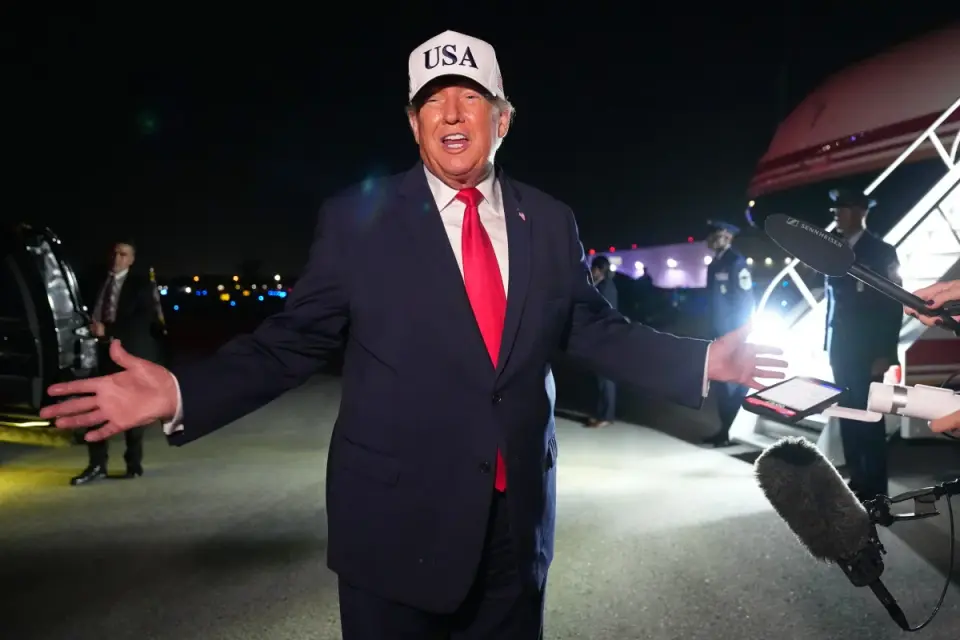
The 2026 midterm elections resulted in a historic defeat for the Republican Party, with Democrats seizing control of both chambers of Congress. While party leaders describe the loss as an 'extinction-level event,' there is no consensus on how to move forward. The central tension is whether to return to traditional fiscal conservatism or double down on the populist style associated with President Donald Trump. Internal conflicts are already emerging over party leadership, the 2028 presidential nomination, and the role of Trump in future elections, as younger Republican voters show significantly lower approval ratings for the president compared to older cohorts.
Key points
- Democrats have won control of both the House and Senate, marking the thinnest Republican presence in Congress in decades.
- Party leaders, including Ron DeSantis and Ted Cruz, have described the defeat as a catastrophic repudiation, but disagree on the cause and solution.
- President Trump has refused to accept responsibility, blaming candidates and elevating Stephen Miller to White House chief of staff, while some Republicans like John Sununu blame Trump’s influence for the loss.
- The AP Voter Poll indicates a generational divide, with younger Republican voters less likely to approve of Trump’s handling of the economy and the war with Iran compared to older voters.
- Immediate internal conflicts are brewing over House leadership, the potential impeachment of Defense Secretary Pete Hegseth, and the selection of the next Republican National Committee chair.
Background
This collapse follows a decade of Republican dominance and a recent period where Trump’s influence over party primaries and policy was at its zenith. Prior to the election, internal GOP strategists had warned that the party had lost voter confidence on economic issues. The defeat also follows a broader trend of rural voter abandonment, as seen in Texas, where Democrats ended a 32-year Republican grip on statewide offices. The current crisis represents a potential shift from a unified Republican government to a fragmented party struggling to define its identity for the 2028 cycle.
Why it matters
The outcome of the 2026 midterms fundamentally alters the balance of power in Washington, ending two years of unified Republican control. It forces the GOP to confront a potential 'lame duck' status for President Trump and a redefinition of its political base. The lack of consensus on strategy suggests a prolonged period of internal turmoil that could impact the party’s viability in the 2028 presidential race and its ability to pass legislation in a divided government.
What to watch
Republicans must immediately navigate a divided government, including votes on defense spending and keeping the federal government open after December 11. The party will face a contentious selection for House leadership between Steve Scalise and Jim Jordan. Simultaneously, a fight for the Republican National Committee chairmanship is underway, with KC Crosbie challenging the Trump-backed Joe Gruters. Long-term, the party must decide whether to court Hispanic and suburban voters or maintain its current hard-line stance, with the 2028 presidential nomination likely to feature a broad field of contenders.
Want the full story? Read the original reporting
Read on AP News