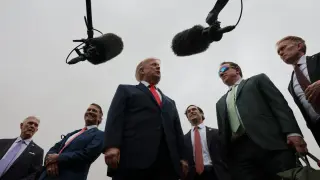
Despite spending half a billion dollars since Labor Day, Republicans have failed to move polls in their favor for the 2026 midterms. Democrats maintain a lead on the generic ballot, while GOP strategists rely on massive financial advantages to counteract declining approval ratings for President Trump.
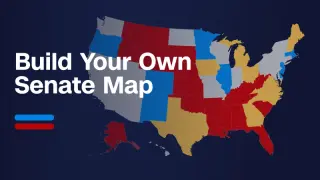
The Cook Political Report revised ratings for three key Senate races toward Democrats, moving Kansas to 'Toss Up,' New Hampshire to 'Lean Democrat,' and North Carolina to 'Likely Democrat.' This shift places a Democratic majority within reach, as they need only four net seats to control the chamber.
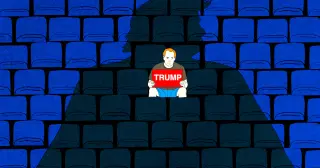
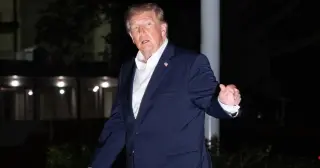
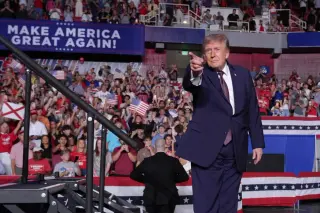
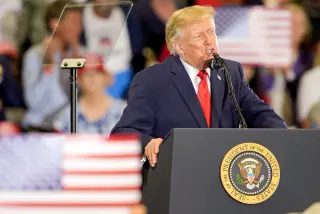
President Donald Trump expressed frustration after reports indicated his recent rally in Mobile, Alabama, drew a smaller crowd than expected. This development follows earlier concerns about declining attendance at his events, highlighting growing challenges in maintaining strong grassroots support ahead of the midterm elections.
With 30 days until the US midterm elections, Democrats hold a significant polling advantage in both the House and Senate, driven by President Donald Trump’s record-low approval ratings and voter dissatisfaction with the economy and foreign policy. Despite massive spending by Republican-aligned Super PACs and high-profile rallies, GOP candidates are trailing in key battleground states. Polls indicate a 99% probability of a Democratic House majority, while the Senate race remains tight but favors Democrats in several swing states. The shift is particularly pronounced among Hispanic and independent voters, who are defecting from the Republican coalition that elected Trump in 2024.
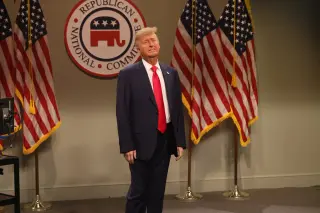
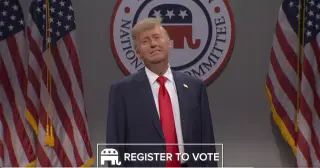
The second episode of the 51st season of 'Saturday Night Live' featured a cold open depicting Republican strategists in a state of panic over poor midterm prospects. The sketch portrayed party leaders, including Marco Rubio, Mitch McConnell, JD Vance, and Pete Hegseth, failing to deliver coherent campaign messages. President Donald Trump eventually intervened, offering a $5,000 'Trump Dividend' to every adult citizen if Republicans win, while explicitly stating he had no intention of paying it. The segment highlighted the party's internal disarray and reliance on the president's personal brand rather than policy substance.
Republican gubernatorial candidate Steve Hilton faces severe internal party backlash over a sexually suggestive campaign ad titled 'Just Try It, California.' The spot, which features two women in a bedroom setting, has drawn condemnation from fellow GOP nominees who call it exploitative and 'creepy.' While Hilton defends the ad as a provocative strategy to attract non-Republican voters in the deep blue state, the controversy has fractured his coalition. He trails Democrat Xavier Becerra by a significant margin in the polls, with the race now less than a month away.
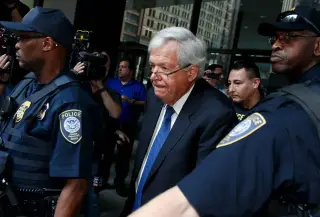
J. Dennis Hastert, the longest-serving Republican Speaker of the U.S. House, has died at age 84. He passed away of natural causes at his home in Illinois while receiving hospice care. Hastert served as Speaker from 1999 to 2007, helping advance President George W. Bush's legislative agenda. His legacy was later marred by a 2016 conviction for bank fraud related to hush money payments to conceal sexual abuse of teenage wrestlers. He served 15 months in prison and was described by a judge as a 'serial child molester.'
President Donald Trump has reversed his long-standing opposition to mail-in voting, urging Republicans to vote by mail or early in the 2026 midterms. This shift follows a Supreme Court ruling that blocked his administration's attempt to restrict mail ballots and coincides with polling showing Democrats gaining ground in Congress. While Trump previously labeled mail voting 'corrupt,' he now emphasizes massive turnout to defeat Democratic opponents, despite his own party's declining trust in the U.S. Postal Service.
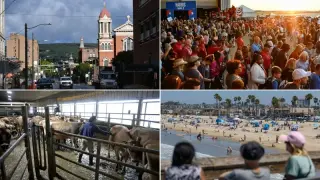
With one month left until the November 2026 midterms, polling models indicate a 99% probability that Democrats will win the House, while the Senate race remains tighter but still favors the opposition. Analysts attribute this shift to a broad backlash against President Donald Trump’s second term, particularly among Latino, rural, and blue-collar voters who supported him in 2024. Key battlegrounds include suburban 'melting pots' in Texas and California, as well as rural agricultural counties in the Midwest. While Democrats face challenges in urban centers due to turnout issues, Republicans are scrambling to defend seats in traditionally safe states like Kansas and Nebraska, where economic pain from tariffs and the Iran war is driving voter defection.
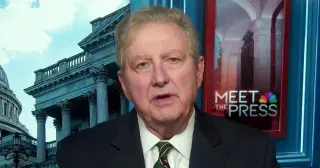
Sen. John Kennedy (R-La.) is considering a presidential run in 2028 but has not made a decision, prioritizing his Senate re-election campaign. He expressed willingness to enter the race if he believes he can outperform other candidates, while declining to comment on Vice President JD Vance. The 2028 cycle features a crowded field with no formal announcements yet, including potential runs by Vance, Ted Cruz, and others.
The October 3, 2026, cold open of 'Saturday Night Live' satirized the Republican Party's struggling midterm campaign strategy. The sketch depicted GOP operatives auditioning various figures, including Marco Rubio, JD Vance, Mitch McConnell, and Pete Hegseth, to deliver a get-out-the-vote message. Each candidate failed to connect with voters, culminating in a performance by President Donald Trump, who promised a $5,000 payout if Republicans won but admitted he had no intention of following through. The sketch highlighted the party's desperation and internal divisions one month before the elections.
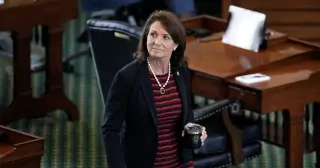
Texas State Sen. Angela Paxton released a new ad urging voters to support the entire Republican ticket for the Nov. 3 election, explicitly avoiding her estranged husband Ken Paxton’s name. The ad, funded by a super PAC, follows her recent speech to conservative women arguing that retaining the Senate seat is more important than individual candidate scandals. While the race remains a toss-up, Democratic nominee James Talarico holds a slight polling lead in a state that has not lost a statewide race since 1994.
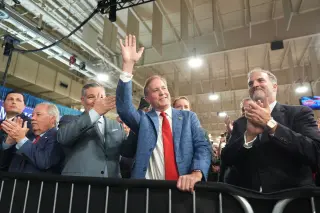
President Trump held a campaign rally in Mobile, Alabama, five weeks before the midterms to energize Republican voters in a deep-red state. While supporters praised his leadership, critics and some GOP strategists worry his unpopularity over the economy and the Iran war could hurt down-ballot races. The event highlighted tensions within the party over whether Trump’s presence helps or hurts competitive districts.
President Trump is conducting an extensive 10-state campaign tour in the final weeks before the November 3 midterms, prioritizing traditional Republican strongholds like Texas, Oklahoma, and Nebraska. This strategy aims to energize the GOP base and secure congressional control despite his approval rating dropping to 32% due to economic concerns and the Iran conflict. While Democrats view the rallies as potential motivators for their own turnout, Republicans leverage a significant fundraising advantage to counter the president's unpopularity through advertising and ground games.
President Donald Trump returned to Mobile, Alabama, on October 2, 2026, to hold a campaign rally five weeks before the midterm elections. The visit marked a return to the site of his 2015 political breakthrough, where he first addressed tens of thousands of supporters. While the event aimed to energize the Republican base, attendance was lower than in previous years, and the rally occurred amid broader struggles for the GOP, including internal clashes and economic concerns. Trump used the trip to promote local projects and endorse candidates, such as Senator Tommy Tuberville, signaling a strategy to rely on core supporters to offset declining national approval ratings.