
Hakeem Jeffries poised to become first Black Speaker after historic Democratic House sweep
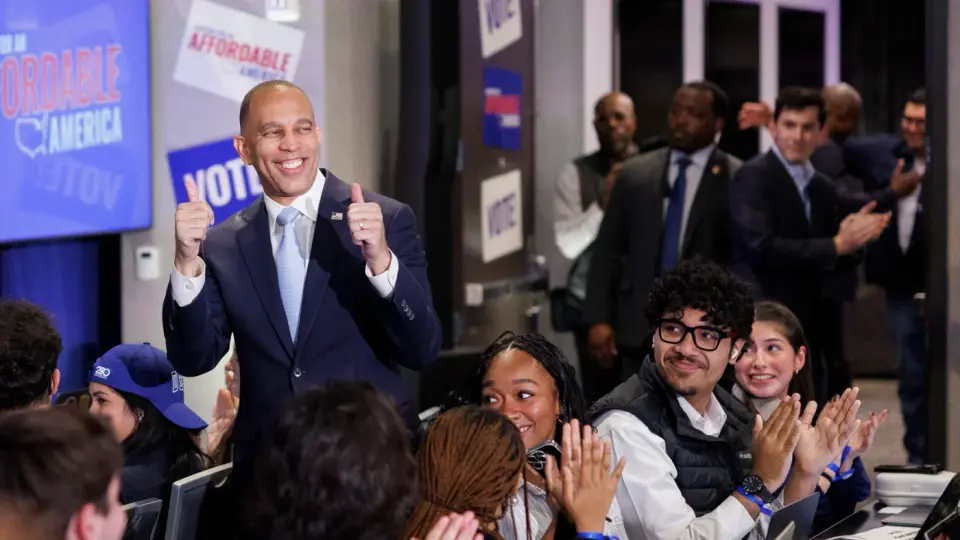
House Minority Leader Hakeem Jeffries is on track to become the first Black Speaker of the House following a massive Democratic victory in the 2026 midterm elections. The party is projected to win up to 256 seats, ending Republican control and forcing President Trump into a lame-duck status. Jeffries plans to prioritize affordability and anti-corruption measures, though he faces internal pressure from progressives who demand more radical policy shifts.
Key points
- Hakeem Jeffries is expected to be elected Speaker of the House in January 2026, becoming the first Black person to hold the position.
- Democrats are projected to win between 218 and 256 seats, a significant increase that allows them to bypass some internal leverage from progressive factions.
- Jeffries’ initial agenda focuses on affordability, including housing, healthcare, and education, while promising to investigate corruption within the previous administration.
- President Trump retains veto power, which will likely block many of the Democrats’ legislative proposals, accelerating his lame-duck status.
- Internal party tensions remain, with progressives warning that the large majority does not excuse incremental governance and demanding bold economic changes.
Background
Prior to the election, Democrats had outlined a 100-day legislative plan focusing on reversing Medicaid cuts and restoring Affordable Care Act subsidies. Recent polling and the Cook Political Report indicated a shifting landscape, with 14 races moving toward Democrats in late October. The party had been preparing for a potential majority by emphasizing economic grievances and anti-corruption narratives, anticipating a 'blue wave' driven by voter dissatisfaction with the current administration.
How outlets are covering it
NPR emphasizes the historical significance of Jeffries’ potential leadership and his focus on affordability and accountability, framing the victory as a rejection of political extremism. CNN highlights the internal dynamics within the Democratic party, noting Jeffries’ challenge to balance establishment moderation with the demands of a progressive wing that previously threatened to withhold support. Axios focuses on the strategic implications of the large majority, suggesting that the size of the win reduces the leverage of progressive factions like 'The Bloc' and allows Jeffries more freedom to govern without being 'leveraged' by internal dissent. While all sources agree on the Democratic victory, they differ on the degree of internal friction and the immediate feasibility of Jeffries’ agenda.
Why it matters
The shift in power marks a significant change in the balance of power in Washington, ending a period of Republican control and potentially altering the legislative agenda for the remainder of Trump’s term. Jeffries’ leadership could set the tone for a more confrontational relationship with the executive branch, while the large Democratic majority may influence the pace and scope of policy changes in the coming years.
What to watch
Jeffries will be formally elected Speaker in January 2026. The new Democratic majority is expected to immediately pursue legislative actions on affordability and launch investigations into the Trump administration. However, the effectiveness of these efforts will depend on their ability to navigate internal party divisions and overcome presidential vetoes. The coming months will test whether the large majority can translate into substantive policy changes or if it remains a symbolic victory.
- House Democratic Leader Hakeem Jeffries declares "America is back" NPR
- Hakeem Jeffries is on track to make House speaker history. But major challenges lay ahead CNN
- Hakeem Jeffries gets the majority of his dreams Axios
- Democrat Hakeem Jeffries Takes Victory Lap WSJ
- Hakeem Jeffries is poised to become the first Black speaker of the House NPR
Want the full story? Read the original reporting
Read on NPR