
Hakeem Jeffries Secures Democratic Speaker Nomination Despite Progressive Dissent
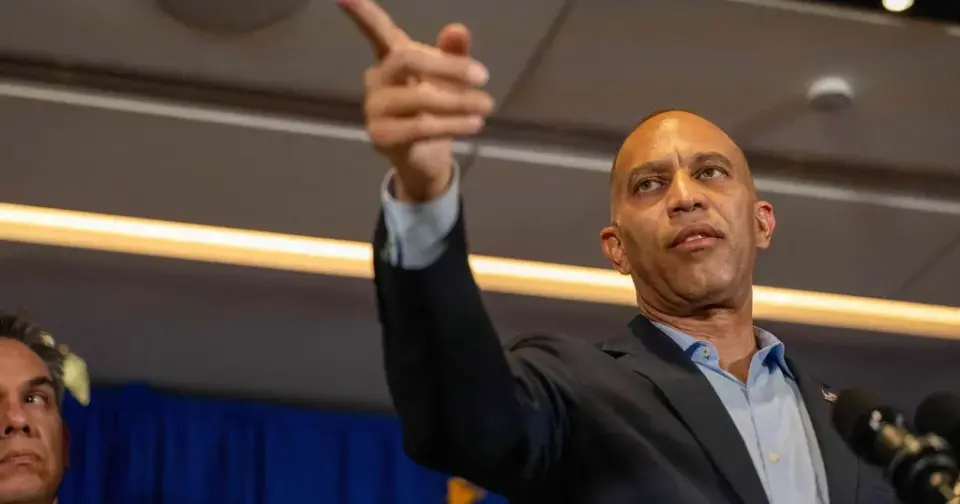
House Democrats are expected to nominate Hakeem Jeffries as their speaker candidate on Wednesday, despite resistance from some incoming progressives. Jeffries will request a recorded vote rather than acclamation to secure a clear mandate, with no formal challenger emerging. If elected in January, he would become the first Black person to hold the gavel in the U.S. House.
Key points
- Hakeem Jeffries, the current House minority leader, is expected to win the Democratic caucus nomination for speaker on Wednesday.
- Jeffries will request a tallied vote instead of a vote by acclamation, mirroring the 2018 transition from minority to majority leadership.
- Some incoming progressive members have declined to back Jeffries, citing policy disagreements, but no formal challenger has emerged.
- House Democrats are projected to control more than 250 seats, providing a significant margin above the 218 needed for a majority.
- If elected in January, Jeffries would become the first Black House speaker in U.S. history.
- Other leadership positions, including majority leader and whip, will also be voted on, with Katherine Clark and Pete Aguilar as key candidates.
Background
Recent archive coverage indicates that Jeffries faced intense grassroots pressure, including a petition with over 900,000 signatures, from progressives concerned about his ties to pro-Israel groups and perceived lack of resistance to President Trump. Despite this backlash, no formal challenger emerged, with figures like Ayanna Pressley and Jamie Raskin declining to run. The shift to a recorded vote was a tactical move to neutralize dissent and secure a clear mandate before the formal House election in January.
How outlets are covering it
CBS News emphasizes the procedural strategy of the recorded vote and the lack of a formal challenger, noting that individual members have less leverage due to the large Democratic majority. The Guardian highlights the historical significance of Jeffries potentially becoming the first Black House speaker and the smooth glide path to the speakership despite potential defections from incoming progressives. Both outlets agree on the outcome but differ in emphasis: CBS focuses on the internal mechanics and 2018 precedent, while The Guardian underscores the historic nature of the potential election and the broader context of the Democratic majority.
Why it matters
The selection of Hakeem Jeffries as the Democratic speaker candidate signals a shift in House leadership dynamics, with the party prioritizing unity and historical representation over progressive policy concessions. The recorded vote strategy aims to minimize internal friction and secure a clear mandate, setting the stage for a potentially more cohesive Democratic majority in the new Congress. This outcome also reflects the broader trend of Democrats consolidating power after midterm losses, with Jeffries poised to lead the chamber as the first Black speaker in U.S. history.
What to watch
House Democrats will officially elect Jeffries as speaker in a floor vote in January, where he is expected to secure the 218 votes needed for the speakership. The caucus will also vote on other leadership positions, including majority leader, whip, assistant leader, and caucus chair. The outcome of these votes will shape the Democratic agenda and strategy in the new Congress, with Jeffries leading the chamber as the first Black speaker in U.S. history.
- House Democrats expected to choose Jeffries as speaker amid resistance from some progressives CBS News
- House Democrats begin leadership elections, with Hakeem Jeffries poised to clinch speaker nomination – live The Guardian
- Democrat Hakeem Jeffries faces a first test to becoming House speaker during leadership elections AP News
- Jeffries nears historic speakership as power shifts in Congress Axios
- Jeffries seeks to shore up support ahead of vote for Democratic speaker nominee The Washington Post
Want the full story? Read the original reporting
Read on CBS News