
Hakeem Jeffries Wins Democratic Speaker Nomination, Set to Become First Black Speaker
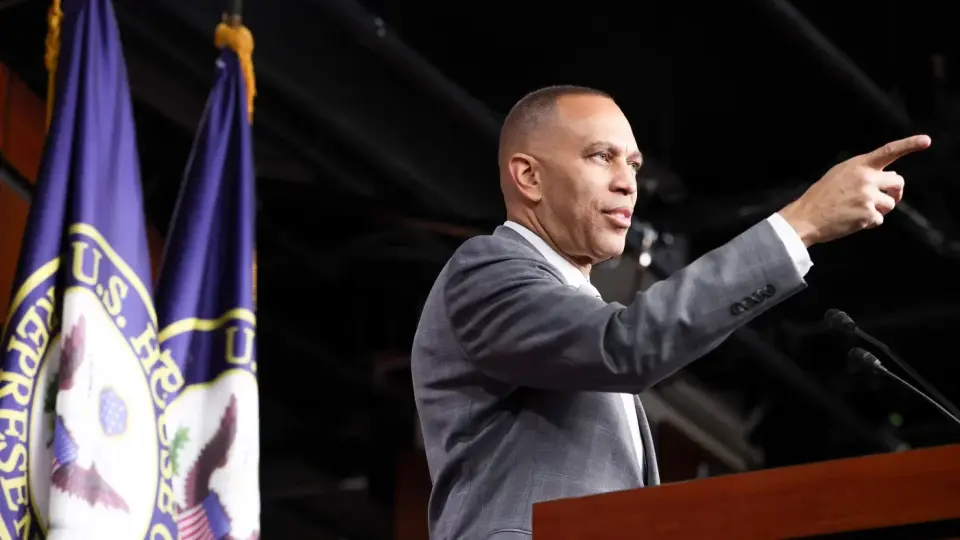
House Democrats nominated Rep. Hakeem Jeffries (D-N.Y.) as their candidate for Speaker of the House on November 18, 2026. The vote, 251 to 11, positions Jeffries to become the first Black person to hold the role when the full House votes on January 3, 2027. While the margin was overwhelming, a small bloc of progressive lawmakers opposed the nomination, demanding concessions on healthcare and foreign policy. Jeffries’s victory marks a historic shift in leadership following the Democratic Party’s significant midterm gains.
Key points
- Rep. Hakeem Jeffries (D-N.Y.) was nominated by House Democrats to be the next Speaker of the House, with a vote of 251 to 11.
- If confirmed by the full House on January 3, 2027, Jeffries will become the first Black person to serve as Speaker.
- Eleven Democrats, primarily newly elected progressives, voted against Jeffries, citing unresolved commitments on Medicare for All and US aid to Israel.
- Jeffries’s leadership team includes Katherine Clark as the first female majority leader and Pete Aguilar as the first Latino whip.
- The nomination follows a strategic decision by Jeffries to call for a recorded vote rather than acclamation, neutralizing leverage from dissenting factions.
Background
Jeffries has led House Democrats since 2022, serving as Minority Leader during the previous Congress. His nomination follows the Democratic Party’s historic midterm victory, which secured a majority of at least 257 seats in the House. This contrasts with the 2022 election, where Republicans faced narrow margins and internal divisions that delayed the selection of Speaker Mike Johnson. Jeffries’s path to the speakership is expected to be smoother due to the larger Democratic majority, though he faces pressure from both the party’s left wing and moderate factions.
How outlets are covering it
NPR and The New York Times emphasized the historic nature of Jeffries’s nomination, highlighting his potential to be the first Black Speaker. CNN focused on the strategic maneuvering by Jeffries to secure a recorded vote, noting that this move neutralized leverage from progressive dissenters. MS NOW analyzed the political implications of Jeffries’s decision to call for a vote, framing it as a calculated risk to demonstrate the strength of his support. All sources agreed that the 251-11 vote reflected broad support within the caucus, despite opposition from a small group of newly elected Democratic Socialists who demanded policy concessions on healthcare and foreign policy.
Why it matters
Jeffries’s nomination signals a shift in Democratic leadership strategy, prioritizing unity and broad coalition-building over ideological purity. His ability to secure a recorded vote despite progressive dissent suggests a more disciplined approach to managing internal party divisions. The historic nature of his potential speakership also underscores the changing demographics of US political leadership, reflecting the growing influence of Black and progressive voices in Congress.
What to watch
The next critical step is the full House vote on January 3, 2027, where Jeffries needs a simple majority to become Speaker. Democrats are expected to control at least 257 seats, making his election likely. In the Senate, Minority Leader Chuck Schumer faces a challenge from Chris Van Hollen for the majority leader position, with leadership elections set for early December. Jeffries will also need to navigate ongoing negotiations with progressive factions to secure commitments on key policy issues.
- Democrats formally nominate Hakeem Jeffries for speaker of the House NPR
- Hakeem Jeffries overwhelmingly wins House speaker nomination despite threats from ultra-progressives CNN
- Democrats Nominate Hakeem Jeffries for Speaker of the House, Making History The New York Times
- Opinion | Hakeem Jeffries took a risk with his caucus vote – and it paid off MS NOW
- The Democrats Who Voted Against Nominating Hakeem Jeffries for Speaker of the House Time Magazine
Want the full story? Read the original reporting
Read on NPR