
Hegseth formalizes US-Venezuela military pact amid political uncertainty
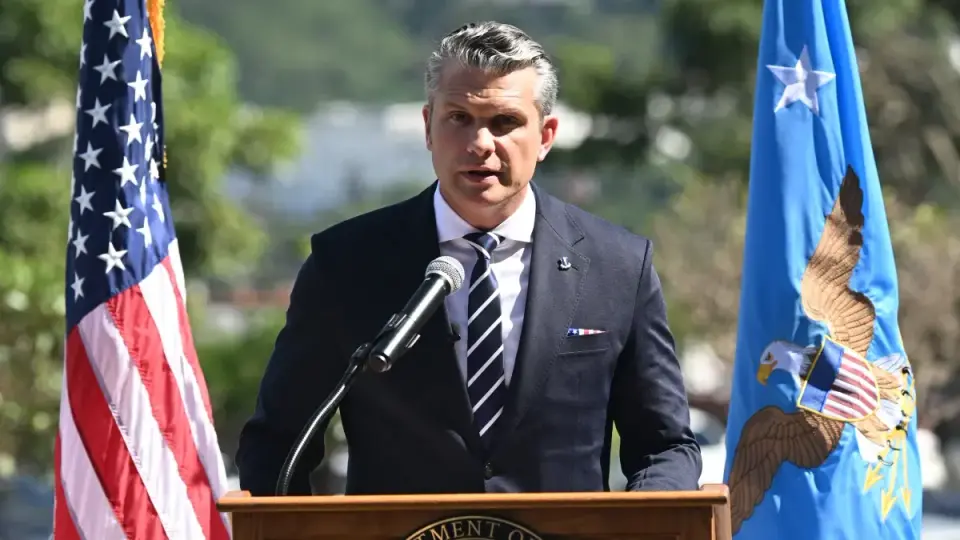
US Defense Secretary Pete Hegseth announced a new military agreement with Venezuela’s interim government, featuring joint training and intelligence sharing. The deal follows the January capture of former President Nicolas Maduro and aims to combat drug trafficking, though critics question the US’s motives.
Key points
- Hegseth signed a military cooperation deal with interim President Delcy Rodriguez in Caracas, including joint training and intelligence sharing.
- The agreement follows the January 3 US military operation that captured former President Nicolas Maduro, who is currently in US custody awaiting trial.
- Hegseth described Venezuela as shifting from a 'regional threat' to a 'compliant security partner,' while Rodriguez framed it as a resumption of technical-military ties.
- The deal coincides with a US push to extract Venezuelan oil reserves, with Hegseth linking the military pact to energy security in the Western Hemisphere.
- Hegseth’s visit was unannounced and followed by a stop in Colombia to deliver a C-130 Hercules aircraft, part of a broader US military expansion in Latin America.
Background
This development follows the January 2026 US military operation that captured Venezuelan President Nicolas Maduro, leading to Delcy Rodriguez assuming the presidency. Previous coverage noted that the US has exerted significant influence over Rodriguez’s government, prioritizing energy concessions and military cooperation over democratic reforms. A recent KPMG audit indicated that 99% of $12.26 billion in Venezuelan oil revenue was returned to the country, though critics argue the US is exploiting resources while leaving the ruling party intact.
How outlets are covering it
Al Jazeera and AP News emphasize the formalization of military ties and Hegseth’s framing of Venezuela as a 'compliant security partner.' The Financial Times highlights the strategic context, noting that the US is expanding military presence in the region to combat drug trafficking and illegal gold mining, while questioning whether the agreement requires Venezuelan military support for future elections. Critics, as noted by Al Jazeera, accuse the US of reducing Venezuela to a vassal state, while AP points out that Venezuela’s ruling party remains in power despite Maduro’s capture. The Financial Times also reports internal discontent within the Chavismo movement over the growing US military coordination.
Why it matters
The agreement signals a deepening US military and political influence in Venezuela, potentially setting a precedent for other nations. It reflects the Trump administration’s strategy of leveraging military force to secure energy resources and combat drug trafficking, while raising concerns about the erosion of Venezuelan sovereignty and democratic processes.
What to watch
Hegseth is expected to meet with Colombian officials to discuss further security cooperation. The US is also backing negotiations between Venezuela’s government and opposition to hold new elections, though no date has been set. The future of the military agreement and its impact on Venezuelan politics and US-Latin American relations will depend on the outcomes of these negotiations and the broader regional security landscape.
- US Defence Secretary Hegseth reveals military partnership on Venezuela trip Al Jazeera
- US and Venezuela sign a deal to reestablish military ties, Hegseth says in visit to Caracas AP News
- Hegseth, in Caracas, announces US-Venezuela military partnership agreement Reuters
- Hegseth meets with Delcy Rodríguez in Venezuela to deepen military partnership The Hill
- US and Venezuela to expand military co-operation to target drug trafficking Financial Times
Want the full story? Read the original reporting
Read on Al Jazeera